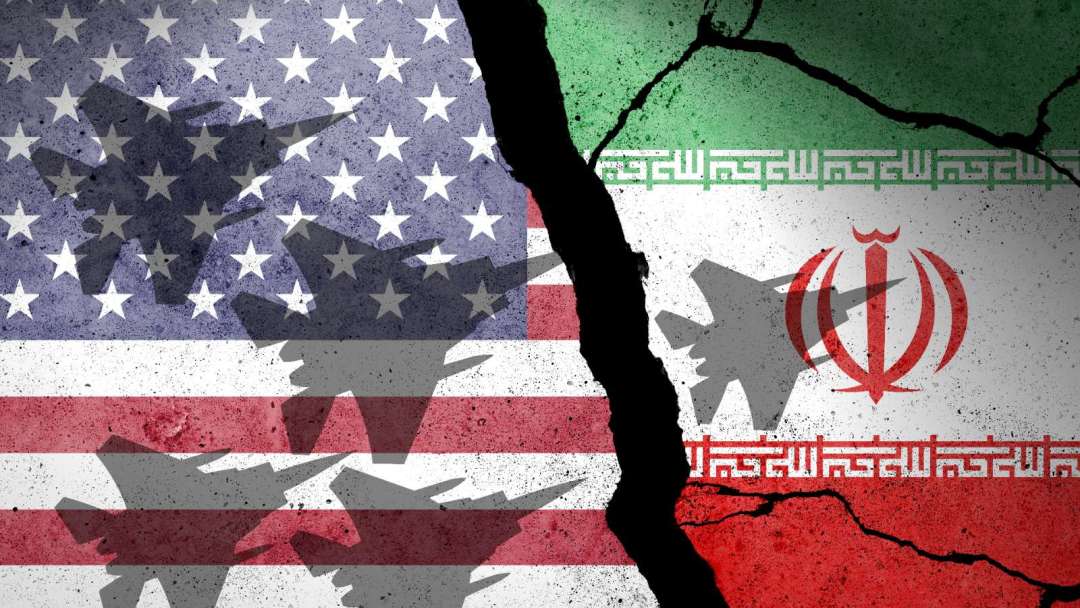
Tensions between the U.S. and Iran continue to escalate, with military actions and diplomatic efforts advancing simultaneously. U.S. President Trump on Tuesday (21st) made a series of hardline statements, cooling prospects for negotiations and adding further uncertainty to the Middle East situation.
Trump publicly stated at the White House that Iran had privately conveyed messages indicating it was 'eager to meet and wants to end this war quickly,' citing significant losses suffered by Iran.
However, Trump did not soften his stance or agree to talks, emphasizing that the U.S. has no intention of sitting at the negotiating table unless Iran demonstrates 'sincere willingness to negotiate.'
More notably, Trump explicitly stated that the conflict between the U.S. and Iran is 'far from over' and that U.S. forces will not withdraw. He even hinted that the U.S. could strike Iranian nuclear facilities if there are signs of reactivating its nuclear program, warning Iran it has 'not yet seen real power.'
As diplomatic prospects cooled, U.S. military threats intensified. Trump revealed that U.S. forces would 'soon' launch a 'very intense' attack on the underground nuclear facility 'Mount Khojir,' located south of Natanz's uranium enrichment site.
It remains unclear whether Iran has already moved its centrifuges into the deeply buried tunnel complex. Trump said he 'believes they likely have,' though there is no concrete evidence.
He emphasized that the U.S. focus is on nuclear materials themselves, not the facility's structure: 'Without the material, no matter how strong the facility, it's meaningless.'
Analysts note that 'Mount Khojir' is one of Iran's most heavily protected underground nuclear sites. It is widely believed that Iran relocated some advanced centrifuges and highly enriched uranium there after last year's 12-day military conflict.
If the U.S. proceeds with an attack, strikes could expand beyond existing military and missile targets to deeper nuclear-related facilities. Iran's recent deployment of new air defense systems indicates both sides are enhancing their offensive and defensive capabilities.
Amid rising external pressure, Iranian President Pezeshkian stated on the same day that he has been in closer contact with Supreme Leader Mujtaba, and that all government policies follow the leader's directives.
He revealed that Mujtaba had instructed officials in a closed-door meeting to end the current 'neither war nor peace' stalemate as soon as possible, though he did not specify how.
Pezeshkian also urged national unity, warning against undermining current negotiation achievements without professional basis. He noted that despite repeated U.S. violations of agreements, Iran's progress on reopening the Strait of Hormuz and resuming oil exports has 'exceeded expectations.'
Notably, diplomatic channels remain open despite ongoing military actions. Qatar and other mediators earlier this week proposed a 10-day ceasefire to de-escalate tensions and restore previous temporary arrangements.
However, according to Bloomberg, Washington's current priority is punitive retaliation for Iran's attacks on vessels in the Strait of Hormuz. U.S. military strikes are expected to continue until President Trump decides to change strategy. Meanwhile, diplomatic negotiation channels remain open.
This creates a contradictory situation: mediation efforts continue, yet military pressure shows no sign of easing. Whether the ceasefire proposal succeeds depends on whether both sides can resolve the Strait of Hormuz shipping dispute and whether Iran is willing to make substantive concessions on core issues demanded by the U.S.
Escalation in the Red Sea: Yemen's Houthis Threaten to Blockade Saudi Maritime Routes
The conflict risk is not limited to the Persian Gulf. Iran-aligned Yemeni Houthi militants recently announced a 'maritime blockade' against Saudi Arabia, threatening attacks on ships docking at Saudi ports.
According to Reuters, two oil tankers carrying Saudi crude oil bound for Asia have rerouted via the Suez Canal due to the threat. Some vessels have even disabled their tracking systems to avoid risks, although loading operations at Saudi Arabia's Yanbu port continue as normal.
Since Yanbu was previously seen by Saudi Arabia as an alternative route to diversify risks away from the Strait of Hormuz, any further escalation of Houthi threats in the Red Sea and Bab el-Mandeb Strait could jeopardize this 'backup pipeline' as well.
In response, Trump stated the Red Sea is 'not yet' blocked, but if the situation develops that way, the U.S. will 'take action.' This statement effectively reserves space for further U.S. intervention in Red Sea affairs.
Analysts warn that if Houthi threats escalate from verbal warnings to actual military actions, the U.S. may have to simultaneously address crises in two critical shipping lanes: the Strait of Hormuz, strained by direct U.S.-Iran confrontation, and the Red Sea and Bab el-Mandeb Strait, threatened by Houthi militants.
Analysts consider this the most troubling new variable in the current Middle East situation. Previously, market concerns focused on the Strait of Hormuz, but now tangible shipping risks are emerging in the Red Sea as well. If both energy and shipping chokepoints face simultaneous crises, global energy transportation, container shipping, insurance costs, and supply chains could all be affected.
FACT BOX
- Source: PR Times
- Category: News