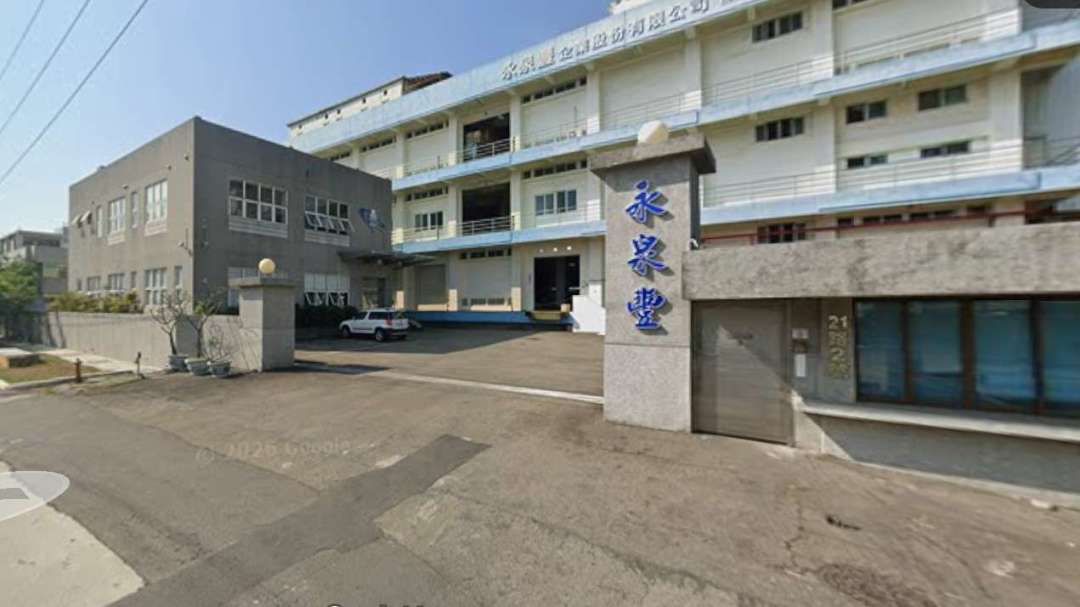
Major technology players and semiconductor supply chain companies are aggressively expanding their manufacturing capacity. Recently, Largan Precision (3008-TW) drew market attention by investing NT$1.189 billion to acquire two plots of land in Taichung Industrial Park. With rising market momentum, industrial real estate transaction volume in Taiwan surged past NT$130 billion in the first half of 2026, reaching NT$139.2 billion and setting a new record for the same period in history.
According to a Q2 2026 commercial real estate market survey by Sinyi Global Asset, a subsidiary of Sinyi (9940-TW), listed and OTC corporations completed NT$54.8 billion in commercial property transactions from April to June, a 49% increase year-on-year. Industrial real estate dominated the market, accounting for NT$44.1 billion—over 80% of total quarterly volume. Key transactions included ASE Group (3711-TW) purchasing two factories in Tainan, contributing NT$25.65 billion in transaction value. Office property transactions totaled NT$9.6 billion, with a notable purchase by insurance company Nan Shan Life Insurance, which acquired office floors in the 'Yi Xiang Tian Di' Building B in Kaohsiung for NT$3.556 billion, reflecting insurers’ confidence in Kaohsiung’s long-term office market. Retail property transactions amounted to NT$1.1 billion, including Global Life Insurance selling the 'Lishile' shopping mall to Sijia Industrial for NT$832 million.
Extending the timeline, industrial real estate transactions in 2026 have been particularly strong. Major tech firms such as Micron, ASE, and Tripod Technology (2383-TW) have actively acquired land, pushing total H1 transaction value to NT$139.2 billion, the highest ever for the first half of a year.
Lin San-chih, General Manager of Sinyi Global Asset, warned that industrial real estate differs significantly from office or residential properties, requiring specialized knowledge and customized solutions tailored to diverse industries. Companies that rush into purchases based solely on market trends, location, or low prices—without considering their specific operational needs—may face the risk of acquiring facilities that cannot be put into production, leading to costly relocations or renovations.
To meet urgent production demands, many AI, semiconductor, and supply chain companies are expanding aggressively this year. Lin advised maintaining a steady approach and returning to fundamentals for precise site selection. Only through strategic, well-informed decisions can companies secure stable asset value and competitive advantage in a heated market. He emphasized four core criteria for effective industrial real estate planning: property legality, factory infrastructure, pollution discharge compliance, and low-carbon sustainability.
Lin stressed that the first step in purchasing a factory is verifying legality—ensuring the land use zoning matches the intended industry, that building and use permits align with actual usage, and that factory registration can be legally processed. Second, different industries have distinct requirements for factory specifications and infrastructure. For example, tech firms with high water and electricity demands must verify Taipower contract capacity and drainage systems; manufacturers with heavy machinery need to assess ceiling height and floor load capacity; logistics and warehousing operators must prioritize truck access routes and loading dock specifications.
Additionally, many industrial processes involve pollution discharge, so companies must evaluate whether their wastewater, exhaust emissions, and noise levels comply with industrial park or environmental regulations. In the era of green supply chains, whether a facility has water-saving systems or solar power installations—and whether it meets international green manufacturing standards—can determine a company’s ability to secure orders and maintain its position in global supply chains.
FACT BOX
- Source: PR Times
- Category: Survey