AI chips and memory-related stocks have recently undergone significant corrections. However, BlackRock, the world's largest asset management firm, argues that the market has overreacted, mistakenly interpreting the emergence of low-cost AI models as a signal of slowing AI investment. The company emphasizes that declining AI costs will accelerate technology adoption, thereby driving sustained expansion in demand for data centers, memory, and power infrastructure, and continues to favor the U.S. AI supply chain.
In its latest market commentary, BlackRock stated that the recent sharp pullback in tech and semiconductor stocks represents an "overreaction," with the market conflating shifts in the AI competitive landscape with broader AI investment trends. BlackRock believes that lower-cost AI models are changing market winners, not the fundamental logic of AI investment.
Recent pressure on AI chip stocks stems from concerns that the rapid rise of low-cost large language models (LLMs) in China could erode the competitive advantage of high-cost frontier AI models, thereby reducing hyperscalers' demand for high-end AI chips.
The iShares PHLX SOX Semiconductor Sector ETF (SOXX-US), which tracks the U.S. semiconductor industry, fell approximately 15% from its June peak, briefly entering a technical bear market, sparking market concerns about cooling demand for AI hardware.
However, BlackRock highlights the other side: as AI model costs decline, more companies will be able to integrate AI into products, services, and workflows, rapidly expanding AI application scale. This will ultimately require greater support from data centers, networking equipment, memory chips, and power infrastructure.
BlackRock states that lower AI prices will expand the total addressable market (TAM), further strengthening demand for AI infrastructure rather than weakening it.
This view aligns with Wall Street's dominant investment logic this year. As major cloud providers continue expanding AI infrastructure, capital has gradually shifted from GPUs to related areas such as HBM, high-speed optical communications, power systems, and liquid cooling.
Recently, Microsoft (MSFT-US), Alphabet (GOOGL-US), Amazon (AMZN-US), and Meta Platforms (META-US) have all continued raising their AI capital expenditures. Market estimates suggest these four tech giants will collectively spend over $600 billion on capital expenditures by 2026, indicating that the AI infrastructure investment boom remains strong.
Beyond AI, BlackRock notes that despite rising geopolitical risks in the Middle East, U.S. economic growth and corporate earnings remain robust. Therefore, it maintains an "Overweight" rating on U.S. equities and continues to favor AI chips, power, and data centers—sectors representing AI bottlenecks.
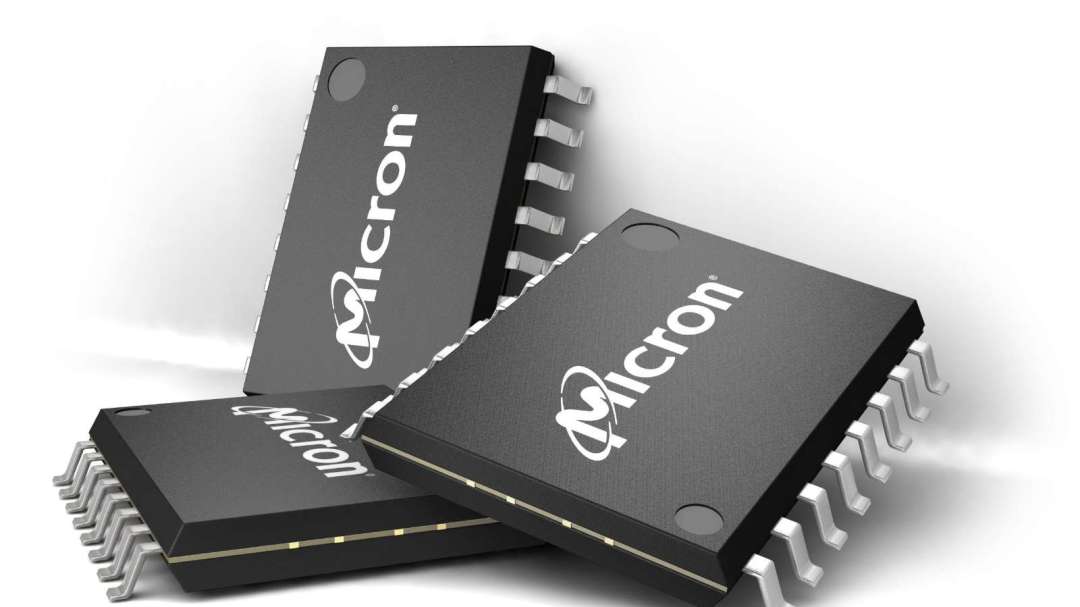
On individual stocks, BlackRock specifically highlights memory chipmakers SanDisk (SNDK-US) and Micron (MU-US).
According to Benzinga, 22 analysts currently rate SanDisk with an average recommendation of "Outperform." While the average target price of $1,418.14 is below the recent share price of around $1,608, institutional investors have recently raised their targets. The average of the three most recent research reports has risen to $2,666.67, with Susquehanna issuing the highest Wall Street target of $3,250.
Major brokerages have also recently upgraded SanDisk’s target price: BofA Securities raised it from $2,100 to $2,500; Bernstein sharply increased it from $1,700 to $3,000; Citigroup raised it from $2,025 to $2,500; Mizuho increased it from $1,825 to $2,200; and Cantor Fitzgerald maintained its $2,900 target price and "Overweight" rating.
For Micron, 29 analysts have an average rating of "Buy," with an average target price of $1,316.79—about 36% above the recent share price of around $969.
Looking at the most recent ratings, the average analyst target price has risen to $1,750, implying about 81% upside potential. Cantor Fitzgerald and Barclays both set a Wall Street-high $2,000 target; Goldman Sachs (GS-US), however, remains more conservative, maintaining a "Neutral" rating and a $1,100 target price.
Market observers note that the recent correction in AI chip stocks stems from a reassessment of AI investment returns, not from disappearing AI demand. As long as major tech companies continue expanding data centers and investing in AI computing power, demand for high-end memory such as HBM, DRAM, and NAND is expected to remain strong, providing solid long-term fundamental support for memory suppliers like SanDisk and Micron.
FACT BOX
- Source: PR Times
- Category: News
- Organizations: BlackRock / SanDisk / Micron
- Products / services: HBM / DRAM