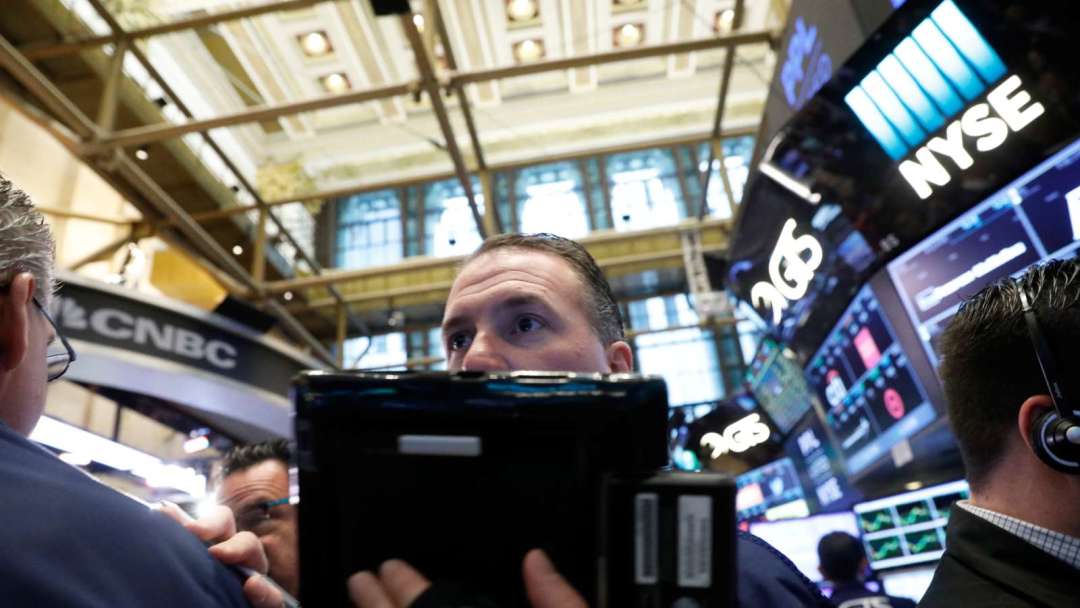
The Roundhill Magnificent Seven ETF (MAGS), which tracks the seven largest U.S. tech stocks, dropped 4.25% during Thursday’s trading session, potentially marking its biggest single-day decline since April 2025 and its worst performance since the market turbulence caused by former President Donald Trump’s tariff policies.
Market focus centered on earnings reports from Tesla (TSLA-US) and Alphabet (GOOGL-US), while rising oil prices—surpassing $100 per barrel—fueled investor risk aversion, putting broad pressure on large-cap tech stocks.
All seven 'Magnificent Seven' component stocks declined on the day, with Tesla suffering the steepest drop at 12.31%. The company reported adjusted Q2 earnings per share of $0.33, significantly below the analyst consensus estimate of $0.51, disappointing market expectations.
Alphabet’s shares fell 6.79%. Although the company raised its capital expenditure forecast for 2026, increasing the upper limit to $205 billion to reflect continued expansion in AI infrastructure investment, investors were more concerned about the strain rapid spending growth could place on cash flow.
Notably, both Tesla and Alphabet reported negative free cash flow (FCF) this quarter. Free cash flow represents the cash remaining after a company pays for capital expenditures such as factory construction, chip procurement, and data center development. Alphabet’s negative FCF marked the first time in its history as a public company, raising investor concerns about the rapidly escalating costs of AI investments.
Beyond earnings, escalating tensions in the Middle East added further pressure. Attacks by Yemen’s Houthi rebels on a Saudi Arabian oil tanker pushed Brent crude prices above $100 per barrel—the highest since May—heightening fears of renewed inflation.
Rising oil prices drove the yield on the U.S. 10-year Treasury note to its highest level since January 2025, reducing market risk appetite and hitting high-valuation tech stocks hardest.
Even tech giants yet to report earnings, such as Microsoft (MSFT-US), weakened. Microsoft’s stock declined 1.3% despite its earnings report being scheduled for next week, indicating that investor sentiment toward large tech stocks has turned cautious amid a confluence of factors: corporate earnings, massive AI-related capital spending, and geopolitical risks in the Middle East.
Market analysts noted that as AI investment scales up, investors are increasingly prioritizing companies’ ability to maintain free cash flow and profitability amid heavy capital expenditures, rather than focusing solely on revenue growth. This shift has significantly heightened volatility in large-cap tech stocks in recent weeks.
FACT BOX
- Source: PR Times
- Category: News
- Organizations: Tesla / Alphabet / Microsoft
- Products / services: MAGS ETF