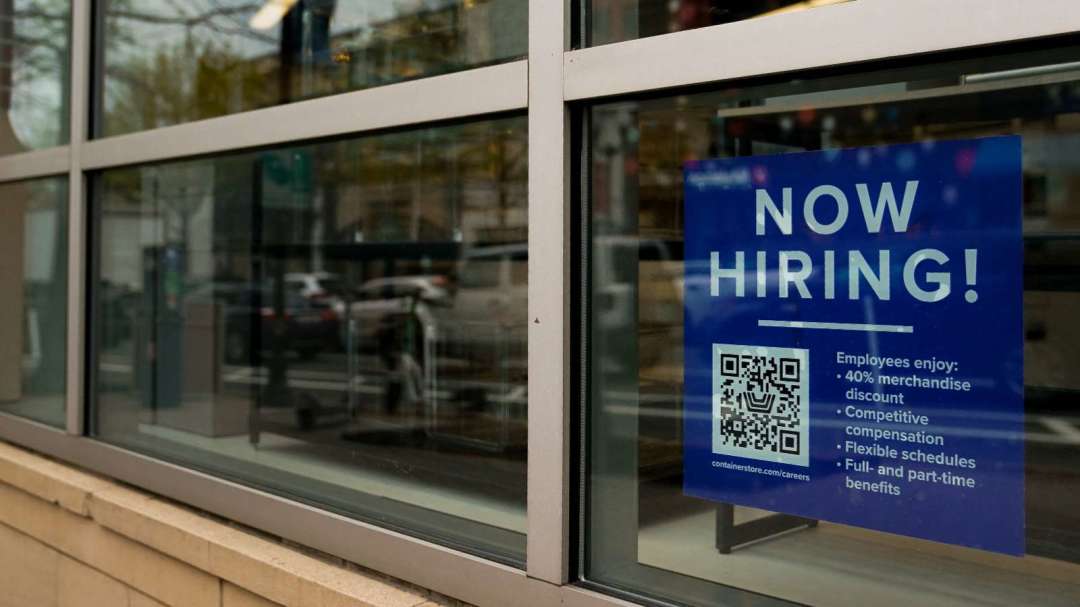
U.S. initial jobless claims unexpectedly plunged last week to their lowest level in nearly 57 years, signaling that corporate layoffs remain highly limited and the labor market remains stable—giving Federal Reserve (Fed) officials more room to focus on curbing inflation.
The U.S. Department of Labor reported on Thursday (23rd) that seasonally adjusted initial jobless claims for the week ending July 18 dropped by 22,000 to 187,000, the lowest since September 1969, with the decline being the largest in nearly three months. Economists surveyed by Bloomberg had initially expected 210,000 claims, while Reuters survey anticipated a slight increase to 212,000.
Unadjusted initial claims fell by 53,718 to 192,296, with New York State seeing the largest drop at 16,954, followed by notable declines in Michigan and California.
Continuing claims, which reflect the number of people receiving ongoing unemployment benefits, fell to 1.796 million for the week ending July 11, the lowest in six weeks. The latest data covers the survey period for the July non-farm payrolls report, indicating that while job growth remains moderate, widespread layoffs have not materialized.
The U.S. unemployment rate unexpectedly fell to 4.2% in June, the lowest in a year, but primarily due to some individuals exiting the labor force rather than a surge in hiring. The current U.S. labor market reflects a unique balance of constrained labor supply, modest job growth, and low layoffs, allowing the unemployment rate to remain at historically low levels.
Bloomberg Economics noted that the sharper-than-expected drop in initial claims may have been partly influenced by imperfect seasonal adjustments, but overall data still indicates limited layoffs. High corporate profit margins are also enabling companies to retain workers while continuing investments.
The Fed will hold its rate-setting meeting on July 28–29, with markets widely expecting no rate change this time. However, with the labor market remaining resilient and inflation still above the 2% target, rate futures indicate investors are betting on at least one rate hike (25 basis points) by the end of the year.
FACT BOX
- Source: PR Times
- Category: Survey
- Organizations: Federal Reserve / U.S. Department of Labor / Bloomberg