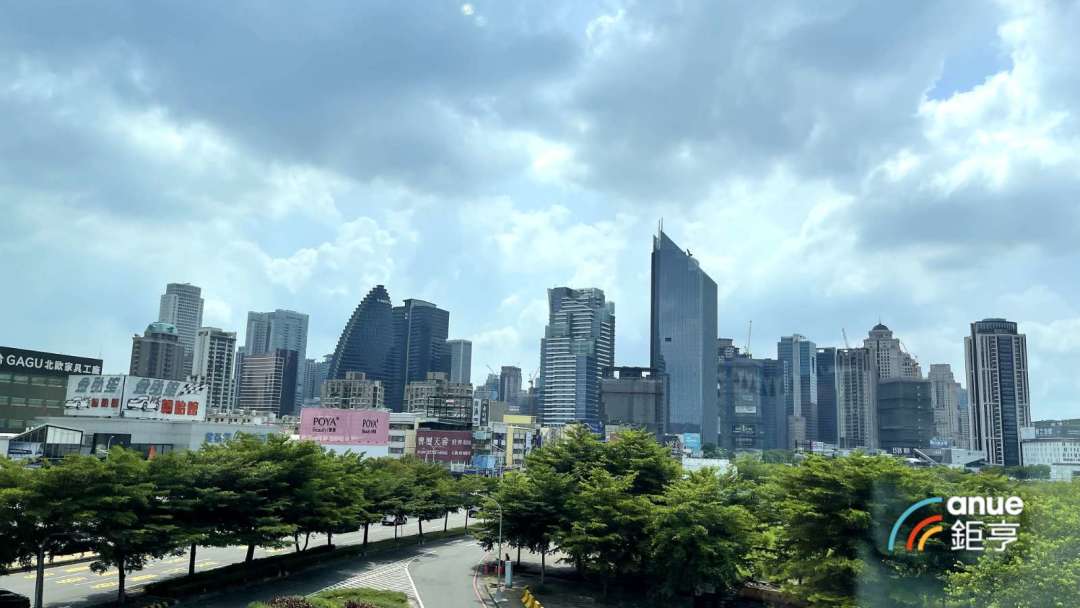
Regional development has led to significant divergence in population inflows and outflows across Taiwan’s counties and cities. According to the latest statistics from the Ministry of the Interior analyzed by a real estate agency, Taipei City recorded a net outflow of 8,911 people in the first half of 2026, ranking first nationwide. Changhua County and Kaohsiung City followed in second and third place. In contrast, Taoyuan City and Taichung City demonstrated strong population attraction, recording net inflows of 3,892 and 3,891 people respectively, making them the two strongest 'population magnets' in Taiwan.
Lai Chih-chang, Deputy Public Relations Manager of the Da-Jia Housing Planning Research Department, analyzed that soaring housing prices and living costs in Taipei and Kaohsiung—the two major administrative centers in northern and southern Taiwan—have gradually driven population outflow. Meanwhile, in central and southern counties, local industrial opportunities are increasingly concentrating in urban areas, which in turn affects regional population migration patterns.
According to Ministry of the Interior data, most counties and cities across Taiwan recorded more people moving in than out. However, five counties still recorded a net population change exceeding 1,000 people: Taipei City, Changhua County, Kaohsiung City, Kinmen County, and Yunlin County. Among them, Taipei City had the highest net outflow of 8,911 people in the first half. Lai noted that while Taipei City remains the most concentrated hub for industries and job opportunities, its high cost of living has historically made it the top net outflow county. However, this year’s net outflow of approximately 8,911 people is significantly lower than last year’s 33,000, indicating a slowing trend in the 'escaping Taipei' phenomenon. This is likely due to the government’s property market cooling measures, which weakened buyer sentiment, and a noticeable return of investment buyers to prime urban districts, resulting in fewer people leaving Taipei overall.
Regarding Kaohsiung, it ranked third nationwide with a net outflow of 1,519 people in the first half. Lai analyzed that as the administrative and commercial center of southern Taiwan, Kaohsiung has seen rapid property price increases in recent years, driven by industrial developments such as the entry of semiconductor giants and major infrastructure projects. While urban amenities have improved, living costs have also risen significantly, leading to observable migration to Tainan and other surrounding counties.
Taoyuan and Taichung have emerged as the strongest population magnets, recording net inflows of 3,892 and 3,891 people respectively in the first half. Lai explained that both cities have matured in recent years in terms of redevelopment zones, major construction projects, and transportation infrastructure. These developments not only boost the real estate market but also create employment opportunities, significantly reshaping population migration patterns in surrounding areas. As a result, these two metropolitan areas have become population magnets—Taoyuan attracting 'escapees from Taipei and New Taipei,' while Taichung continues to draw homebuyers from central regions such as Changhua and Yunlin.
Hsu Chia-hsin, Executive Director of the Chung-Shang Real Estate Planning Research Department, cautioned that from the overall population migration map, whether a location meets basic living needs and offers substantial functional amenities has become key for owner-occupiers. While redevelopment zones in major cities have strong population-attracting advantages, buyers must carefully assess commuting time costs and target areas that balance transportation convenience with fundamental demand to ensure asset preservation during the current real estate market downturn.
FACT BOX
- Source: PR Times
- Category: Survey