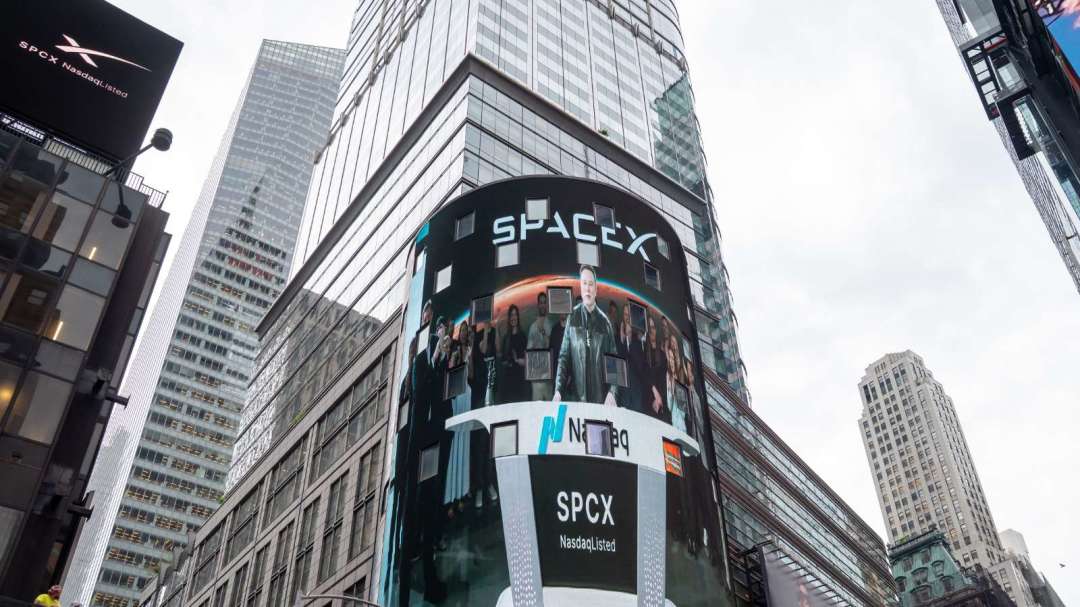
According to financial data analytics firm Ortex, short sellers have accumulated $15.5 billion in unrealized gains since SpaceX launched its IPO at $135 per share earlier this month. The stock closed Thursday (23rd) at $118.25, down over 12% from its IPO price and nearly halved from its peak. SpaceX shares surged to $225.64 intraday on June 16—its third trading day—but have been retreating steadily since.
Peter Hillerberg, co-founder of Ortex, pointed out that short sellers show no signs of taking profits. Instead, they are adding more short positions during the decline. Currently, approximately 360 million shares are held in short positions, representing 56% of the float.
Elon Musk warned last Friday (17th) on X that institutions maintaining long-term short positions on SpaceX have an 'extremely low probability of survival.' However, the short interest has not decreased—in fact, it has expanded.
Moreover, structural selling pressure is mounting. Starting August 6, the first tranche of insider share unlocks begins, involving 911.5 million shares, valued at $116 billion at peak prices. By early December this year, the number of publicly traded shares is expected to surge from 639 million to 5.33 billion, creating massive supply. Shorts believe this gives further room for downside.
Reuters analysis highlights that the market is betting on SpaceX being overvalued (IPO valuation of $1.77 trillion, price-to-sales ratio over 90x). Yet, retail and institutional interest remains extremely high. Musk's history of orchestrating short squeezes—such as in 2018 when he hinted at taking Tesla private, triggering a sharp rally—adds to the risk. The reverse short squeeze risk is equally alarming. Both bulls and bears are now betting the other side will break first.
FACT BOX
- Source: PR Times
- Category: News
- Organizations: Ortex
- Products / services: Starlink