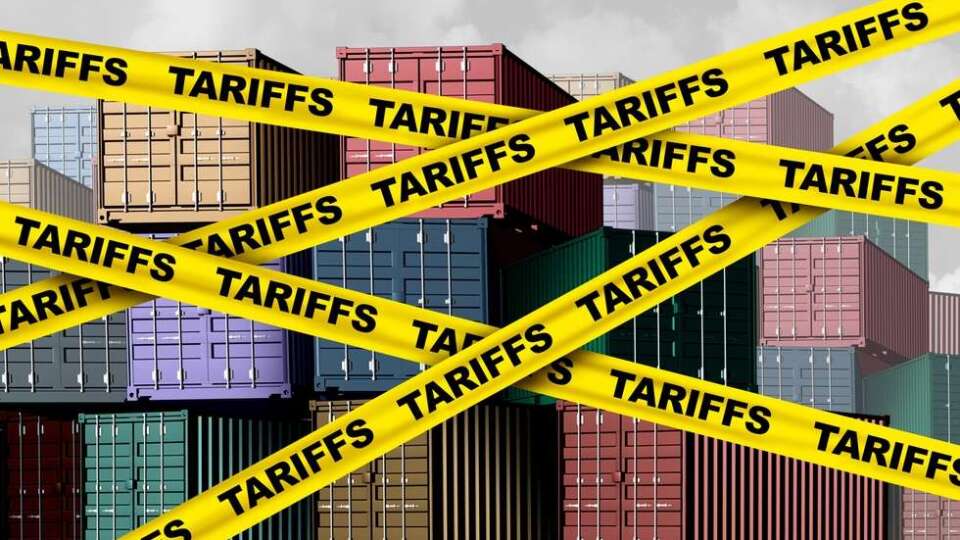
The Office of the United States Trade Representative (USTR) announced the final actions under the Section 301 investigation on forced labor, categorizing Taiwan and the European Union (EU) into the most favorable tariff group. The applicable rate is 10%, without叠加 the Most-Favored-Nation (MFN) tariff, offering a more advantageous position than Japan, South Korea, and Switzerland, which face a 12.5% rate. This outcome significantly benefits Taiwan’s export industries.
On July 23 (U.S. Eastern Time), USTR released its final determination under Section 301 of the Trade Act of 1974 regarding the 'prohibition of imports of forced labor products.' Sixty global trading partners were classified into four tariff groups based on their enforcement of forced labor policies. Taiwan was placed in the same top-tier group as the EU.
According to Taiwan’s Executive Yuan U.S. Economic and Trade Working Group, a total of 2,231 products from Taiwan are exempted from the Section 301 tariffs. These items will only be subject to standard MFN tariffs when exported to the U.S. The list includes 322 agricultural products and 1,909 industrial goods.
Notably, all 1,735 products designated for tariff relief under the 'U.S.-Taiwan Initiative on Trade and Investment (ART)' are fully included in this exemption list. When the ART was signed in February, Taiwan secured tariff exemptions for 2,072 export items, with 1,735 explicitly listed in the agreement. This latest action confirms the successful implementation of ART outcomes.
Moreover, an additional 496 products not previously listed in ART have also been granted tariff exemptions. Among the 2,231 exempted items, 118 are uniquely designated for Taiwan, reflecting special recognition. Agricultural products include Phalaenopsis orchids, anthuriums, black and green tea, tapioca starch (a key ingredient in bubble tea), pineapple cakes, taro, mangoes, and fruit juices. Industrial items include radio navigation equipment, communication instruments, lithium-ion batteries, aircraft components, pharmaceuticals, fertilizers, and light oil products.
The Executive Yuan emphasized that these exemptions enhance the price competitiveness of Taiwanese goods in the U.S. market, supporting industries in capturing supply chain diversification opportunities and securing new orders. Additionally, the announcement explicitly excludes all products previously subject to tariffs under Section 232, as well as ongoing Section 232 investigations on ICT products and drones.
The temporary 150-day tariff imposed under Section 122 of the Trade Act of 1974, effective from February 24, expired on July 24. The outcome of the ongoing Section 301 investigation into 'structural overcapacity' remains pending. Premier Cho Jung-tai of the Executive Yuan reaffirmed that the government will continue close coordination with the U.S. to ensure Taiwan maintains its favorable treatment in any final tariff decisions.
FACT BOX
- Source: PR Times
- Category: News