The market is actively searching for reasons to turn bearish on artificial intelligence (AI) investment, even as tech giants continue pouring billions of dollars into an increasingly competitive landscape. Ray Wang, chairman of Constellation Research and co-founder of the AI Forum, argues that current market sentiment toward AI investment is overly pessimistic.
According to a report by Seeking Alpha, Wang said in a CNBC interview that although investors are wary of tech giants announcing massive increases in capital expenditure, these large companies have no choice but to keep investing heavily.
"This is a winner-takes-all market," Wang stated. "If you don't make these investments, you'll gradually fall behind your competitors."
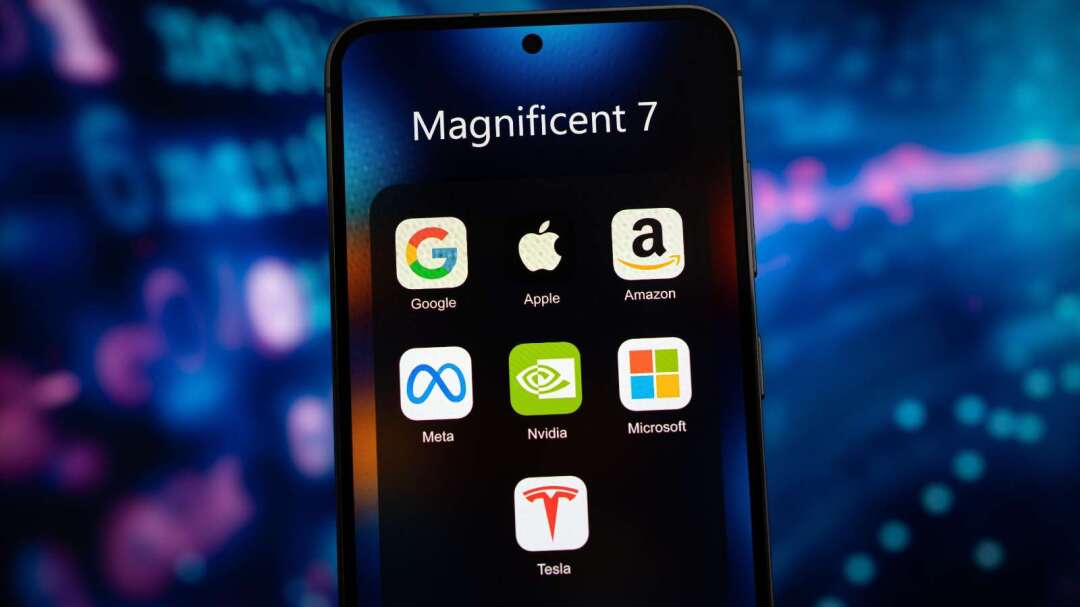
Discussing the so-called 'Magnificent Seven' tech giants—Nvidia (NVDA-US), Microsoft (MSFT-US), Apple (AAPL-US), Alphabet (GOOGL-US), Amazon (AMZN-US), Meta (META-US), and Tesla (TSLA-US)—Wang noted clear divergences in their AI spending strategies.
He observed that Amazon has always prioritized long-term growth over short-term profits and will continue making large investments. Meta is similarly aggressive in increasing its spending. In contrast, Microsoft "might be the most conservative among the seven."
Wang emphasized that these companies can sustain such high spending because of their strong core businesses. For example, Alphabet's Google Cloud business is growing at an impressive 80% to 90%, and YouTube's advertising revenue remains robust. Meta's advertising business also maintains strong momentum.
The analyst described the current AI investment environment as "one of the largest wealth transfers in history," with capital shifting from previously favored 'light-asset' business models to 'heavy-asset' models requiring massive capital outlays. Hardware suppliers are emerging as the biggest beneficiaries of this trend.
Wang also highlighted the concept of "AI inflation," pointing out that prices across the AI supply chain are rising, adding further cost pressure to already substantial capital expenditures.
He further identified a critical bottleneck often overlooked by investors: delays in data center permitting and energy supply constraints, which are significantly pushing back the return timelines for AI investments.
"Data center permitting is the single biggest factor slowing down everything," Wang said, adding that these administrative processes and physical infrastructure limitations are extending companies' expected return on investment periods by 18 to 24 months.
On individual stocks, Wang believes Nvidia's growth potential is largely already reflected in its share price, but other AI beneficiaries still have room to rise.
"Advanced Micro Devices (AMD-US) still has significant growth potential," he said, citing continued expansion in data center demand and the prospect of gradually declining computing and energy costs in the future.
Despite growing investor impatience and the possibility of higher interest rates persisting longer, Wang expects tech companies to continue aggressively investing in AI capital expenditures.
"They will keep investing," Wang asserted, noting that companies like Alphabet have ample free cash flow to support large-scale AI investments even as financing costs rise.
He acknowledged that investors remain highly anxious: "Everyone is waiting for any piece of news to jump into trades immediately—or even to go short."
The report concluded that while the timeline for profitability from AI investments may stretch further, the highly volatile market environment will continue to attract active trading in AI-related stocks.
FACT BOX
- Source: PR Times
- Category: Survey
- Organizations: Nvidia / Microsoft / Apple
- Products / services: GPU