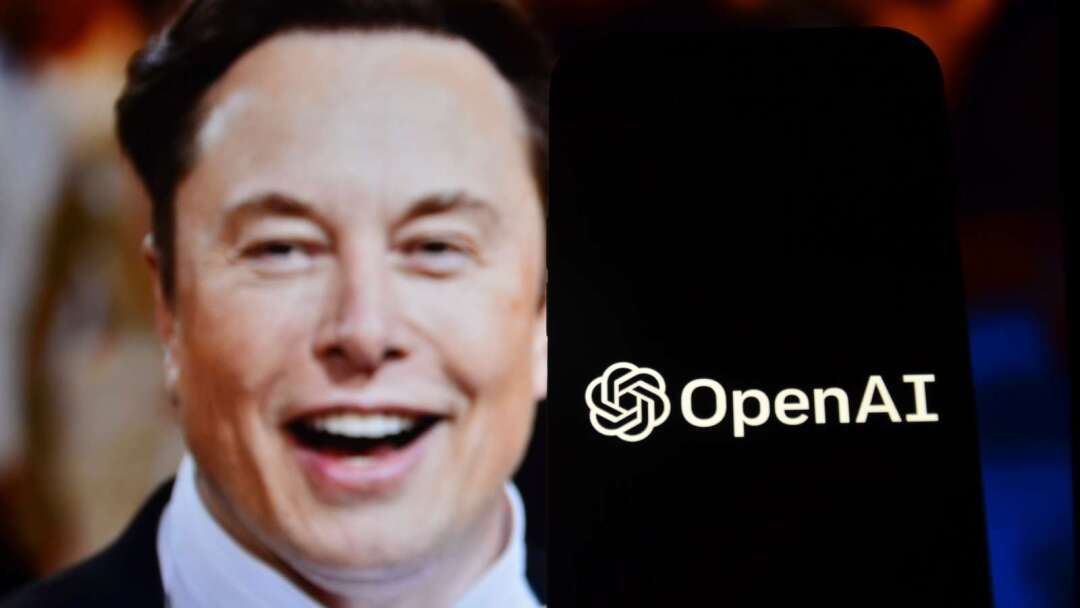
Elon Musk, CEO of Tesla (TSLA-US) and SpaceX (SPCX-US), recently sat down for an exclusive interview with the editor-in-chief of The Economist, delivering a series of provocative statements on artificial intelligence (AI). He predicted that AI would surpass human intelligence across the board within just a few years, while simultaneously admitting that AI poses significant risks, yet affirming his decision to actively engage in this technological wave.
Musk's interview covered a wide range of topics, including technical timelines, risk assessments, regulatory frameworks, and his long-standing personal rift with OpenAI CEO Sam Altman. The remarks sparked widespread discussion across the tech industry immediately after their release.
Musk laid out a clear timeline, stating he believes AI's overall intelligence level will surpass that of humans in approximately five years. When pressed on whether humans would still control AI development a decade from now, he candidly admitted the probability was quite low.
He used the intelligence gap between humans and chimpanzees as an analogy, pointing out that once the cognitive gap between AI and humans exceeds even the gap between humans and chimpanzees, humans may gradually lose control of the situation—just as chimpanzees cannot dominate human society.
This is not the first time Musk has voiced concerns about AI's existential threat. He has long argued that the probability of AI and autonomous weapons systems leading to human extinction lies somewhere between 10% and 20%.
When confronted with the sharp question, 'Would you board a rocket if it had a 20% chance of exploding?' Musk answered affirmatively.
He believes the trajectory of AI development is now irreversible, and rather than standing by and allowing the situation to spiral out of control, it is better to participate directly and do one's best to minimize risks.
He even suggested that even if a 'kill switch' to instantly shut down AI existed, humanity might not want to press it—because if extreme disasters like nuclear war can be avoided, AI could deliver unprecedented material abundance to humanity within the next decade.
Proposing 'Peer Review' Oversight, Bypassing Government-Led Regulation
On the topic of AI regulation, Musk expressed skepticism toward top-down government control models. He believes policymakers generally lack sufficient technical judgment to accurately assess the safety risks of new AI models.
Therefore, he proposed a self-regulatory framework to be executed by the industry itself, consisting of three core layers.
First, he recommended that major AI labs such as OpenAI, Google DeepMind, Anthropic, and xAI should hold regular safety meetings—weekly or biweekly—to share information about potential risks in their respective models.
He revealed that he has already reached consensus on this issue with the founder of DeepMind, emphasizing that this initiative is urgent.
Second, he advocated that companies should open their new models to competitors for review one to two weeks before release. If major safety concerns are identified, peer companies should have the right to request a delay in launch.
In his view, competitive relationships would actually encourage transparency, preventing companies from covering up each other's security flaws.
As for the government's role, Musk believes it should serve only as a final line of defense—intervening only when a company refuses to improve after receiving peer warnings, rather than imposing blanket restrictions on model development from the outset.
He stressed that this mechanism must be launched immediately, criticizing the industry's original plan to implement it within six months as far too slow. Given that AI technology is evolving at an astonishing pace, a six-month gap could embed irreversible hazards, he warned.
Rarely Addresses OpenAI Rift, Calls on Silicon Valley to Set Aside Personal Grudges
In the interview, Musk also rarely opened up about his dissatisfaction with Sam Altman, the current CEO of OpenAI.
He stated that OpenAI was originally founded with the intention of creating an open-source, nonprofit organization for the benefit of all humanity, designed to counterbalance Google's monopoly in the AI field. Today, however, OpenAI has transformed into a closed-source, for-profit enterprise valued at $800 billion—diverging sharply from its original mission.
He further revealed that the core founding team of Anthropic collectively left OpenAI back then primarily due to a loss of trust in Altman, and that Anthropic's founder, Dario Amodei, himself remains wary of him.
Despite this, Musk called on the industry to set aside personal grievances. He emphasized that, in his eyes, the Anthropic team has always upheld principles and genuinely cared about humanity's future, urging all stakeholders to cooperate for global AI safety and to help implement the peer review mechanism.
The rift between Musk and OpenAI has deep roots. He exited OpenAI's board of directors in 2018 due to conflicts of interest and later even filed a lawsuit against the company, accusing it of hollowing out its original nonprofit mission and betraying its open-source commitment. Yet, in Musk's current view, facing existential risks posed by AI, past grudges are no longer a priority.
A Contradictory Stance: Coexistence of Pessimism and Optimism
Overall, Musk's position throughout the interview reveals a striking contradiction: on one hand, he clearly acknowledges a roughly 20% risk of AI causing human extinction, while on the other, he firmly believes this technology will ultimately bring humanity unprecedented prosperity.
Musk believes the technological tide can no longer be stopped by individual efforts, so he chooses to participate directly, striving to correct its development path rather than standing on the sidelines.
Despite unresolved tensions with Altman and OpenAI, he insists the industry must prioritize the bigger picture, working together to build cross-company safety safeguards.
Musk likened this AI wave to a high-risk rocket journey—full of explosive dangers—but one in which humanity has no choice but to move forward, taking preventive measures while embracing the unknown future this technology brings.
As the age of AGI draws closer, the speed of technological advancement has clearly outpaced the establishment of regulation and societal consensus. Whether Musk's proposed peer review system can be successfully implemented and balance commercial competition with the survival of humanity remains to be seen.
FACT BOX
- Source: PR Times
- Category: News
- Organizations: Tesla / SpaceX / OpenAI