A jointly signed open letter, coupled with the first-ever post from NVIDIA (NVDA-US) CEO Jensen Huang’s personal X (formerly Twitter) account, has brought to the surface a long-simmering debate over strategic direction within the U.S. artificial intelligence (AI) industry.
On July 24, Microsoft (MSFT-US) published an open letter titled "Open Weights and American AI Leadership" on its official website, with one central message: a call urging the U.S. government not to impose restrictions on open-source AI models.
The signatories include 25 companies and institutions such as NVIDIA, Microsoft, Meta (META-US), IBM (IBM-US), Dell Technologies (DELL-US), Palantir (PLTR-US), ServiceNow (NOW-US), Hugging Face, Mistral, Y Combinator, a16z, and the Linux Foundation. The group spans chip manufacturing, cloud services, model development, open-source communities, and venture capital.
The letter presents six key arguments directly addressing current policy trends in Washington:
1. Open-source AI lowers industry-wide entry barriers—not just by offering free models
The letter argues that releasing model weights allows startups, large enterprises, universities, and government agencies to avoid training models from scratch or paying high costs to use the most advanced closed-source models for every AI application. This significantly reduces the barrier to adopting AI technology.
2. Open-source helps prevent AI market monopolization by a few tech giants
The letter contends that enabling more organizations to build, customize, and deploy their own AI models fosters competition across chips, cloud platforms, applications, and services. This not only reduces costs but also ensures AI-generated economic benefits are more widely distributed.
3. Enterprises should control AI, not be dependent on vendors
The letter emphasizes that using open-source models allows organizations to manage their own data, evaluate and fine-tune models, and deploy them according to specific needs. This enables continuous optimization, building proprietary knowledge and competitive advantages without reliance on a single supplier.
4. Open-source isn’t inherently riskier; closed-source doesn’t guarantee safety
The letter points out that closing AI models does not automatically make them safer. Closed models can still be hacked or misused, and due to the lack of external scrutiny, vulnerabilities may not be detected promptly. Moreover, concentrating critical AI technologies in a few suppliers creates a single point of failure risk.
5. AI does pose risks, but restricting open-source entirely isn’t the best solution
The letter argues that as attackers increasingly use advanced AI, defenders must also have access to capable AI models to detect, simulate, and respond to threats. Therefore, regulations should be based on verifiable risks, not the assumption that closed-source models are inherently safer than open ones.
6. Model distillation should not be conflated with intellectual property theft
The letter clarifies that model distillation is a widely adopted AI optimization technique. The real issue is the illegal appropriation of commercial value from closed models. These concerns should be addressed through more precise legal frameworks and commercial norms, not by restricting the technology itself.
Jensen Huang’s first post in two months backs open-source stance
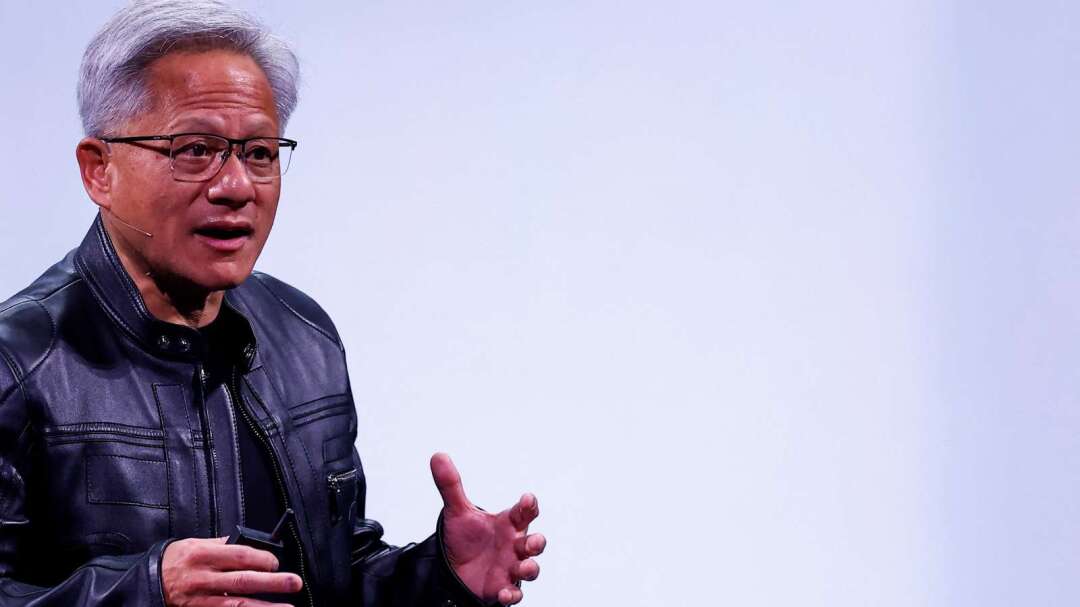
Shortly after the letter’s release, Huang posted his first message since launching his X account in June, stating that NVIDIA had signed the letter. He emphasized that AI will transform every industry, power every company, and be built by every nation.
The post drew attention not only for its content but also for Huang’s timing and approach: the CEO of a trillion-dollar company with over 83,000 followers chose his very first post not to announce a new product, financial results, or chip capacity, but to fully commit to the principle that open models are essential.
Notably, this wasn’t the only related open letter this month. On July 22, another letter initiated by the Little Tech Association and co-signed by nearly 200 Silicon Valley startups took a more direct stance, explicitly opposing a U.S. ban on Chinese open-source models.
Compared to Microsoft’s policy-focused and broad-appeal letter, this startup-led letter was more confrontational and narrowly focused: do not ban Chinese open-source models.
Both letters were triggered by the same event—the release of Moonshot AI’s open-source model Kimi K3.
Kimi K3 as the catalyst, challenging the U.S. assumption of 'closed-source performance superiority'
On July 16, Moonshot AI, a Chinese AI startup, released Kimi K3, an open-source model with 2.8 trillion parameters.
Reports indicate that Kimi K3 outperformed frontier models from Anthropic and OpenAI in front-end coding arena benchmarks, approaching the performance of the most advanced U.S. closed-source systems—while its API pricing was only one-third to one-fifth of its competitors’.
This development challenged a long-standing assumption in the U.S. AI industry: that open-source models inherently have lower performance ceilings than closed-source ones.
After the news broke, discussions emerged within the Trump administration about potentially banning Chinese open-source AI models. Dean Ball, OpenAI’s newly appointed Head of Strategic Futures, publicly suggested the government should "create massive regulatory risk around Chinese open-weight models." Investor David Sacks criticized the move as "regulatory capture disguised as national security."
NVIDIA’s business calculus: the more open-source thrives, the greater the chip demand
Analysts suggest that while Huang’s support for open-source AI may appear ideologically driven, from a business perspective, NVIDIA’s interests align closely with the open-source ecosystem.
There are three main reasons:
First, the more widespread open-source models become, the greater the demand for GPUs.
Each new open-source model means more companies need to fine-tune, deploy, run inference, and customize—driving up demand for computing power.
In contrast, if the market is dominated by a few closed-source models, most computing demand would be concentrated among a small number of providers. This would not only centralize procurement but also limit NVIDIA’s growth potential and pricing power in the broader market.
Second, "sovereign AI" has become a key strategy NVIDIA is actively promoting.
An increasing number of countries want to build local AI capabilities using domestic data to create large language models tailored to their needs—efforts that largely rely on open-source models, fine-tuned with local data.
Huang’s recent social media comments about "achieving AI sovereignty" are not just ideological statements but reflect NVIDIA’s strategic direction in expanding globally.
Third, NVIDIA does not want the rules of the AI market to be entirely dictated by closed-source model providers like OpenAI and Anthropic.
In recent years, some closed-source AI companies have advocated for stricter export controls and regulatory regimes. If such regulations become more stringent, the primary beneficiaries would be the few platforms holding advanced closed-source models. In contrast, companies like NVIDIA, Meta, and others embracing the open-source ecosystem would face greater development constraints.
OpenAI and Anthropic absent from signatories—factions emerge
Notably, OpenAI and Anthropic are absent from the list of 25 signatories.
Both companies have previously stated their positions: OpenAI’s Chief Strategy Officer Jason Kwon has repeatedly warned in congressional hearings that open-source models could be exploited by "adversarial nations." Anthropic CEO Dario Amodei also favors stricter export controls on model weights.
Thus, a three-way rivalry has emerged within the U.S. AI industry:
- The closed-source camp, led by OpenAI and Anthropic, supports regulation to protect their technological and commercial moats.
- The open-source camp, led by Meta, NVIDIA, Microsoft, and hundreds of startups, opposes restrictions to preserve existing business models and market space.
- The government hawk faction seeks to limit the spread of Chinese open-source models under the guise of "national security."
The battle over openness will shape the global AI ecosystem
Analysts note that the repeated emphasis on "American AI leadership" in the open letter reflects a deeper concern: the rise of Chinese open-source AI models like Kimi K3, DeepSeek, and Qwen is threatening U.S. technological dominance.
FACT BOX
- Source: PR Times
- Category: News
- Organizations: Meta / IBM / Palantir
- Products / services: GPU