The two pillars that have sustained repeated highs in U.S. equities—artificial intelligence (AI) investment and expectations of de-escalating geopolitical risks—unexpectedly failed at the same time last week. Rising U.S.-Iran tensions pushed oil prices higher, reigniting inflation and Federal Reserve (Fed) rate hike concerns. Meanwhile, earnings reports from Alphabet (GOOGL-US) and Tesla (TSLA-US) revealed that investor patience with massive AI-related capital expenditures is wearing thin.
According to Business Insider, the recent market volatility in U.S. stocks has largely revolved around two key themes: whether the AI investment boom can be sustained, and how the Iran conflict impacts geopolitical risk.
In the past, these two forces often offset each other. When chip giant earnings fell short of expectations, a de-escalation in U.S.-Iran tensions would typically stabilize market sentiment, allowing indices to consolidate near record highs.
However, last week’s “something’s gotta give” scenario failed. AI concerns and war risks erupted simultaneously, creating a dual negative shock that hit Wall Street with one of its most intense sell-offs in recent weeks.
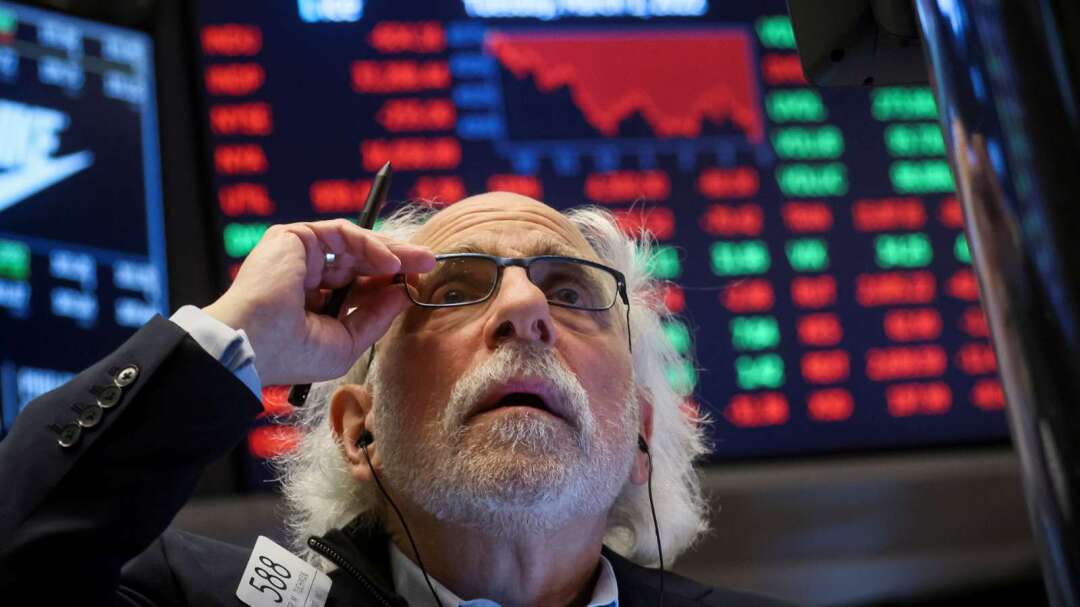
On the 23rd, the S&P 500 closed down 1.2%, the tech-heavy Nasdaq 100 plunged nearly 2%, and the so-called 'Magnificent Seven' tech giants—highly tied to AI—collectively dropped over 4%, becoming the epicenter of the downturn.
Overall, this event reflects a simultaneous reversal in two key market drivers, generating strong downward pressure that pushed equities lower. In a way, it serves as a real-world case study of the stock market’s 'worst-case scenario'.
The resurgence of the Iran conflict has pushed oil prices higher, reigniting inflation and rate hike concerns.
Last week, crude oil prices, after briefly retreating to pre-war levels, surged past $100 per barrel as U.S.-Iran tensions reignited. Market concerns about rising inflation have intensified. Investors are particularly worried about the potential impact on global energy supply and prices if the Strait of Hormuz remains blocked long-term.
Rising inflation expectations have led markets to front-load bets on Fed rate hikes. Higher interest rates are traditionally seen as a drag on equity valuations, making this a key factor behind last week’s sharp market weakness.
Analysts note that future market direction will depend heavily on diplomatic progress between the U.S. and Iran. With investors highly anticipating a peace deal, any breakthrough in negotiations could quickly be reflected in market prices.
On a positive note, Axios reported on Saturday (25th) that Trump ordered the U.S. military to pause strikes on Iran on Friday (24th), ending nearly two weeks of almost daily airstrikes.
The report stated that for the past two weeks, Trump had been approving military attack plans each afternoon, with operations executed within hours.
However, on the 24th, he received a similar plan but held off, instead instructing troops to delay the strike. It remains unclear whether this was a one-off decision or a signal of a policy shift.
At the same time, the AI investment boom is being re-evaluated by the market, with investors increasingly demanding returns.
Fueled by the AI trend, tech giants have poured massive investments into data centers and computing infrastructure, but market patience appears to be fading.
Recent earnings from Alphabet and Tesla show that even with strong operational performance, rising capital expenditures can trigger investor sell-offs.
On the 23rd, Alphabet’s stock fell 7% after raising its annual capital expenditure forecast, with the market overlooking its strong profits and AI cloud growth. Tesla’s shares plunged 15% due to increased investment spending and weaker-than-expected profits.
Analysts point out that next week, Meta (META-US), Microsoft (MSFT-US), and Amazon (AMZN-US)—major players in AI infrastructure—will release earnings. Market focus may shift beyond revenue and profits to whether these companies continue expanding capital spending. If tech giants maintain high AI investment levels, it could trigger a new wave of corrections in AI-related stocks.
FACT BOX
- Source: PR Times
- Category: News
- Organizations: Alphabet / Tesla / Meta