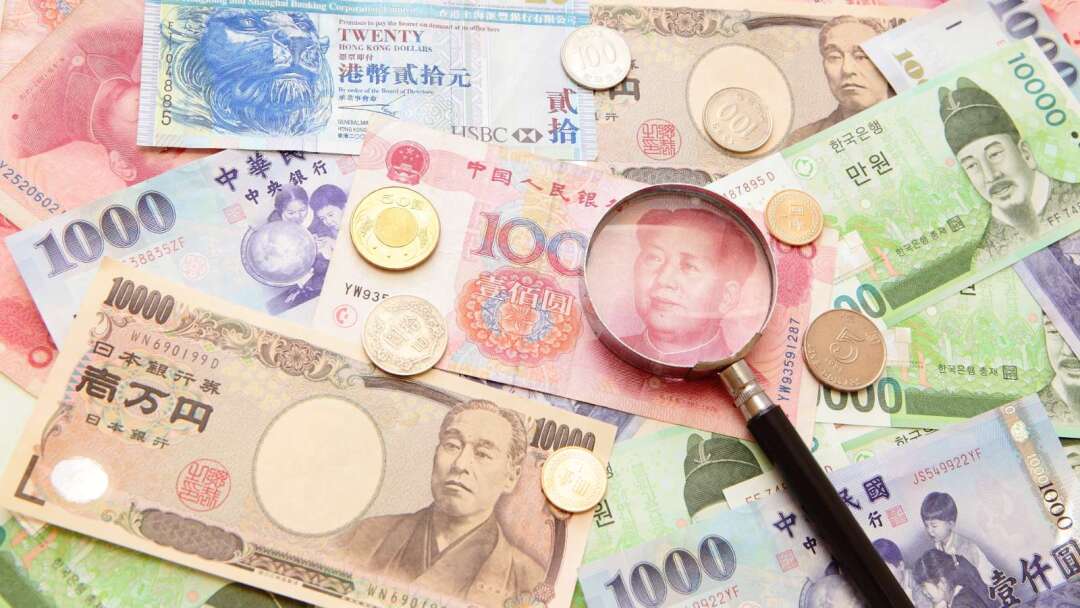
On the 28th, stock markets in South Korea, Japan, and Taiwan all experienced significant declines as foreign capital withdrew. The New Taiwan Dollar depreciated by 1.5 units against the US Dollar, breaking the 32.4 mark. However, exporters increased their selling of foreign currency at the end of the month, and the central bank intervened to stabilize the exchange rate, bringing the depreciation to 7.9 units, with the final exchange rate at 32.384. The total transaction value in the Taipei and Yuanta foreign exchange markets reached 25.58 billion US dollars.
Although oil prices have fallen significantly, news of a breakthrough in DUV technology in China's semiconductor industry put pressure on US chip stocks, leading to panic selling in the Taiwan Stock Exchange. The market dropped 2069.19 points during trading, marking the fifth-largest single-day drop in history. The final closing price was 41603.36 points, down 2030.83 points, or 4.65%. Foreign investors sold off 874.85 billion NT dollars worth of Taiwan stocks.
The New Taiwan Dollar opened at 32.33 against the US Dollar. After a surge in US Dollar buying, the lowest point during trading was 32.455. However, exporters had routine end-of-month foreign currency selling needs, and the central bank increased its defensive measures, leading to a narrowing of the depreciation. The final exchange rate was 32.384, down 7.9 units.
Observing the performance of major currencies today, according to the central bank's statistics, the US Dollar Index rose by 0.25%. Except for the South Korean Won, which appreciated by 0.69%, other Asian currencies depreciated. The New Taiwan Dollar depreciated by 0.24%, the Singapore Dollar by 0.22%, the Japanese Yen by 0.15%, and the Chinese Yuan by 0.01%.
FACT BOX
- Source: PR Times
- Category: News