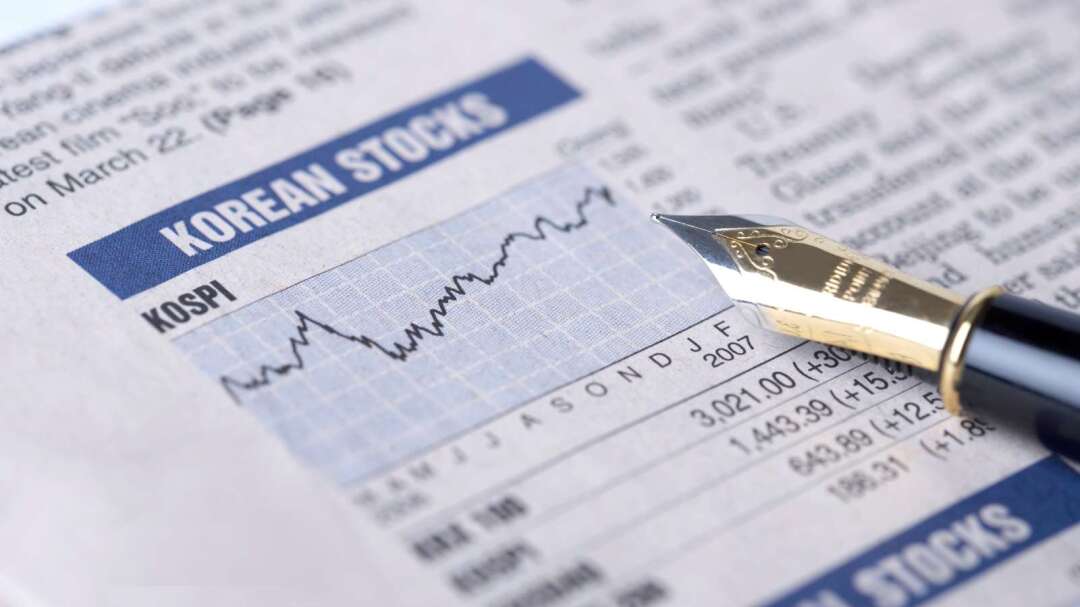
South Korea's stock market has recently faced epic volatility, and as the market undergoes a sharp correction, investor psychology has undergone a significant reversal—from the first-half 'fear of missing out' (FOMO) to the current 'joy of missing out' (JOMO).
Data shows that the KOSPI index plunged 10.76% on Tuesday (28th), briefly falling below the 6,000-point mark during trading. This represents a 33% drop from its all-time high of 9,063.84 points reached last month. The KOSDAQ index also hit its lowest level since April last year on the same day. So far this year, South Korea's market has triggered the circuit breaker mechanism eight times, accounting for more than half of all historical triggers.
On the individual stock front, semiconductor bellwethers Samsung Electronics and SK Hynix have corrected 31% and 38% respectively from their peaks. According to Korea Investment & Securities, as of the 27th, approximately 42% of Samsung investors and 57% of SK Hynix investors are in a loss position.
As the market declines, capital is rapidly exiting. Investor escrow funds (idle cash) have decreased by about 31 trillion won from last month's peak, dropping to a five-month low. Margin trading loan balances have also contracted simultaneously, indicating that leveraged market activity is cooling down.
This market trend has directly triggered a psychological shift. Author Kim Seung-bum noted that when the KOSPI index was approaching the 10,000-point mark, investors were gripped by anxious FOMO. However, with recent sharp price declines, the market has embraced JOMO sentiment—rejoicing in not having entered the market. A young netizen shared that while they once envied friends who profited from investments, they now feel 'not buying stocks was the real win' upon seeing friends陷入 financial distress due to the market crash.
Institutional and analyst views are divided. Facing extreme pessimism, opinions within the securities industry vary:
Contrarian view: Lee Min-gun, a researcher at Korea Investment & Securities, believes this extreme pessimism could be seen as a 'contrarian buy' signal. If the selling pressure subsides, even minor positive news could trigger a rebound.
Buy-the-dip strategy: Morgan Stanley analyst Joseph Moore suggests viewing this weakness as a buying opportunity, forecasting that memory semiconductor shortages will persist and drive price increases in the third quarter.
Bullish outlook: DS Securities argues that even under the worst-case scenario, the KOSPI remains undervalued, and has therefore raised its second-half target price to 9,000 points.
FACT BOX
- Source: PR Times
- Category: Survey