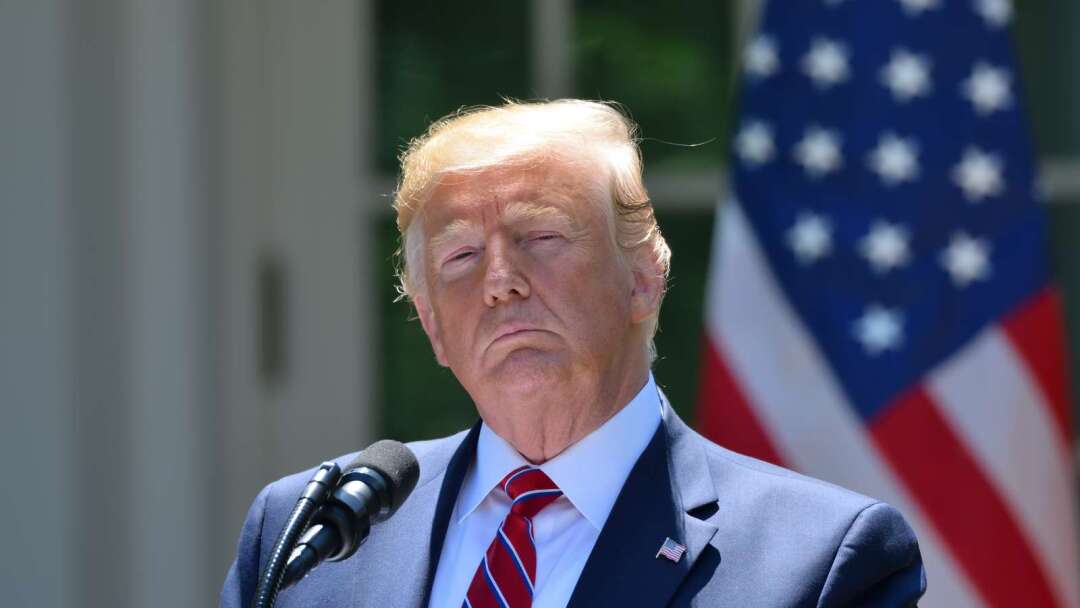
Tensions in the Middle East have escalated again after a brief pause in hostilities between the United States and Iran. On Wednesday (29th), President Trump stated that the US would take strong retaliatory action after Iran launched ballistic missiles at US forces stationed in the Middle East, vowing that Iran would receive a 'devastating strike'.
According to US Central Command, the Iranian Islamic Revolutionary Guard Corps launched multiple ballistic missiles from within Iran late Tuesday (28th) US time, attempting to surprise US military personnel in the Middle East. However, all incoming missiles were intercepted, and no US casualties were reported.
During an interview with Fox News, Trump said US forces had only minutes to react and intercept the missiles, and emphasized that the US would launch a fierce attack against Iran in response.
US Central Command did not disclose the specific targets of the missile attacks. Axios, citing US officials, reported that the intended target may have been a US military base in Jordan.
Shortly before and after Iran's missile launches, US and Saudi Arabian forces conducted a joint military operation in eastern Iraq. US Central Command stated that the operation destroyed multiple logistical and weapons facilities belonging to terrorist organizations, in response to over 30 drone attacks carried out by Iran-backed armed groups over the past three days.
The Saudi Ministry of Defense confirmed that the military operations were coordinated with US Central Command. Saudi Arabia emphasized that it has no intention of escalating the conflict but will respond to any attacks.
Earlier, the Saudi government stated that Iran-backed armed groups had launched drones from Iraq, attempting to attack Saudi oil facilities.
The Iran-backed Iraqi Popular Mobilization Forces reported that the airstrikes killed at least 20 members and injured 32 others.
The brief de-escalation between the US and Iran has ended as Iran launched missiles again, rapidly reversing the temporary calm. International oil prices surged, ending three consecutive days of declines. Brent crude futures rose over 7%, reclaiming the $90 per barrel mark.
Reuters previously reported, citing senior Iranian officials, that Tehran had indicated it would suspend military operations if the US ceased its attacks.
The New York Times reported that Trump had previously paused expanding attacks on Iran, partly due to concerns over dwindling stockpiles of Patriot interceptor missiles and other air defense munitions deployed in the Middle East. However, Trump denied that US forces were facing ammunition shortages.
Maritime security in the Red Sea is also back in focus. The UK Maritime Trade Operations office reported that the captain of an oil tanker heard an explosion while transiting the southern Red Sea, though authorities have not yet disclosed the cause or further details.
It remains unclear whether this incident is linked to Houthi forces. The group claimed last week to have attacked two Saudi oil tankers, prompting Saudi Arabia to retaliate.
The Bab el-Mandeb Strait is a critical maritime passage connecting the Red Sea and the Gulf of Aden, serving as a key export route for Saudi Arabia to bypass the Strait of Hormuz when shipping crude oil. Market analysts warn that if shipping through the Bab el-Mandeb is disrupted, crude oil exports will be further constrained, exacerbating supply risks already caused by tanker attacks in the Strait of Hormuz.
FACT BOX
- Source: PR Times
- Category: News