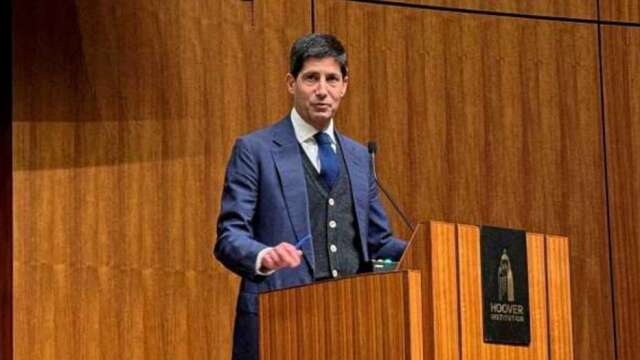
The U.S. Federal Reserve (Fed) is scheduled to announce its monetary policy decision at 2:00 PM Eastern Time on Wednesday (29th), which is 2:00 AM Thursday in Taiwan. The decision is widely expected to keep interest rates unchanged, marking the fifth consecutive meeting with the federal funds rate target range held at 3.50–3.75%. However, analysts warn that amid inflationary pressures triggered by former President Trump’s military posture toward Iran, some Federal Open Market Committee (FOMC) members may cast dissenting votes advocating for a rate hike—drawing significant attention to internal policy disagreements.
According to the CME Group’s FedWatch tool, most investors anticipate the Fed will maintain the current rate for the fifth straight time. Yet, market bets on a rate hike have been steadily increasing. Although U.S. June consumer prices rose 3.5% year-on-year—a slowdown—analysts expect inflation could rebound due to oil price volatility caused by Trump’s Iran policy. Escalating Middle East tensions have further heightened uncertainty.
One reason this meeting is particularly difficult to predict is that Chair Kevin Warsh has declined to publicly share his economic outlook. This is part of his broader strategy to reform Fed communication by reducing forward guidance—preemptive signals about future policy moves.
Gregory Daco, Chief Economist at EY-Parthenon, said: 'This meeting is unusual because we have almost no insight into what the Fed Chair truly thinks right now.'
Inflation Patience Wearing Thin
Since taking office, Warsh has repeatedly emphasized in public remarks that the Federal Open Market Committee (FOMC) is committed to restoring price stability, though he has not specified how or when action will be taken.
Daco said: 'Other policymakers are gradually losing patience with inflation. If inflation doesn’t return to around 2% soon, a majority—or nearly all—officials are ready to act.'
The Fed held its previous meeting six weeks ago. Since then, several officials have voiced growing concerns about persistently high inflation, which has exceeded the Fed’s 2% long-term target for over five years.
For example, Fed Governor Christopher Waller stated on July 13: 'The Fed must be prepared to tighten monetary policy to avoid a repeat of the inflation失控 seen from 2021 to 2022. Simply staring down inflation and hoping it fades on its own is not an option.'
Potential for Dissenting Votes
Warsh previously said he wanted FOMC meetings to feature a 'good family fight'—a healthy internal debate—and this week’s meeting may deliver exactly that.
Diane Swonk, Chief Economist at KPMG, said: 'I don’t expect a rate hike this time, but I do expect dissenting votes. Even though the chair has changed, the Fed’s veteran officials are increasingly worried about the economic shifts this year.'
Swonk believes the 'hawkish' faction within the Fed—those advocating rate hikes to combat high inflation—is growing. 'The Fed’s hawkish core isn’t just more resolute—it’s also expanding in size.'
June’s temporary cooling in inflation has given policymakers some breathing room, but prices could rise again. Swonk forecasts the Fed will still raise rates twice later this year.
She notes that high inflation is highly 'erosive,' hitting low-income households hardest, while high-income consumers remain resilient. 'Inflation hurts those who can least afford it, and this pressure is gradually spreading across more consumer sectors.'
U.S. inflation is being driven not only by tensions with Iran but also by lingering pandemic effects, the Russia-Ukraine war, and the erratic tariff policies of former President Trump. Swonk said the Fed wants to act quickly before households’ and businesses’ inflation expectations spiral out of control. 'What’s truly concerning is that a series of shocks are beginning to form a “muscle memory” for companies to raise prices—and this is exactly what the Fed wants to avoid most.'
FACT BOX
- Source: PR Times
- Category: News
- Organizations: EY-Parthenon / KPMG