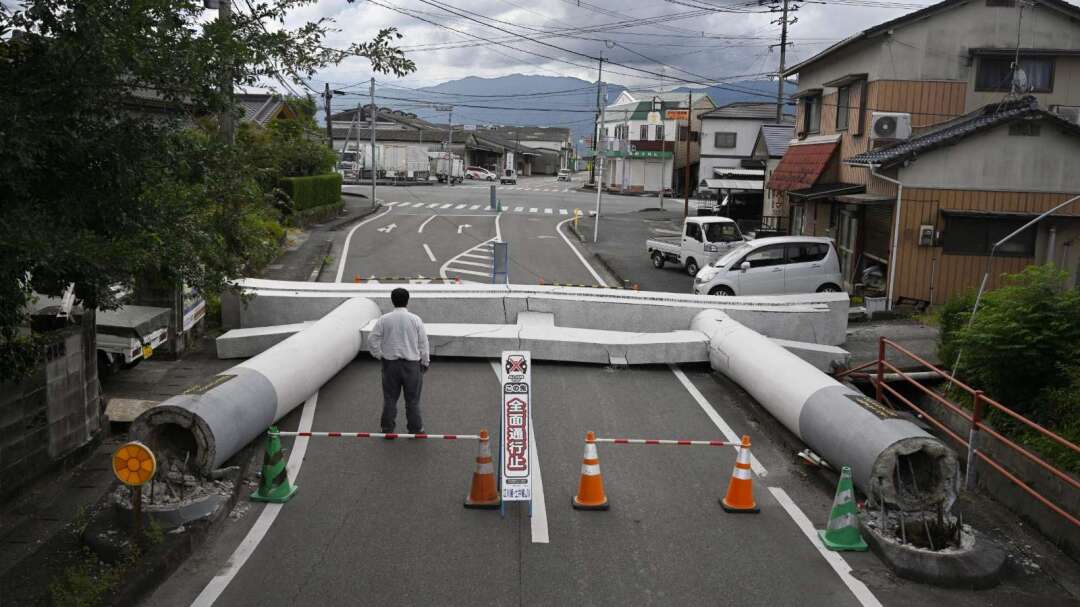
A magnitude 7.1 earthquake struck Kumamoto Prefecture, Japan, on Tuesday (28th), reaching the highest seismic intensity level in Japan—'Shindo 7'. The Japan Meteorological Agency briefly issued a tsunami warning, drawing significant attention from the global semiconductor industry and capital markets. Kumamoto is a key hub for semiconductor manufacturing, hosting foundries, equipment suppliers, and critical material providers, raising concerns about potential disruptions to the global supply chain.
Kumamoto has developed a robust cluster for automotive semiconductors, including TSMC's (2330-TW) joint venture (JASM), Sony's image sensor production site, Renesas Electronics, and Mitsubishi Electric—core players in the sector.
In addition to manufacturing plants, the region hosts key equipment suppliers such as Tokyo Electron (TEL), RORZE, and Horiba, as well as major material firms including Fujifilm, Tokyo Ohka Kogyo, and Shin-Etsu Chemical. The high concentration of semiconductor-related industries makes Kumamoto a critical node in the global supply network.
Following the earthquake, companies immediately activated emergency response protocols and implemented preventive shutdowns. According to publicly available information, personnel evacuations have been completed across most facilities in Kumamoto, with no reports of casualties or major structural damage to factory buildings.
TSMC's facility in Kikuyo Town recorded a seismic intensity of 'Upper 5'. A company spokesperson stated that the top priority is equipment inspection and risk assessment, and it is currently impossible to accurately estimate the duration of production disruption.
Sony reported that its facilities, designed with high-level seismic resilience, remain structurally stable.
In addition to TSMC and Sony, Renesas Electronics, Mitsubishi Electric, and Tokyo Electron have all announced temporary shutdowns for safety inspections. Tokyo Electron explicitly stated it would suspend all operations on the 29th to ensure system and equipment safety.
While market anxiety over semiconductor supply chain disruptions is rising, multiple industry experts note that Kumamoto's semiconductor facilities were built with extremely high seismic standards due to the region's frequent seismic activity. Manufacturing equipment is designed with high resilience.
Insiders indicate that the current shutdowns are primarily preventive inspections aimed at ensuring the safety of precision processes and product quality. Recovery and restart are expected to take approximately 3 to 7 days. While short-term production schedules will be affected, the overall supply chain impact is expected to be limited. The industry is accelerating coordination for resumption of operations to minimize downstream capacity impacts.
FACT BOX
- Source: PR Times
- Category: News