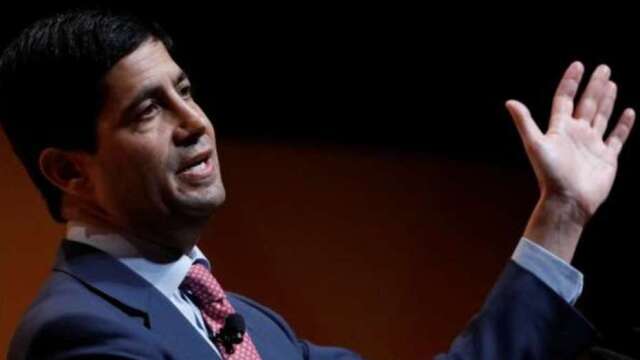
Bob Michele, Global Head of Fixed Income and Chief Investment Officer at JPMorgan Asset Management, said the three dissenting votes during the Federal Reserve's (Fed) decision to hold interest rates steady on Wednesday were particularly significant, indicating that pressure to raise rates may persist.
"The three dissenting votes are more important in this statement," Michele said. "It shows they are beginning to move toward a tightening policy direction."
The Federal Open Market Committee (FOMC) voted 9 to 3 to maintain the target range for the federal funds rate at 3.50%-3.75%. However, in a bland, five-paragraph statement from the FOMC, three officials voted in favor of a rate hike: Lorie Logan, President of the Dallas Fed; Beth Hammack, President of the Cleveland Fed; and Neel Kashkari, President of the Minneapolis Fed. They opposed the decision and advocated for a 25-basis-point rate increase.
Nick Timiraos, a Wall Street Journal reporter known as the "Fed whisperer," noted this is the first time since 2016 that the Fed has seen three dissenting votes in the same direction during a single meeting.
Jim Bianco, President of Bianco Research, stated, "The dissent is the most important thing," explaining that with new FOMC Chair Kevin Warsh deliberately avoiding forward guidance, the traditional post-decision press conference now reflects more of the chair’s personal views than the full FOMC consensus.
Bianco added that amid unprecedented criticism from former President Trump, Fed policymakers are using dissenting votes to signal their commitment to policy independence.
All three dissenting votes came from Federal Reserve Bank presidents, while the Fed Governors on the FOMC unanimously aligned with Chair Warsh, supporting the current hold on rates.
Diane Swonk, Chief Economist at KPMG, suggested some Fed Governors may privately support future rate hikes, stating, "These dissenting opinions didn’t come out of thin air."
Following the rate decision, U.S. equities saw increased volatility, U.S. Treasury yields quickly dropped to intraday lows, then rebounded to near pre-announcement levels. The 10-year Treasury yield settled around 4.63%.
Bianco noted that with Warsh limiting Fed communication, markets may be building their own interpretive frameworks. "There’s an old saying I always quote: when the Fed starts to panic, bond traders can relax—or stop panicking. Perhaps a bit of panic from the Fed could help the bond market finally stop pushing yields higher," he said.
FACT BOX
- Source: PR Times
- Category: News
- Organizations: JPMorgan Asset Management / Bianco Research / KPMG