Recently, selling pressure has surged in AI concept stocks, causing global tech equities to retreat in tandem, with Taiwan’s stock market also experiencing volatility. Many investors are beginning to worry whether the AI boom is cooling down or even entering a bear market. Chyun-Heng Buy Fund stated today (29) that this market correction primarily reflects a reassessment of AI infrastructure financing models and capital costs, not a weakening of AI demand. Rising credit risks do not mean the industry’s growth momentum has disappeared, nor are they sufficient to conclude a reversal in AI’s long-term trend. In the face of short-term fluctuations, investors should focus on fundamentals such as corporate earnings, policy direction, and industry demand, rather than exiting the market due to sentiment and missing rebound opportunities.
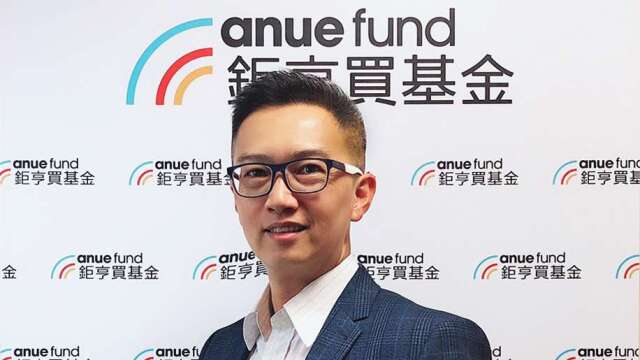
"What the market fears is not that AI lacks a future, but that AI is now undergoing stricter financial scrutiny," said Chang Jung-Jen, General Manager of Chyun-Heng Buy Fund. Recent market attention has focused on reports that NVIDIA may provide financing guarantees for OpenAI’s data center construction and chip procurement, raising concerns about corporate debt capacity and credit risk, and triggering profit-taking in tech stocks. However, this reflects the market’s growing scrutiny of capital efficiency in AI investments, not a sudden weakening of AI demand. More importantly, AI has been elevated to a strategic industry critical to U.S. economic competitiveness and national security, and policy support remains unchanged.
Chang pointed out that as long as AI infrastructure development continues, the ultimate beneficiaries will be supply chain players with key technologies—and Taiwan is a core hub in the global AI industry. From advanced process technologies and advanced packaging to AI servers, networking equipment, and key components, Taiwanese firms hold leading advantages. As U.S. tech giants continue investing in data center construction and countries worldwide accelerate the expansion of computing and energy infrastructure, related investments will eventually flow back into hardware demand, sustaining growth momentum for Taiwan’s supply chain. The long-term foundation of Taiwan’s stock market remains solid.
During every sharp market correction, investors often consider, "Should I sell first and re-enter later?" But Chang emphasized that what truly impacts long-term performance is not short-term declines, but exiting in panic and missing the subsequent rebound.
Chyun-Heng Buy Fund also conducted a backtest using S&P 500 historical data, finding that investors who stayed fully invested achieved a cumulative return of 333.4%. Those who moved to cash when the VIX exceeded 33 saw returns drop to 204.2%, and those who exited when VIX surpassed 20 achieved only 105.4%. This shows that repeated market timing often leads to missing long-term returns more than consistent market participation.
"Many investors worry: What if I just bought at the peak?" Chang said. What truly widens the gap in long-term performance is not the entry timing, but the ability to consistently accumulate positions during market corrections. Backtesting the "Super Bottom King" strategy, Chyun-Heng Buy Fund found that even when entering at market peaks—such as the 2000 dot-com bubble, the 2007 financial crisis, the 2020 pandemic, and the 2022 rate hike cycle—performance over 1, 3, and 5 years outperformed both panic-driven stop-loss and simple dollar-cost averaging. This demonstrates that disciplined, systematic buying beats timing the market.
Chang stated that the AI industry is transitioning from high-speed growth to a new phase emphasizing capital efficiency, but its long-term trend remains unchanged. Facing market volatility, rather than spending time guessing entry and exit points, investors should establish disciplined investment habits. Using strategies like "Super Bottom King" to automatically increase exposure during market pullbacks helps diversify entry costs and replace emotional decisions with disciplined investing—offering a better chance to capture the long-term growth opportunities driven by AI.
FACT BOX
- Source: PR Times
- Category: News
- Organizations: OpenAI