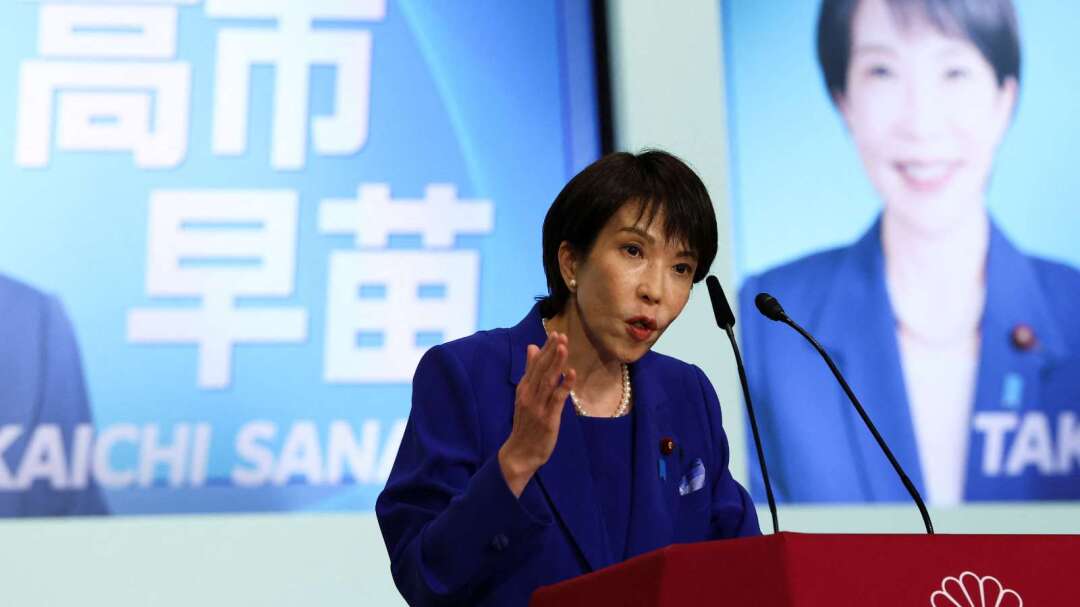
Japanese ruling party officials revealed on Thursday (30th) that Prime Minister Takashi Koshi has decided to temporarily reduce the consumption tax rate on food and non-alcoholic beverages from the current 8% to 1% starting next April. This decision symbolizes that Prime Minister Koshi is pushing forward with her important campaign promise after experiencing several months of political deadlock.
LDP Secretary-General Suzuki Shunichi stated that the government will also provide subsidies to eligible households to further reduce their burden of purchasing food. He emphasized that the government has a strong determination to return the tax rate to the current 8% level in two years.
Suzuki pointed out that Koshi has stated that she will ensure the financial resources needed for the policy without relying on deficit-issued bonds to maintain market confidence.
This move is expected to boost Prime Minister Koshi's declining approval ratings. After achieving a landslide victory in the February election, as the honeymoon period ended, Prime Minister Koshi's approval ratings began to waver; voters have accumulated a lot of resentment towards the government's excessive focus on non-urgent legislation while being insensitive to the rising cost of living.
Although Suzuki stated that the government will formulate a detailed financial resource plan before formal implementation, the current lack of details may raise market concerns.
Given that Japan's debt-to-GDP ratio is the highest in the world, investors have expressed concerns about whether Prime Minister Koshi's fiscal expansion path is sustainable in the long term.
Senior researcher Jun Uchida of Nomura Research Institute pointed out that although the related benefits will only become apparent in April next year, reducing the consumption tax on food is undoubtedly a big plus for Japanese retailers.
He analyzed that this move will help stimulate domestic demand. If the Middle East situation stabilizes, funds are expected to further flow into Japanese consumer stocks. He said that the market has already begun to show such a trend, and investors are actively looking for investment opportunities other than AI themes.
The Liberal Democratic Party and its coalition partner, the Japan Innovation Party, had promised to accelerate discussions on a plan to reduce the food consumption tax rate to zero for two years before the House of Representatives election in February this year.
However, after retailers reflected that the existing cash register systems could not support a zero tax rate, the government subsequently proposed the idea of reducing the tax rate to 1%.
Koshi originally commissioned a cross-party committee to deliberate on the details of food tax cuts, but after several months of discussion, the committee failed to reach a consensus.
There were disagreements within the committee not only about the financial resources for the tax cut but also about whether a food tax cut was the best way to alleviate price pressures. Some committee members argued that direct cash subsidies would be more efficient.
Before the relevant discussions began, the chairman of the cross-party committee had proposed that the government provide cash subsidies of about 6,000 billion yen (about 37 billion dollars) to low-income households, effectively reducing the food consumption tax for eligible households to zero.
Suzuki stated that Koshi had informed the committee that she believed the chairman's proposed plan was the best approach.
The market's reaction to this widely expected policy announcement was limited. However, as the government has not yet proposed a clear financial plan, amid Koshi's continued push for long-term growth investment plans, increased defense spending, and other high-cost policies, as well as rising debt interest burdens, Japanese government bond yields may still maintain upward pressure.
FACT BOX
- Source: PR Times
- Category: 政策