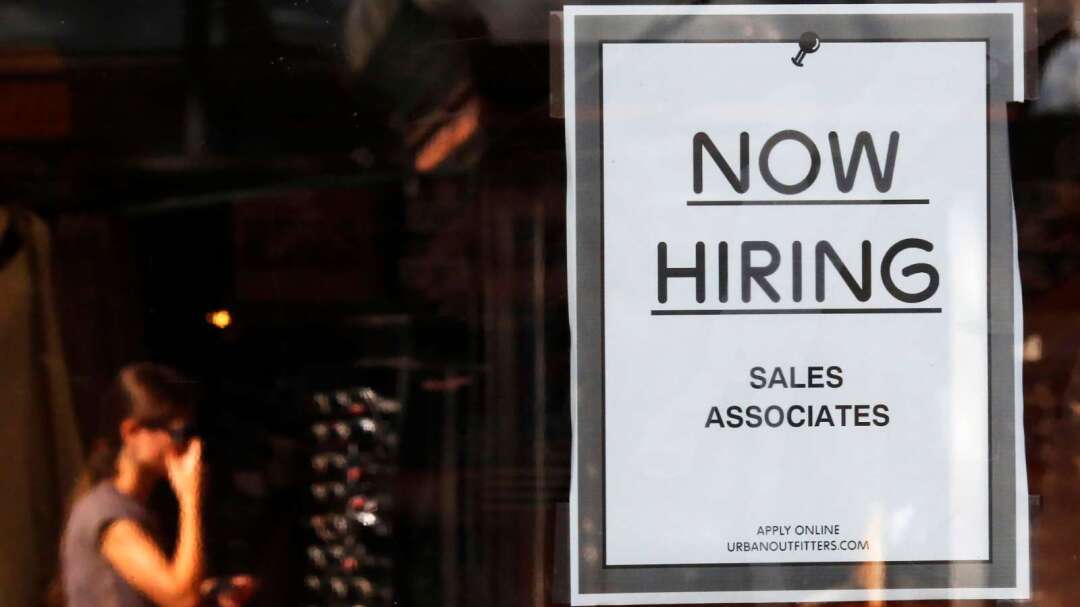
U.S. initial jobless claims increased less than expected last week, continuing to hover near lows not seen since 1969, signaling that while businesses are slowing hiring, they are not engaging in mass layoffs, keeping the labor market broadly stable. However, household savings rates continue to decline, suggesting consumers may be tapping into deposits to cope with persistently high living costs.
The U.S. Labor Department reported on Thursday (30th) that seasonally adjusted initial jobless claims for the week ending July 25 rose by 9,000 to 197,000, below the 200,000 expected by economists surveyed by Reuters. While the number rebounded from the previous week’s near 57-year low, it remains at historically low levels.
U.S. initial jobless claims rose less than expected and continue to hover near 1969 lows (Chart: ZeroHedge)
July data is typically more volatile because automakers historically shut down factories during this period for annual maintenance and production line adjustments. However, General Motors (GM-US) kept most of its assembly plants operating this year, and Ford (F-US) canceled the traditional shutdown at its truck plant, potentially disrupting the government’s seasonal adjustment models.
Continuing claims for the week ending July 18 decreased by 7,000 to 1.782 million. This metric reflects how easily unemployed individuals find new jobs and covers the period used in the government’s July unemployment rate survey.
Top: Initial claims trend, Bottom: Continuing claims trend (Chart: U.S. Labor Department)
Economists describe the current U.S. labor market as being in a 'slow hiring, slow layoffs' state. Companies are reluctant to aggressively hire but are not significantly expanding layoffs, keeping unemployment applications low. The Federal Reserve (Fed) voted 9 to 3 on Wednesday to hold interest rates steady in the 3.5% to 3.75% range, with three officials advocating for a 25-basis-point rate hike.
However, the July unemployment rate still faces upward risks. A survey released this week by The Conference Board shows the share of consumers who view job opportunities as 'plentiful' has dropped to the lowest since February 2021. The June unemployment rate declined from 4.3% to 4.2%, but this was primarily due to some individuals exiting the labor force rather than a clear improvement in employment demand.
Meanwhile, U.S. personal income and consumer spending continue to grow, but household savings rates keep falling, indicating that high prices are forcing consumers to draw down savings to maintain their standard of living. This 'few layoffs, few hires' state temporarily stabilizes the job market but could make job hunting more difficult and weaken the sustainability of future consumer spending.
U.S. personal income and consumer spending continue to grow, but household savings rates keep falling (Chart: ZeroHedge)
FACT BOX
- Source: PR Times
- Category: Survey
- Organizations: General Motors / Ford