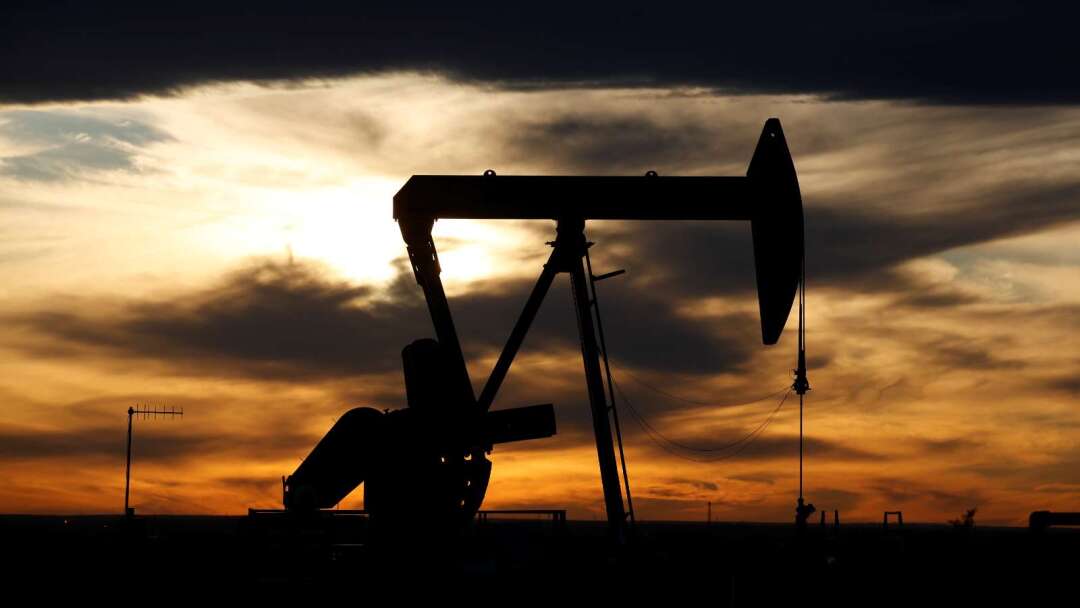
International oil prices swung sharply on Thursday (30th), closing lower as markets digested Saudi Arabia's proposal to establish a multinational maritime defense alliance to enhance shipping security in the Red Sea, while continuing to monitor rising military tensions between the U.S. and Iran, and the uncertain outlook for navigation through the Strait of Hormuz. Oil prices experienced significant intraday volatility before ending in negative territory.
London Brent crude for September futures dropped $1.71, or 1.88%, to settle at $89.03 per barrel, after briefly spiking to $93.31 due to reports of U.S. and Iranian forces attacking military targets. U.S. West Texas Intermediate (WTI) September futures fell $0.87, or 1.03%, to close at $83.59 per barrel, with an intraday high of $85.94.
Saudi Arabia's Ministry of Defense announced it is pushing to establish a Saudi-led multinational maritime defense coalition to strengthen security cooperation in the Bab El-Mandeb Strait, the Red Sea, and the Gulf of Aden. Fourteen countries have already jointly issued a statement supporting the initiative, including Turkey, Pakistan, Egypt, Sudan, and Djibouti.
Markets believe this move could help reduce threats to Red Sea shipping posed by Yemeni rebels. The Iran-backed Houthi movement in Yemen announced last week a naval blockade against Saudi Arabia, threatening to shut down Red Sea shipping lanes—an alternative route critical for Saudi crude exports, especially when the Strait of Hormuz is disrupted.
John Kilduff, partner at Again Capital, said the market broadly believes that once regional tensions ease, a large volume of crude supply will be ready to re-enter the market, thus limiting further significant upside in oil prices.
Meanwhile, Iran and Oman continue negotiations over the management of the Strait of Hormuz. Iranian state media reported that dialogue continues, but senior Iranian officials recently stated they have rejected Oman’s proposal for joint regional management of the strait.
Hamad Hussain, Senior Climate and Commodities Economist at Capital Economics, noted that Oman’s continued talks with Iran suggest there remains hope for the Strait of Hormuz to resume normal navigation. Progress in diplomatic negotiations would help ease tensions in energy markets.
The Strait of Hormuz remains one of the most strategically vital waterways in the global energy market, with about one-fifth of the world’s crude oil and liquefied natural gas (LNG) shipments passing through it. Since February 28, when the U.S. and Israel launched military actions against Iran, the strait has remained the top geopolitical risk for global oil markets.
Tim Waterer, Chief Market Analyst at KCM Trade, said that as long as safe navigation through the Strait of Hormuz cannot be guaranteed, the geopolitical risk premium in oil markets will not disappear. While diplomatic efforts are welcomed by markets, investors must still contend with the reality of ongoing military conflict.
The Middle East situation continues to deteriorate. The U.S. military stated that after Iran launched ballistic missiles at U.S. bases in the Middle East, it conducted retaliatory airstrikes on dozens of Islamic Revolutionary Guard Corps (IRGC) targets inside Iran.
The U.S. military also denied claims by the Iranian Revolutionary Guards that they shot down three F-35 fighter jets and three other military aircraft, emphasizing that recent Iranian attacks caused no losses to U.S. aircraft. Kilduff said this helped somewhat alleviate market concerns about a rapid escalation.
Egypt also confirmed that two natural gas vessels at the Mediterranean port of Damietta caught fire not by accident, but due to drone attacks. Egyptian Prime Minister Madbouly said the government has secured alternative energy supply sources to ensure domestic demand remains unaffected.
Additionally, according to Saudi and regional security officials, the Yemeni Houthi movement this week coordinated with Iraqi armed groups to launch attacks on Saudi Arabia from within Iraq, indicating a higher level of coordination among Iran-aligned militant groups. Targets included key oil facilities in Saudi Arabia’s Eastern Province, one of the country’s most important crude production and export hubs.
Global crude supply also faces other disruptions. Two sources indicated that a tanker at the Black Sea export terminal of the Caspian Pipeline Consortium (CPC) was attacked during loading, causing vessels scheduled for cargo pickup to divert their routes, affecting subsequent export operations.
In Russia, two industry sources said Ukrainian drones attacked Lukoil’s refinery, causing a fire at the Perm refining facility, damaging one crude distillation unit and forcing it to shut down, further impacting Russia’s refining capacity.
Hamad Hussain said that with multiple critical maritime transport chokepoints—including the Red Sea, Strait of Hormuz, and Black Sea—facing simultaneous disruptions, coupled with rapidly declining global crude inventories, international oil prices theoretically have further upside potential, indicating markets remain highly alert to supply risks.
FACT BOX
- Source: PR Times
- Category: News
- Organizations: Lukoil / Caspian Pipeline Consortium (CPC)