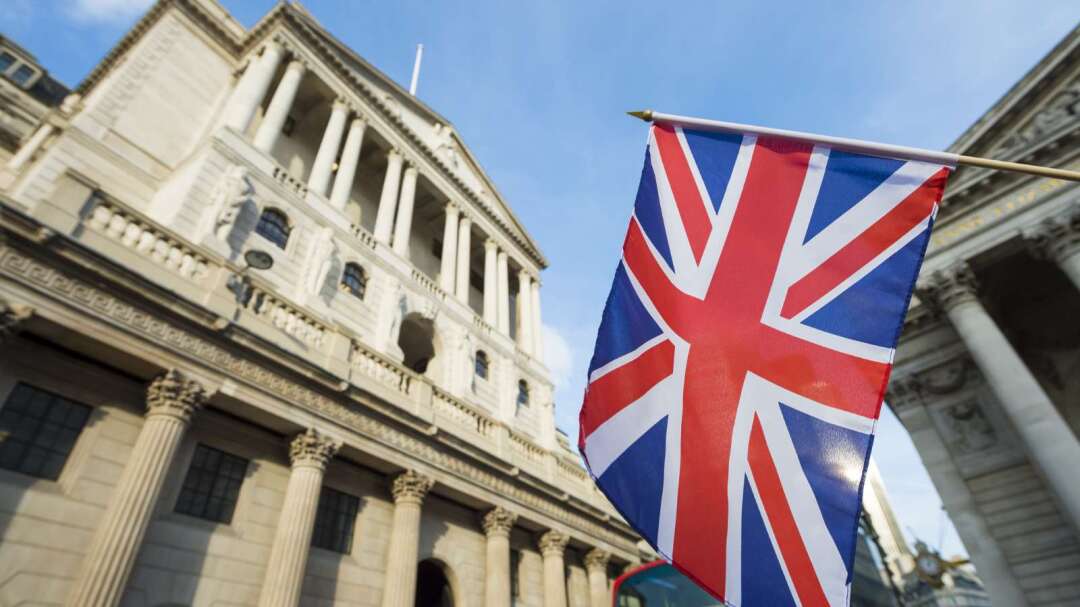
Amid global instability triggered by the Iran war, the Bank of England is expected to announce on Thursday that it will hold its benchmark interest rate at 3.75% for the fifth consecutive time. Although escalating Middle East tensions have intensified inflationary pressures, analysts broadly believe the central bank will maintain a cautious wait-and-see stance given the highly uncertain economic outlook.
The current economic environment is deeply affected by the Iran war, with the Strait of Hormuz closed for five months, causing significant fluctuations in global oil and wholesale energy prices. While the UK's inflation rate in June fell to 2.6%, the lowest in 15 months, it remains above the central bank's 2% target.
More concerning is the expected 13% rise in household energy prices in July due to the war, which could further push up short-term inflation figures.
Most economists predict the Bank of England's Monetary Policy Committee (MPC) will vote 7 to 2 to keep rates unchanged. While the US Federal Reserve recently held rates steady, internal voices favoring a rate hike remain strong; the European Central Bank, meanwhile, raised rates in June.
Bank of England Governor Andrew Bailey previously indicated that the anticipated rate-cutting plan has been temporarily shelved due to the war. However, members such as Chief Economist Huw Pill are seen as potential voters in favor of a rate hike.
Maintaining the current rate is a relief for new Prime Minister Andy Burnham, who has prioritized alleviating the cost-of-living crisis, including measures such as scrapping the household electricity tax. However, market uncertainty has already impacted the mortgage market, with the average two-year fixed mortgage rate rising to 5.62%, the highest in over a month.
For savers, this is good news, as some one-year fixed bonds are now offering returns of up to 4.91%, the highest since the end of 2024.
Markets widely expect the Bank of England to refrain from adjusting rates until the end of 2026, with any rate cuts unlikely before the first half of 2027.
FACT BOX
- Source: PR Times
- Category: News