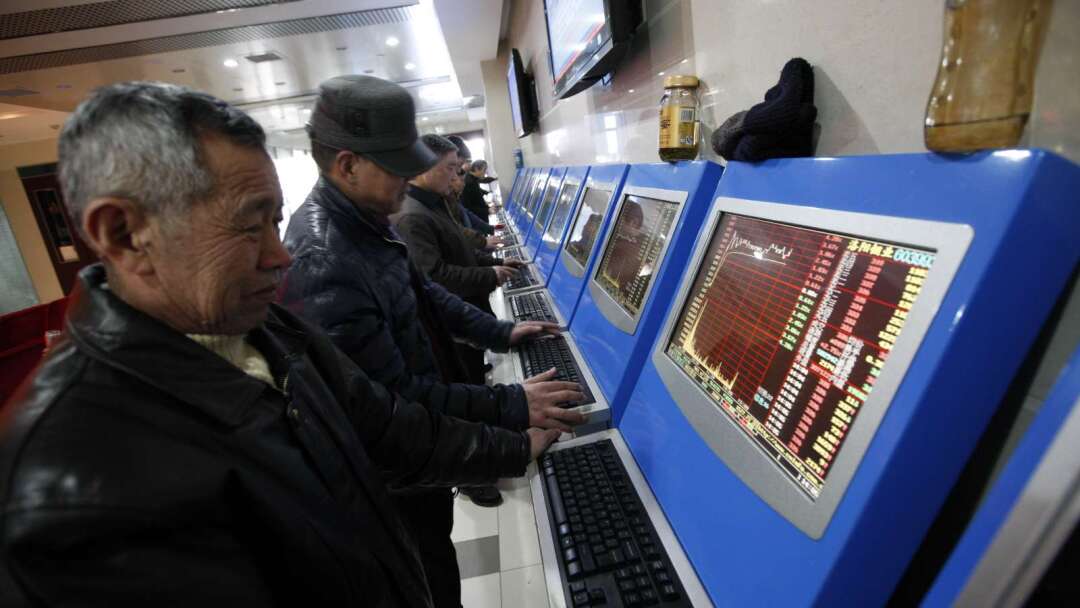
China's three major A-share indices collectively opened lower on the 30th (Thursday), trending downward in early trading. Losses widened in the morning session but gradually recovered in the afternoon, with both Shanghai and Shenzhen markets showing a notable contraction in decline.
The Shanghai Composite Index closed down 0.62% at 3,804.69 points; the Shenzhen Component Index fell 2.73% to 13,285.8 points; the ChiNext Index dropped 3.97% to 3,244.62 points.
Total trading volume on the Shanghai and Shenzhen markets reached RMB 2.3428 trillion, an increase of RMB 46.2 billion from the previous trading day.
Dongwu Securities' strategy team believes that the peak of growth-style stocks is typically determined by the convergence of liquidity expectations and industrial trend turning points. This year indeed marks a global liquidity turning point, as central banks in Japan, Europe, and South Korea enter rate-hiking cycles, and the U.S. Federal Reserve's monetary policy expectations are marginally tightening. The phase of 'more money than goods' has reached the end of this cycle, making it difficult to replicate market dynamics like Q2's 'tech hardware虹吸 (siphoning) from other core stocks'.
However, the AI industry trend has not been fundamentally disproven. In the medium to long term, greater emphasis should be placed on downstream AI segments. The key issues for the next phase will be which companies have stronger user stickiness and ecosystem barriers, and which can better lock in profits through pricing power.
With marginal improvement in funding conditions, upstream hardware sectors may see a divergence and recovery opportunity in the second half of the year. Priority should be given to sectors driven by volume growth and small-cap companies with high supply barriers and no easily replaceable technological alternatives.
Orient Securities believes that with moderately expanding trading volume, the market's bottom zone is becoming clearer. From a technical perspective, new positive signals are emerging in the tech sector.
First, leading stocks have begun to stabilize. The core sentiment driver in the STAR Market is Changxin Technology, recently listed, showing clear characteristics of large institutional capital activity.
Second, market-supporting funds are buying aggressively. Multiple broad-based ETFs have rebounded with increased volume. Both overall ETFs and broad-based ETFs recorded the highest net inflows of the year in July, with particularly active capital inflows in the past week, indicating long-term investors broadly recognize the current index level as a bottom zone, helping to calm panic sentiment.
Overall, the market's most difficult phase of decline is likely coming to an end. Although short-term macroeconomic and industrial headwinds persist, most negative factors are already well reflected in stock prices. Going forward, tech stocks are likely to see new rotational recovery movements.
FACT BOX
- Source: PR Times
- Category: News
- Products / services: ETF