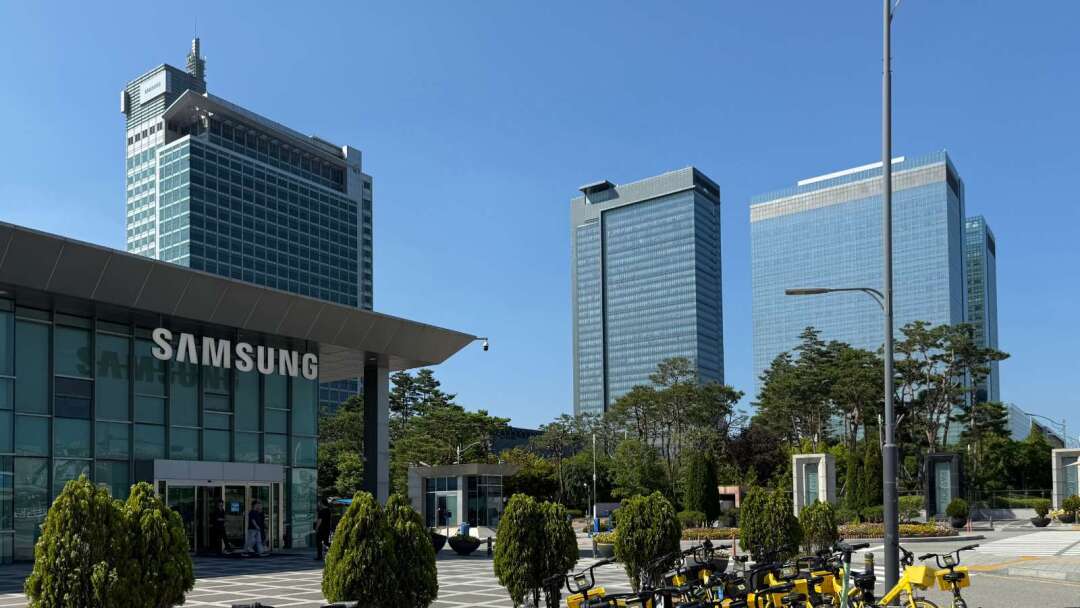
Goldman Sachs (GS-US) hosted a Korean memory industry expert network seminar on July 28 and released the meeting transcript on July 29. Industry experts in attendance generally believe that, driven by sustained demand for AI servers, traditional DRAM prices will remain strongly bullish in the second half of this year. High Bandwidth Memory (HBM) could see significant price hikes next year—potentially even doubling. As the coverage of long-term supply agreements (LTAs) continues to rise, memory vendors' pricing power and earnings visibility are improving simultaneously, leading Goldman Sachs to maintain its Buy rating on Samsung Electronics.
According to the Goldman Sachs transcript, experts forecast that traditional DRAM prices in Q3 2026 will grow by a 'double-digit percentage' compared to the previous quarter, consistent with the recent strong rebound in spot market prices. In Q4, with supply still tight, DRAM prices may again see double-digit sequential growth.
Experts note that there is no significant capacity expansion on the supply side, while demand continues to be driven by AI server deployments, keeping the DRAM market in a supply-constrained state where prices are more likely to rise than fall.
Compared to traditional DRAM, the price outlook for HBM is even more optimistic. Experts believe that as traditional DRAM prices continue to rise, HBM has room for substantial price increases next year—potentially even doubling.
Goldman Sachs forecasts that Samsung Electronics' HBM products will see an 87% increase in average selling price in 2027 compared to the previous year, significantly higher than the 52% average estimated by Bloomberg-aggregated market analysts. This indicates Goldman Sachs is more bullish on HBM supply-demand fundamentals than the broader market.
Goldman Sachs notes that the sustainability of strong HBM pricing hinges on the binding power of long-term supply agreements. Experts state that current LTAs typically include high advance payments, 'take-or-pay' clauses, and early termination penalties, substantially increasing the cost for customers to exit contracts.
Currently, over half of global server DRAM supply volume is already locked in via LTAs, and experts expect this coverage ratio to continue rising. Compared to past economic cycles, the current LTAs are more binding, improving revenue visibility for manufacturers and giving suppliers greater pricing power—supporting Samsung Electronics' future profitability.
Regarding market concerns about Chinese memory capacity expansion, Goldman Sachs cites expert views indicating that although Chinese firms are aggressively increasing capacity, they are unlikely to pose a real threat to global leaders in the short to medium term.
Experts believe Chinese players still lag behind global memory suppliers in process technology, product quality, and production yield. As a result, new capacity may not quickly translate into effective supply, and technological barriers remain difficult to overcome in the near term.
On the other hand, while global memory capacity expansion is expected to outpace historical averages this year, actual supply growth may not increase proportionally. Experts point out that HBM manufacturing consumes more DRAM wafers per unit than standard DRAM, so even if total wafer capacity increases, the growth rate of usable DRAM bits available to the market may remain below historical averages.
Goldman Sachs believes this is a key reason why memory supply remains structurally tight. While capacity appears to be expanding on the surface, actual effective supply is not keeping pace, providing structural support for prices.
On the technology front, the market widely views hybrid bonding as a critical technology for next-generation HBM. However, experts remain conservative about its commercialization timeline.
Experts note that as HBM stacking layers increase, existing packaging bonding technologies will gradually face bottlenecks. However, hybrid bonding still requires considerable time to achieve the yields needed for mass production, making a full-scale replacement of current technologies unlikely in the short term.
Memory manufacturers are expected to simultaneously develop various packaging solutions—including fluxless bonding—while gradually introducing hybrid bonding, rather than making a full transition at once.
Based on these industry outlooks, Goldman Sachs maintains its Buy rating on Samsung Electronics, with a 12-month target price of 480,000 Korean won for common shares and 360,000 won for preferred shares.
Goldman Sachs states that Samsung has made meaningful progress in HBM product development and is expected to enhance shareholder returns, maintaining its strong medium- to long-term investment appeal. However, the firm warns that rapid deterioration in global memory supply-demand dynamics, a sharp decline in smartphone business profitability, or loss of market share in mobile OLED could become significant downside risks to Samsung’s operations and stock price.
FACT BOX
- Source: PR Times
- Category: Survey
- Products / services: DRAM / HBM