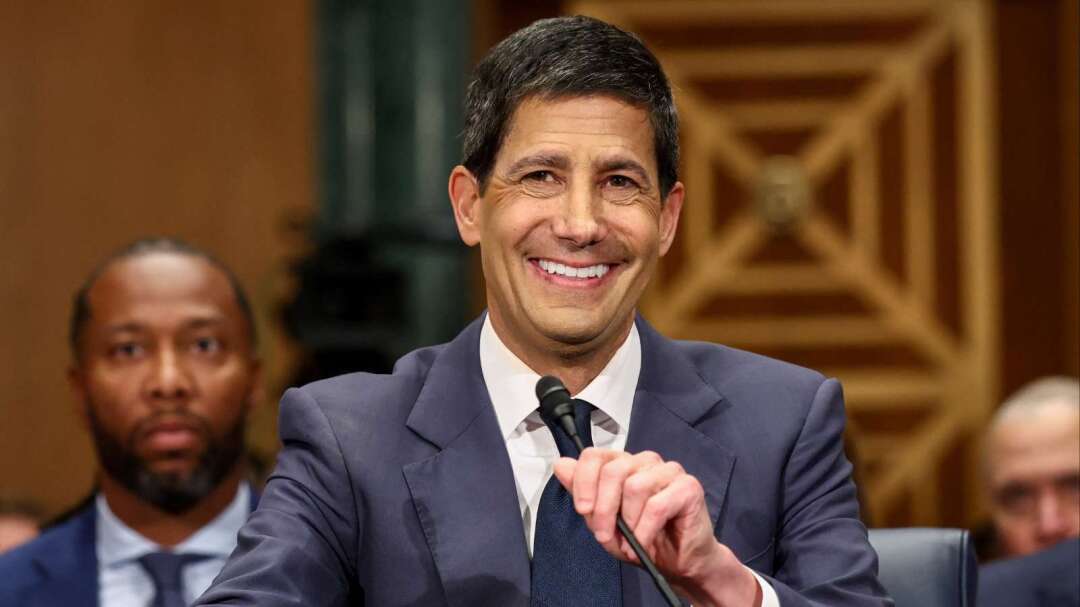
A Bloomberg column points out that Federal Reserve (Fed) Chair Kevin Warsh has repeatedly stressed that inflation has remained above the 2% target for too long and has pledged to restore price stability. Yet, since taking office, he has opted to hold rates steady in two consecutive policy meetings. As tough rhetoric fails to translate into policy action, Warsh’s commitment to defending the 2% inflation target is rapidly losing credibility.
On Wednesday, the Fed voted 9 to 3 to keep interest rates unchanged in the 3.5% to 3.75% range. The U.S. June Personal Consumption Expenditures (PCE) price index is estimated to have risen 3.7% year-on-year, 1.7 percentage points above the Fed’s target, while the unemployment rate stands at just 4.2%. Among the 12 policymakers, three have publicly supported a rate hike, and others have shown hawkish inclinations. Warsh had an opportunity to build consensus, push for a modest rate increase, and establish anti-inflation credibility.
By missing the chance to raise rates, Warsh has also drawn criticism over the Fed’s independence. The column argues that had Warsh raised rates this week, he could have demonstrated resolve against inflation and reduced suspicions of accommodating President Trump. Trump has long advocated loose monetary policy and previously pressured former Chair Jerome Powell to cut rates. Warsh was nominated by Trump, and his inaction now represents a missed opportunity to prove the Fed’s independence.
When pressed by reporters on why tough rhetoric has not been followed by policy action, Warsh stated that officials are spending significant time analyzing data sources, monetary policy strategies, and tools, and exploring reform directions through multiple working groups. He emphasized that the Fed will achieve price stability but cannot do so instantly with a 'magic wand'.
The column counters that markets are not asking Warsh to use magic but to take concrete action against inflation that has persisted for five years. The global economy will not wait for the Fed’s working groups to finish their reports. Warsh cannot simultaneously claim inflation pressures are lasting too long while using policy reviews as an excuse to delay action.
Market reactions highlight that investors are unconvinced. Traders in the swaps market, who had almost certainly priced in a September rate hike, quickly reduced the odds to about 50%. Short-term and long-term inflation expectations both rose, with the 10-year zero-coupon inflation swap rate increasing by 7 basis points in a single day—the largest jump since April 2025. The yield spread between 10-year and 2-year U.S. Treasuries also widened to its largest level in four months.
Abandoning forward guidance has further damaged policy credibility. The column acknowledges that a July rate hike was always a difficult decision, as actual U.S. inflation pressures may not be as severe as official data suggest. The Dallas Fed’s trimmed mean PCE, which Warsh favors, shows an inflation trend of about 2.4% as of May, not approaching the runaway inflation of 2022. Oil price increases driven by U.S.-Iran tensions and chip supply constraints due to AI data center demand may be one-off supply shocks.
The problem is that the global economy has faced successive supply-side shocks in recent years—from the COVID-19 pandemic, Russia-Ukraine war, tariffs, data center demand, to U.S.-Iran conflict. The general public does not distinguish between core inflation and short-term shocks; they simply perceive that the Fed has failed to control prices. Once public confidence in the 2% target erodes, rising inflation expectations could become self-fulfilling.
Warsh has also rejected forward guidance, arguing that revealing future policy directions reduces the Fed’s flexibility. However, past Fed chairs, even without immediate rate changes, used statements to signal potential hikes and stabilize inflation expectations. By voluntarily abandoning this tool and failing to clearly articulate the conditions for a rate hike during press conferences, Warsh has made it difficult for markets to interpret his policy stance.
The column concludes that Warsh seeks to patiently monitor inflation, minimize policy communication to retain maximum flexibility, and maintain public belief in the 2% inflation target. However, these three goals are mutually incompatible under current conditions. Without rhetoric being backed by action or clear guidance, the central bank’s credibility—what Warsh values most—may become the biggest casualty.
FACT BOX
- Source: PR Times
- Category: News