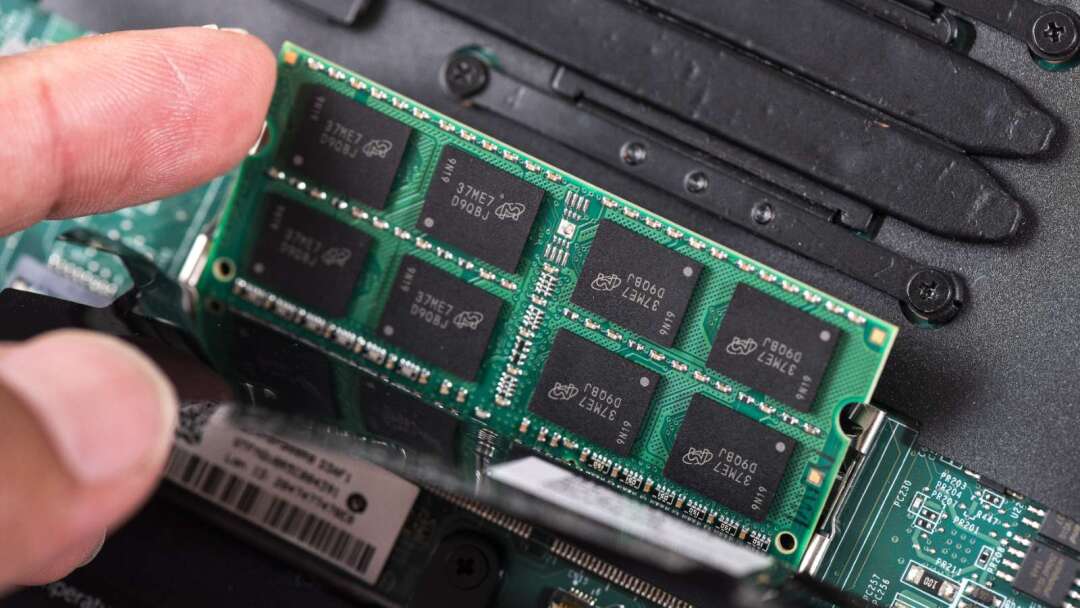
TechInsights has released its latest 2026 Q2 DRAM market report. This 129-page report's core theme is that AI-driven data center construction is fundamentally reshaping DRAM market pricing, profit margins, and supply-demand dynamics.
The DRAM industry is undergoing a transformation from a 'cyclical commodity' to a 'strategic resource in the AI era.' The three major players—Samsung, SK Hynix, and Micron—are expected to generate $1.7 trillion in operating profit over three years. HBM has evolved from a supporting role to the lead, while consumer markets are being squeezed out of capacity allocation. Physical AI represents the next unpriced variable. Supply-demand tension is structural, not cyclical.
The DRAM market is undergoing a historic restructuring.
AI-driven data center construction is fundamentally altering DRAM market pricing, profit margins, and resource allocation. Three core forces are colliding simultaneously, driving this unprecedented cycle:
Demand Side: Agentic AI is driving a structural increase in server CPU counts, thereby pulling demand for DDR5/LPDDR5.
Supply Side: Long-term agreements (LTAs) are changing customer procurement methods, weakening traditional price discovery mechanisms. Industry operating profit margins are expected to stabilize at 60–65%, far exceeding the previous cycle's average of 34%.
Financial Side: Samsung, SK Hynix, and Micron are projected to generate approximately $1.7 trillion in DRAM operating profit and $1.3 trillion in free cash flow between 2026 and 2028. Just 2026’s annual free cash flow (~$300 billion) exceeds the cumulative DRAM free cash flow of all three companies over the past decade by 65%.
Longest Supply Shortage in History
The DRAM market is experiencing the most prolonged and significant supply shortage in its over 50-year history. Prices are expected to continue rising for the next two years. Q2 2026 single-quarter revenue is projected to approach 2025’s full-year revenue.
Smartphone DRAM costs will soar to historic highs, directly pushing up end-product prices.
Long-term trends show suppliers using long-term agreements to trade 'moderate annual price reductions' for 'demand certainty.' Gross and operating margins are expected to peak in 2027 before moderating, but the baseline has structurally risen.
HBM Becomes the Pivot of the Entire Table
HBM is currently the market’s most critical variable. HBM and standard DRAM ASPs are currently roughly equal—a highly abnormal situation for a product with 3x higher manufacturing costs. The report forecasts HBM pricing will rise significantly by 2027, with the HBM/non-HBM ASP ratio reaching 2.0x by Q4 2027 and 3.5x by 2031.
HBM’s 'bit replacement' cost: HBM3E die area is 83% larger than DDR5 at the same node; producing one unit of HBM4/HBM5 consumes wafer area equivalent to four units of standard DRAM.
HBM’s share of NVIDIA GPU BOM is surging: With Rubin Ultra featuring 1TB HBM, single-card HBM cost reaches $23,826, accounting for 77% of total BOM (compared to ~$2,524 and 37% in the Blackwell era).
Stacking technology roadmap: SK Hynix continues with MR-MUF, while Samsung and Micron pursue TC-NCF. All three plan to shift to hybrid bonding by HBM5 (~2028).
Key HBM data for 2026: Annual HBM capacity (year-end) ~755K wafers/month (29% of total industry capacity), HBM supply adequacy rate only 2% (extremely tight). SK Hynix remains the largest HBM supplier, maintaining market leadership through 2027.
Agentic AI Changes Compute Allocation
Agentic AI doesn’t replace single inference but wraps it in a CPU-intensive 'orchestration loop'—decomposing tasks, invoking tools, iterating validation until goals are met. This shifts the CPU-to-GPU ratio from 1:4 toward 1:1.
Each additional CPU socket requires DDR5 or LPDDR5, so mainstream DRAM demand will rise in tandem with Agentic AI adoption, approaching HBM-like growth rates.
At the AI accelerator level, inference has overtaken training as the dominant workload; NVIDIA GPUs remain dominant, but custom ASICs are also growing.
End-Market Triad
Data Centers: Will account for ~50% of total DRAM bit demand by 2026. U.S. hyperscalers account for ~60% of DRAM procurement value, potentially peaking at 70%, and are absolutely dominant in HBM.
Consumer (PC/Smartphones): In 2026, unable to compete with data centers for capacity, bit demand growth plummets to 3%, suffering from 'supply hunger.' It will rebound to 18% by 2029 when supply loosens and prices fall.
Physical AI (Autonomous Driving/Robotics): Growing rapidly (automotive DRAM CAGR 35.5% from 2024–2031), but currently small in scale, with most demand beyond the 5-year forecast window—clear upside risk.
CXL and DRAM Reuse
CXL (Compute Express Link) is creating a new 'reuse' layer for DRAM in data centers. Hyperscalers began deploying reusable DDR4 via CXL slots in 2025. By 2030, CXL-related DRAM is expected to account for ~16% of server DRAM demand, though long-term prospects remain uncertain.
Reuse models leverage existing DRAM to meet new demand, thus having limited impact on driving new capacity.
Technology Roadmap Evolution
DRAM: DDR5 surpassed DDR4 as mainstream in Q2 2024. DDR6 is expected to take over in Q3 2030. LPDDR6 will be introduced in 2026 but won’t become mainstream until 2029. GDDR7 has entered mass production, expected to exceed 50% market share by mid-2026. In Q2 2026, the 1b-nm process node accounts for 43.5% of total DRAM bit output, the current mainstream process.
EUV Lithography: By 2031, total DRAM lithography steps will double, with EUV steps growing ~13x.
3D DRAM: Expected to enter mass production after 2031.
Supplier Landscape
Samsung: Maintained revenue leadership in Q1 2026 with a 93% surge in average selling price. Actively expanding HBM capacity, targeting 343K wafers/month by 2028.
SK Hynix: Maintains absolute leadership in HBM market, targeting 405K wafers/month by 2028. HBM share of total capacity reaches 23%, highest among the three.
Micron: Targets 202K wafers/month by 2028, trailing South Korean rivals but actively catching up.
CXMT (ChangXin Memory Technologies): China’s primary DRAM supplier. Wafer capacity share expected to rise from 9% in 2025 to 22% by 2031. However, advanced process development is hindered by equipment export restrictions, with effective bit output per wafer only 60–65% of global leaders.
Three Upside Risks
If Agentic AI adoption outpaces expectations, CPU-driven DRAM demand will further exceed market forecasts.
Additionally, Physical AI (humanoid robots and autonomous driving) is not yet fully incorporated into demand models. If it replicates generative AI’s growth curve, it will bring significant incremental demand to the DRAM market.
On the other hand, FP8 precision adoption doubles compute speed, but effective bandwidth only doubles, shifting the system from 'nearly balanced' to 'clearly memory bandwidth constrained.' This will further push up demand for high-bandwidth DRAM (HBM).
FACT BOX
- Source: PR Times
- Category: Survey
- Organizations: TechInsights
- Products / services: HBM / DDR5