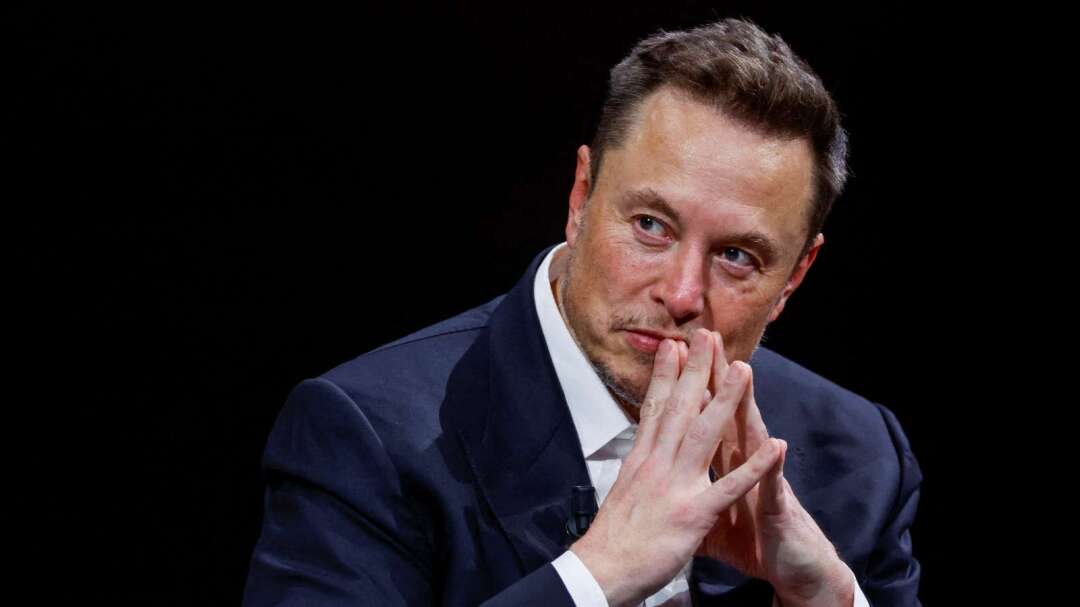
Bloomberg's column reports that Elon Musk has denied The Wall Street Journal's (WSJ) claim that Tesla (TSLA-US) might spin off its China business to facilitate a merger with SpaceX (SPCX-US), calling the report 'absurd fake news.'
However, Musk's past public statements about potential Tesla deals have not always aligned with subsequent developments. Therefore, if Tesla is indeed internally discussing any restructuring involving its China operations, it would send two critical signals: Musk may be determined to push through a Tesla-SpaceX merger, and this arrangement may not necessarily serve Tesla shareholders' interests.
China's importance to Tesla goes far beyond its revenue share. While the Chinese market contributed roughly one-fifth of Tesla's revenue last year, the Shanghai Gigafactory—operational since 2019—produces over half of Tesla's annual global electric vehicle output and serves as a key export hub.
Tesla's approval to fully own its China operations, without being required—as most foreign automakers are—to form a joint venture with a local partner, was a major breakthrough for Musk. By establishing deep roots in both the U.S. and China, the world's largest EV market, Tesla successfully weathered the pandemic and de-globalization shocks, turned profitable, and briefly surpassed a $1 trillion market capitalization.
However, accelerating de-globalization in recent years has made such a cross-Pacific structure a potential obstacle to SpaceX acquiring Tesla. SpaceX is deeply embedded in U.S. aerospace and defense sectors, while Tesla operates in China's energy, transportation, robotics, and artificial intelligence (AI) domains. Amid U.S.-China competition for global technological and strategic dominance, it is highly questionable whether both governments would allow a single company to operate deeply in such sensitive sectors.
Even if Tesla merely isolates its China assets internally from other operations, it could undermine the economies of scale provided by the Shanghai factory as a global manufacturing and export center—and may not gain acceptance from both Washington and Beijing.
If Tesla chooses to sell its China business entirely or transfer majority ownership to Chinese investors, it could face severe value discounting. The Tesla brand remains attractive in China, but with the rise of local rivals like BYD (01211-HK), its market share in China's EV sector has shrunk to about 5%, and BYD has overtaken Tesla as the world's top EV seller.
Fierce price competition in China has significantly eroded Tesla's profits, causing its profit margins to decline in Q2 despite higher sales volumes. Moreover, Tesla's current high valuation is closely tied to Musk himself. If its China operations were independently valued under conditions resembling forced divestiture, the transaction price could be far below the value implied by Tesla's current stock price, negatively impacting the overall share value.
The column argues that if Tesla is still studying a China spinoff, it further proves Musk may be willing to pay a high price to bring Tesla and SpaceX under one roof. While both companies are increasingly overlapping in AI and chip development, the most apparent 'synergy' may be fulfilling Musk's long-term ambition to consolidate control over his business empire.
With Tesla's financial health weakening and market confidence in its robotaxi vision waning, Musk's motivation to push for a merger may be increasing. However, such a deal is not good news for Tesla's valuation.
SpaceX's valuation has declined more than Tesla's over the past month, meaning if SpaceX uses stock as acquisition currency, it would need to issue more shares to buy Tesla—diluting Musk's control in the merged entity. The most favorable scenario for Musk would be for SpaceX—almost entirely under his control and clearly valued higher than Tesla—to acquire Tesla.
In this context, if splitting off the China business lowers Tesla's valuation, it could reduce the cost for SpaceX to acquire it and help Musk maintain control. Bloomberg's column warns that regardless of whether such plans are actually under discussion, Tesla investors should recognize that their interests may not fully align with Musk's in any potential SpaceX deal.
FACT BOX
- Source: PR Times
- Category: News
- Organizations: Tesla / SpaceX / BYD
- Products / services: AI