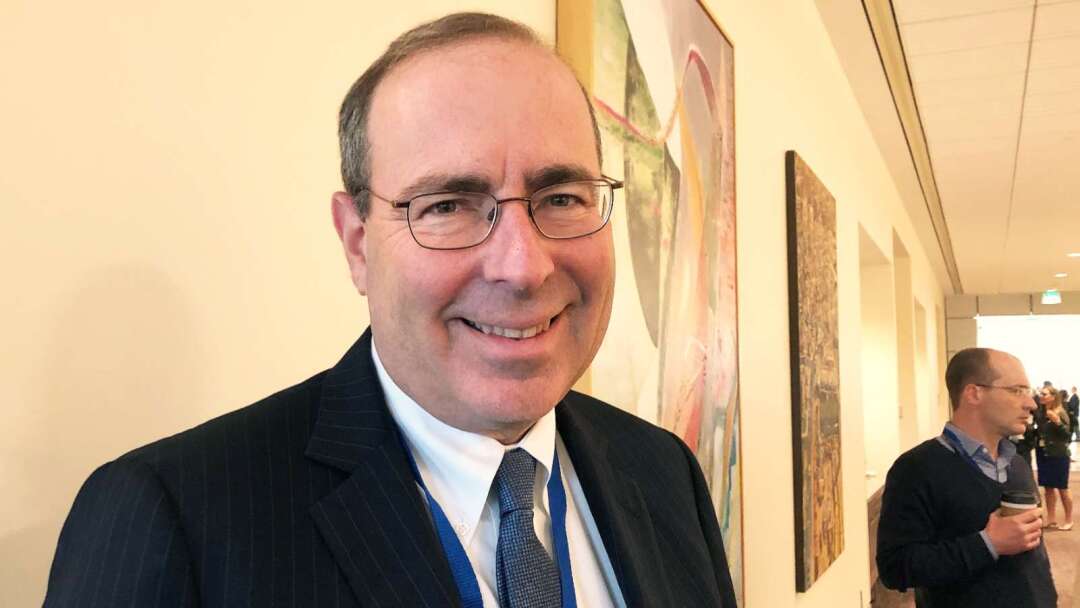
Nick Timiraos, a reporter for the Wall Street Journal (WSJ) known as the "Fed's mouthpiece," exclusively reported on Friday (31st) that Richmond Federal Reserve Bank President Tom Barkin said it is still difficult to judge whether current interest rates are sufficient to cool inflation. He also stated that there are sufficient reasons to further tighten policy and roll back some of last year's rate cuts. However, the weakening of inflation data in June also suggests that the Fed may have time to observe and judge at the next meeting whether the current policy is sufficiently restrictive. The Fed maintained interest rates at 3.5% to 3.75% on Wednesday, the second meeting chaired by Chairman Kevin Warsh. Barkin does not have voting rights this year and will participate in rate decisions again next year. He said he prefers to express his opinions privately to the chairman and other officials rather than publicly commenting on policy direction. Over the past two years, the Fed has cumulatively cut rates by 7 notches to prevent the labor market from weakening, but inflation this year has not returned to the expected 2%. Trump administration tariffs, the US-Iran war disrupting the energy market, and the AI infrastructure boom have all brought price pressures. Barkin pointed out that continued growth in nominal consumption, robust AI investment, and healthy bank loan demand may indicate that the restrictive effect of interest rates is not as expected. Although the decline in core inflation in June is a positive signal, decision-makers still need to consider whether the current tightening is sufficient or whether further action is needed. However, Barkin is skeptical of the view that the labor market has clearly strengthened, stating that it "doesn't feel like the job market is tight." Price pressures are also being transmitted in an uneven manner. Business-to-business sellers have successfully passed on the rising costs of crude oil, diesel, aluminum, fertilizer, and semiconductors, with price increases of about 3% to 4%. However, businesses that directly face consumers find it difficult to follow suit because consumers will switch to lower-priced goods or postpone large expenditures. Barkin said that some costs are still in the inventory of retailers and have not yet been reflected in the profit and loss statement, meaning there may still be inflationary pressure in the future. However, strong productivity growth may also allow companies to absorb costs on their own. The Fed's preferred Personal Consumption Expenditures (PCE) price index rose 3.7% year-over-year in June, down from 4.1% in May. The core PCE, excluding food and energy, rose 3.3% year-over-year, also down from 3.4% in May. Regarding Warsh's hint that the Fed may review other inflation targets in the future, Barkin said he prefers to adopt a target range rather than a single number, but the Fed must first bring inflation down to 2% to have credibility to discuss changing the system. Changing the target "midway" before reaching the goal would make it difficult to maintain the central bank's credibility, but he also believes Warsh is not hinting at an imminent adjustment to the target.
FACT BOX
- Source: PR Times
- Category: News