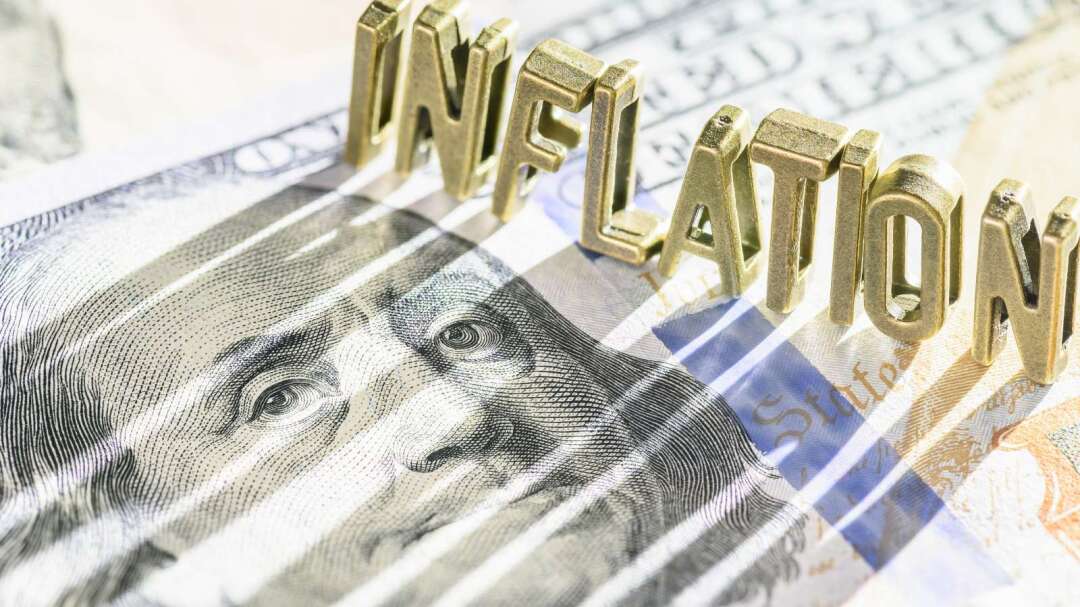
U.S. inflation data may heat up once again, putting markets on edge. However, Société Générale analysts believe investors still have safe havens and have outlined a seven-asset hedging strategy.
According to Business Insider, the trend of cooling inflation over recent years was relatively clear, but entering 2026, the situation appears to be reversing. The spillover effects of the Iran conflict, combined with former President Trump’s tariff measures, are prompting markets to reassess inflation risks.
Even more concerning for investors is the policy uncertainty caused by leadership changes at the Federal Reserve (Fed). Market confidence in the Fed’s ability to bring inflation back down to its 2% target is eroding.
Fed Chair Kevin Warsh announced last week that interest rates would remain unchanged. Yet despite a clear rebound in oil prices recently, he insisted the central bank should not provide clear guidance on future rate paths, further intensifying market anxiety.
In a recent client report, Société Générale noted that the core Personal Consumption Expenditures (PCE) price index—the Fed’s preferred inflation gauge—is currently “still above the path consistent with a smooth return to target” and has exceeded the official 2% target for over five consecutive years.
The report states: “Macroeconomic fundamentals continue to support persistent inflation. A second wave of U.S. tariffs, accelerating AI and infrastructure capital expenditure cycles, renewed oil price volatility, and persistently high fiscal deficits across developed economies suggest the inflation environment could be harsher than currently priced by markets.”
Based on this assessment, Société Générale has identified seven asset classes expected to perform well in an inflationary environment, offering investors a hedging reference.
1. Inflation-Protected U.S. Treasury Bonds
Treasury Inflation-Protected Securities (TIPS) are U.S. government bonds whose principal adjusts based on inflation, recalibrated every six months using the latest inflation data.
In inflationary environments, TIPS are typically viewed as a safe-haven asset, offering investors relatively stable returns. As inflation rises, both principal and interest payments increase accordingly.
Société Générale strategists stated in the report: “TIPS remain our most preferred direct inflation-hedging tool.”
They added: “Actual inflation remains above market pricing, and our economists project core PCE annual growth will stay above 3% in 2026. Thus, there is still a strong case for reallocating to inflation-protected assets.”
The iShares TIPS Bond ETF (TIP-US), which provides exposure to TIPS, has declined about 2% year-to-date.
Notably, bond prices move inversely to yields, so this ETF’s price drop indicates rising real yields.
2. European Inflation-Linked Government Bonds
European inflation-linked government bonds are collectively known as inflation-protected sovereign debt in Europe, serving as the counterpart to U.S. TIPS.
Société Générale says these bonds offer investors attractive inflation-hedging opportunities and help enhance portfolio resilience against inflation.
The report notes: “French and Spanish inflation-linked bonds remain attractively valued, while Italian long-dated inflation-linked bonds also hold investment merit. Additionally, strong investor demand provides further support for these assets.”
3. Copper
Société Générale refers to copper as “a physical-economy inflation hedge.”
The bank’s strategists state in the report: “Electrification, AI infrastructure, and power grid expansion continue to drive copper demand, yet mining investment remains relatively weak. With structural demand strength and constrained supply, the long-term outlook for copper prices remains positive.”
Recently, as investors begin focusing on the physical supply constraints behind the AI boom, copper has regained market attention.
Year-to-date, copper prices have risen approximately 14% from their starting levels, continuing the strong momentum since 2025.
4. Gold
As a traditional safe-haven asset, gold has long been regarded as a key tool for hedging against inflation and is therefore included by Société Générale in its recommended list.
The bank calls gold a “strategic hedge against policy uncertainty,” meaning that geopolitical risks and uncertainty around interest rate trajectories could push gold prices higher.
Société Générale states: “Market expectations for the Fed maintaining higher rates for longer have already been largely priced in. ETF demand remains positive, gold price volatility has declined, and central banks’ continued push for foreign exchange reserve diversification will provide long-term, stable support for gold prices.”
Year-to-date, gold prices have fallen about 5%, mainly due to a cooling of sentiment following a speculative rally at the end of 2025.
5. Commodities and Real-Economy Equities
Société Générale also sees opportunities in equities tied to the real economy, such as commodities, industrial stocks, and raw materials sectors.
The bank points out that the Bloomberg Commodity Total Return Index—one of its preferred “diversified commodity exposure tools”—has risen 18% year-to-date, outperforming the S&P 500 Index.
Strategists further express preference for the equal-weighted S&P 500 Index, stating it “more clearly expresses our positive view on the real economy.”
This is because the equal-weighted index allocates a higher proportion to real-economy stocks, whereas the market-cap-weighted S&P 500 is currently heavily concentrated in tech stocks.
6. European Sovereign Bonds, Banks, and Utilities Stocks
Société Générale also sees investment potential in European sovereign debt, as well as bank and utilities stocks, particularly as the EU’s overall fiscal position gradually improves, benefiting these assets.
Bank strategists note: “Periphery countries have begun achieving primary fiscal surpluses, while most core countries remain in fiscal deficit, driving upward revisions in periphery countries’ credit ratings.”
They add: “Fiscal fundamentals in Europe are improving,” with expectations of stronger economic growth.
7. Private Credit
Société Générale states that despite rising market concerns about private credit, this asset class can serve as a “natural inflation hedge” due to its floating-rate structure.
Strategists point out that since private credit investment yields typically adjust with market interest rates, when financial market rates remain elevated, related investments can see higher yields.
The bank states: “Given that direct lending accounts for about 70% of the private credit market, a prolonged high-interest-rate environment will directly translate into higher coupon income, making private credit a natural complementary allocation within inflation-resistant investment strategies.”
However, private credit funds have recently faced pressure. Concerns about risk spillovers from the software and AI sectors have triggered a wave of investor redemptions.
Major players including Blackstone (BX-US), BlackRock (BLK-US), Apollo Global Management (APO-US), and KKR (KKR-US) have all been affected by this market turmoil.
FACT BOX
- Source: PR Times
- Category: Survey
- Organizations: Blackstone (BX-US) / BlackRock (BLK-US) / Apollo Global Management (APO-US)