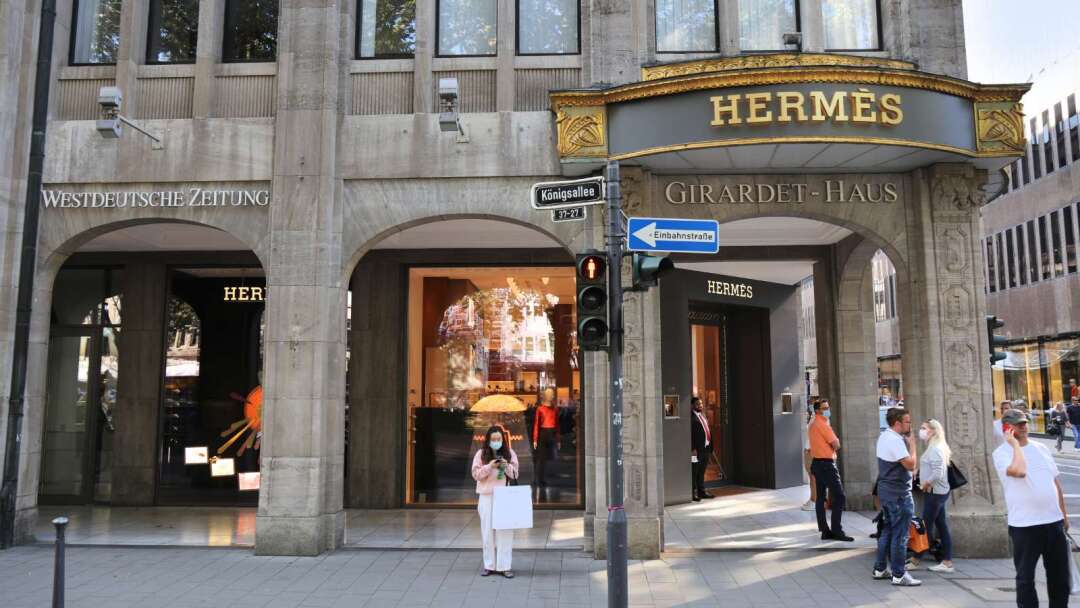
On July 29, Taiwan time, shortly after European markets opened, Hermès shares plummeted over 11%, hitting their lowest level since January 2023.
As of mid-session trading in Europe on July 31, Hermès shares were trading around €1,543, slightly down from the previous session, remaining in a low range not seen in three and a half years.
The release of Hermès' 2026 half-year report on that day may have been the trigger. Although revenue met expectations, profit margins and core profitability fell short of market forecasts, prompting investor sell-offs.
During the earnings call, questions about the Chinese market dominated investor inquiries.
According to a report by Observer Net, Hermès Executive Chairman Axel Dumas did not provide specific figures but instead brought up the topic of pork prices in China.
He noted that pork prices in China are currently low and expressed hope for a rebound. He explained that pork is commonly used for banquets and gatherings, making it a proxy for people's willingness to celebrate and socialize. Therefore, rising pork prices could signal a revival in social consumption and public optimism.
This unexpected comment quickly turned "Hermès CEO waiting for pork prices to rise" into a hot topic following the earnings release.
Regarding the Chinese market, Hermès' financial report used carefully worded language: "Greater China maintained growth, while Korea delivered outstanding performance."
Dumas summarized his assessment of the Chinese market during the conference call using three keywords: stabilizing, not yet (rebounding), and uncertain.
He praised the strong performance of the local team, stating that Hermès has become the leading luxury brand in the Chinese market post-pandemic. While Greater China continues to grow, the pace has not returned to previous levels, and there has been no clear improvement in underlying demand.
When explaining his judgment, Dumas highlighted three key indicators he closely monitors: the property market, stock market, and pork prices.
He believes that current Chinese consumer behavior is driven more by real estate and stock market trends than by GDP growth. Falling home prices lead households to save more and cut spending passively. Meanwhile, pork prices serve as an alternative metric to gauge social consumption and public optimism.
During the call, Dumas also discussed category growth based on customer demographics. Jewelry, fragrances, cosmetics, and scarves are seeing the fastest growth in China, but this is largely driven by loyalty among existing customers rather than a significant influx of new ones.
He candidly admitted that while core high-net-worth customers remain resilient in their spending, aspirational customers face greater consumption headwinds. This growth logic differs from some peers who emphasize Z-generation-driven expansion or a shift from luxury to mass-market consumption categories.
FACT BOX
- Source: PR Times
- Category: News