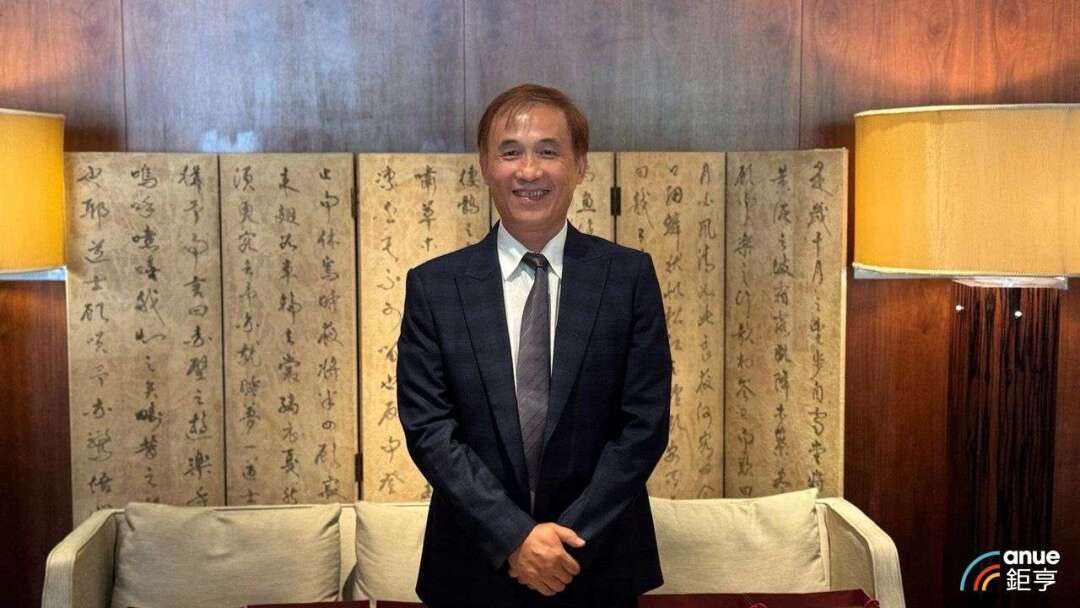
Specialty materials provider Chung Shun (7763-TW) is expected to go public as early as by the end of 2024. Looking ahead, Chairman Chung Wen-ching stated on the 3rd that, driven by rising demand for material upgrades from AI servers, high-performance computing, robotics, and high-end printed circuit boards (PCBs), as well as increasing raw material costs, the company has begun adjusting quotations with customers. Most products will see price increases of 10% to 20% starting in the third quarter, and the company expects second-half operations to outperform the first half, accelerating its capture of opportunities in the electronic materials market.
Chung Shun has recently strengthened its operational footprint in Taiwan. Its 'Zhongli Factory, Office, and Exhibition Center' in Taoyuan officially opened on July 22, integrating product displays, technical exchanges, customer reception, and business negotiations. This facility will serve as a key hub for the company to stay close to northern electronic materials customers, understand market demands, and advance new product verification.
Chung Shun stated that the Zhongli exhibition center will systematically showcase the functions and value of its core materials across various industry chain stages. This will help customers better understand how raw materials—such as hardeners and bismaleimide resin (BMI)—are extended into copper-clad laminates (CCL), printed circuit boards (PCB), and ultimately integrated into end products like AI servers, high-speed computing systems, and other high-end electronics.
The opening of the exhibition center was attended by key representatives from Taiwan-based electronic materials firms Kokusai Chemical (4722-TW) and Shuang Chien Chemical (4764-TW). Kokusai was represented by Manager Chang Yen-hsiang, while Shuang Chien’s Chairman Tsai Mao-te attended in person, highlighting Chung Shun’s collaborative relationships within Taiwan’s electronic materials supply chain.
Chung Wen-ching emphasized that service speed is critical in the electronic materials industry. If customers encounter issues during product development, formulation, or production, suppliers must respond immediately. If all materials were produced in Japan and shipped to Taiwan, response times might not meet the demands of high-end electronics customers. Therefore, Chung Shun established the Zhongli site to be closer to the electronics cluster in Taoyuan and northern Taiwan, with convenient access to highways and Taoyuan International Airport, improving efficiency in sales, R&D, and technical services.
With rapid growth in demand for AI, high-performance computing, data centers, and high-speed transmission, electronic materials are facing increasingly stringent requirements for heat resistance, reliability, low dielectric properties, and dimensional stability. Chung Shun’s current R&D focus is on low dielectric constant (Low Dk), low dielectric loss (Low Df), and dimensional stability, aiming to increase the adoption of its materials in high-end substrate formulations such as M9 and M10.
Chung said that applications for M4 and M6-related materials are already mature, with shipment volumes steadily growing and widely used in 5G, smartphones, computers, and other electronic devices. As material specifications advance to higher generations, formulation and certification requirements from different customers are becoming more complex, favoring suppliers with capabilities in specialty amines, isocyanates, and custom material development.
Currently, electronic materials-related products account for about 18% to 20% of Chung Shun’s total revenue, including specialty amines, isocyanates, and other electronic chemicals. Some amine products were early adopted by major Japanese polishing pad manufacturers and in chemical mechanical polishing (CMP) applications. With expanded electronic materials capacity in its China plant and ongoing construction of its new Changbin facility, the company’s medium- to long-term goal is to increase the revenue share of electronic chemicals to 40% to 50%.
In response to global supply chain restructuring, Chung Shun has adopted a cross-strait division strategy. The company believes it is difficult to completely exclude China from the supply of basic chemical raw materials, as Taiwan no longer produces many of these chemicals, and China still holds scale advantages in petrochemicals, industrial clusters, and infrastructure.
Therefore, Chung Shun will use the Chinese supply chain for basic raw material synthesis and front-end manufacturing, while Taiwan will handle R&D, processing, formulation adjustments, packaging, and high-end application development. This approach allows the company to serve both the Chinese market and demand driven by U.S. and non-China supply chains. The company emphasized that it will not abandon the Chinese market, while further focusing Taiwan’s operations on high-end electronic materials and technical services.
Currently, Chung Shun’s main production base remains in China, where it owns about 50,000 ping of land, of which only about 40–50% is currently utilized, leaving ample room for expansion. With complete utility facilities and production conditions already in place, some electronic materials production capacity can be quickly scaled up by adjusting production equipment.
In Taiwan, Chung Shun is steadily advancing the construction of its new Changbin plant, scheduled for completion by the end of 2028 and production to begin in 2029. The Changbin plant will focus on high-end electronic chemicals and will include R&D, warehousing, formulation adjustment, and packaging functions. It will receive raw materials from China, Japan, South Korea, and other suppliers and perform downstream processing and delivery in Taiwan.
Chung Shun noted that electronic chemicals are subject to strict regulations regarding hazardous substances, toxic materials, and substances of concern, resulting in high barriers for fire safety, environmental protection, and facility requirements—not just any industrial plant can conduct production or packaging. In addition to serving its own products, the new Changbin plant is expected to offer formulation adjustment, packaging, and local supply services for the electronic materials supply chain, forming another operational advantage.
Looking ahead to next year, Chung Shun is optimistic that 2024 will outperform 2023, with major growth drivers including electronic chemicals, AI servers, robotics, European automotive, and specialty industrial materials. With the opening of the Zhongli exhibition center, continued capacity expansion in China, and the phased construction of the Changbin plant, the company will accelerate its transformation from a specialty chemicals supplier to a high-end electronic chemicals and specialty functional materials provider, laying the foundation for growth over the next three to five years.
FACT BOX
- Source: PR Times
- Category: News