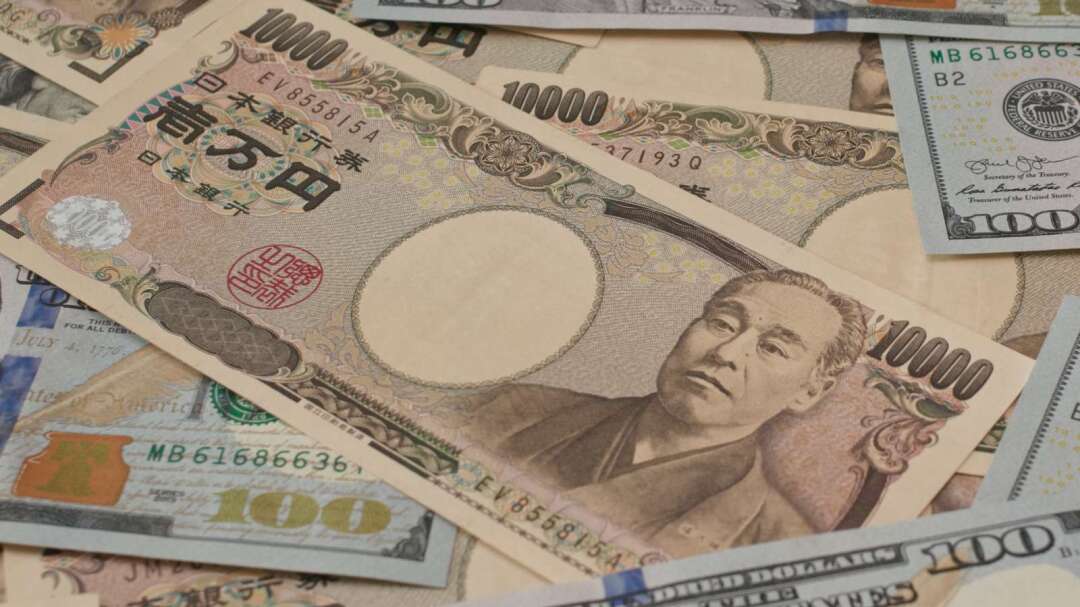
After coordinated intervention by the U.S. and Japan, the yen rebounded sharply, prompting a broad-based rally in Asian currencies. Wall Street analysts at Citi and Barclays have highlighted in their latest client reports that many Asian currencies are highly correlated with the yen, stating that 'yen appreciation will similarly drive strength across Asian currencies,' with the Korean won (KRW), Singapore dollar (SGD), and Thai baht (THB) identified as the primary beneficiaries.
Over the past three trading sessions, the yen appreciated over 4% against the U.S. dollar, pulling back from near 40-year lows. During the same period, the Korean won, Thai baht, and Philippine peso each strengthened by at least 0.7%, while a basket of Asian currencies excluding the yen rose 0.5%.
Citi strategists Garg and Goh, based in Singapore, noted in their report that over the past year, the Korean won, Singapore dollar, and New Taiwan dollar exhibited the highest correlation with the yen, while the Indian rupee and Indonesian rupiah showed the lowest.
The Barclays team led by Kotecha in Singapore also stated that the Korean won is among the most sensitive currencies to the yen in Asia. The U.S.-Japan intervention was coordinated, and its spillover effect is likely to exceed historical beta estimates. Seoul simultaneously sold dollars, pushing the won to a nine-month high. The dovish stance of Fed Chair Waller, leading to a pullback in the dollar, further amplified the supportive momentum.
However, both Citi and Barclays refrain from viewing this as a trend reversal. The fundamental anchor remains the U.S.-Japan interest rate differential. The U.S. federal funds rate stands at 3.5%–3.75%, compared to Japan’s 1%, a gap of 250–275 basis points.
Franklin Templeton strategists warn that intervention only buys time and cannot substitute for Japan’s policy costs. Brookings Institution scholars go further, stating that as long as Japanese government bond yields are artificially suppressed, the yen remains overvalued and faces downward pressure.
Unresolved structural issues—Middle East energy risks, aging demographics, and industrial hollowing—combined with the fact that the U.S. sold euros to buy yen rather than selling dollars, have led markets to question the credibility of the 'coordinated intervention.'
In the short term, a yen-led recovery in Asian currencies is expected. However, the medium- to long-term direction of exchange rates will remain in the hands of U.S. and Japanese central banks’ interest rate differentials and carry trade dynamics.
FACT BOX
- Source: PR Times
- Category: News