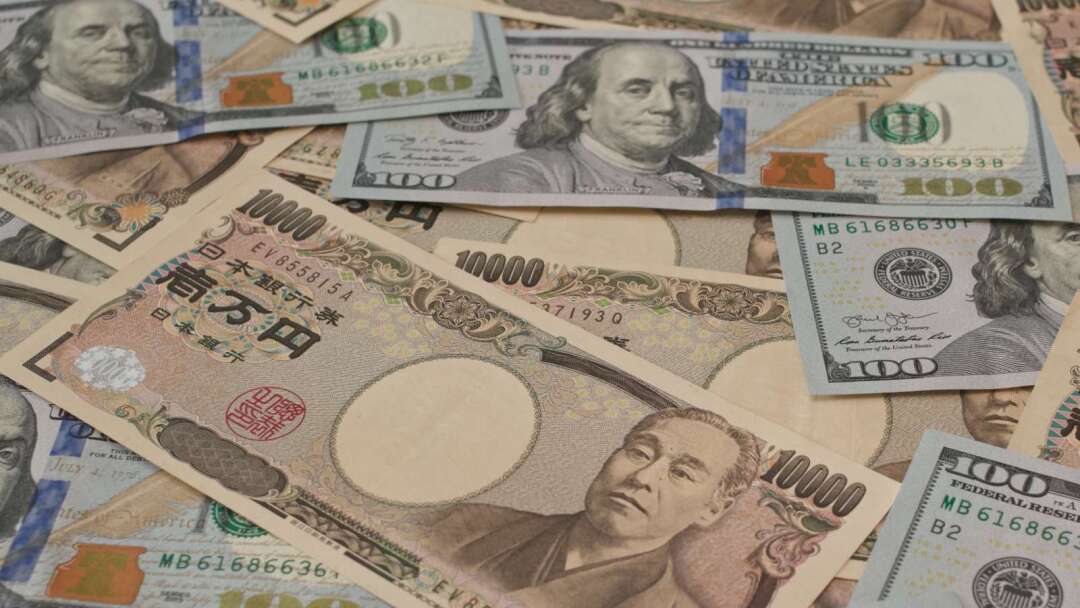
Japan's Ministry of Finance officially confirmed today (3rd) that it coordinated with the U.S. Department of the Treasury last Friday (July 31) to carry out a 'coordinated intervention to buy yen' in the foreign exchange market. This marks the first substantive joint market intervention since the G7 coordinated yen-selling action following the 2011 Great East Japan Earthquake, and the first time in over a decade that the U.S. has actively supported Japan’s efforts to stabilize the yen through concrete action.
Japanese Finance Minister Katsumi Katayama stated today that the intervention aims to address 'recent excessive volatility and disorderly movements in the yen.' He added, 'If market conditions require, we will not hesitate to conduct further coordinated interventions,' and emphasized that Tokyo 'remains vigilant and maintains close communication with the U.S. Treasury Department.'
U.S. Treasury Secretary Bessent also confirmed the action, stating: 'The coordinated foreign exchange operation last Friday offset the yen’s disorderly fluctuations. The United States strongly supports Japan’s decisive market and monetary measures to correct the yen’s significant undervaluation and will not hesitate to participate in further joint interventions.'
The White House also issued a statement, with President Trump calling the move 'a sign of friendship and beneficial to the global economy.'
According to a report by First Financial, the timing of this intervention was highly strategic. The yen-dollar exchange rate had recently plunged to 163.99, a nearly 40-year low, with yen short positions heavily crowded. At the same time, dovish signals from the Federal Reserve emerged—June’s PCE index fell 0.1% month-on-month, the first negative growth since 2020—leaving the dollar relatively weak and giving Japanese authorities a window to 'act with the trend.'
The report noted that the New York Federal Reserve, acting on behalf of the U.S. Treasury, conducted FX rate inquiries for the first time since January, and Bessent’s public statement that 'the yen is severely undervalued' were both seen by markets as precursors to direct U.S. involvement.
Unlike past instances, this time the U.S. did not limit itself to 'exchange rate monitoring' or verbal warnings.
Estimates based on data from currency brokers and Bank of Japan (BOJ) funding show Japan deployed approximately ¥8.45 trillion (about $528 billion) in intervention between July 30 and 31. The U.S. indirectly assisted by selling euros and buying yen, reducing pressure on Japan to sell U.S. Treasury bonds.
Japan’s Ministry of Finance also announced it will now use the Federal Reserve’s FIMA repo facility, pledging U.S. Treasuries from its foreign reserves to obtain short-term dollar liquidity, thus avoiding direct sales of Treasury holdings.
The joint intervention immediately showed results. The dollar-yen rate plunged from around 163.9 to 157.57, with the yen appreciating about 4% in a single day. Today, it trades around 157.70, briefly dipping into the 156 range during early trading.
This marks Japan’s second major intervention this year. The first occurred from April 28 to May 27, totaling ¥11.73 trillion (about $732 billion), the largest intervention during a yen-depreciation cycle in history. However, its effects lasted only a few weeks before the exchange rate reverted. In just three months, nearly ¥20 trillion has been spent, yet the rate remains volatile around 160.
The market is almost unanimous: interventions can 'buy time,' but not reverse trends.
Chen Xiayi, Global Investment Strategist at Franklin Templeton Institute, pointed out that the limitation of repeated interventions lies in Tokyo’s desire for a stronger yen without fully bearing the policy cost required to achieve it.
According to Chen, as long as the U.S.-Japan interest rate differential persists, borrowing yen remains extremely cheap, and dollar-denominated assets offer higher returns, carry trades will continue pushing the yen down. 'FX intervention can slow depreciation, curb excessive speculation, and signal official dissatisfaction, but it cannot alter the fundamental arithmetic.'
The U.S. choice to sell euros instead of dollars is also more nuanced. Robin Brooks, Senior Fellow at the Peterson Institute for International Economics (PIIE), believes this 'indirect approach' actually weakens the effectiveness of U.S. participation. Markets may question why the U.S. won’t directly sell dollars to support the yen, suggesting an underlying preference for a 'strong dollar.'
Investors might interpret this as Washington wanting to help Japan but unwilling to let Japan sell U.S. Treasuries—indirectly testing confidence in U.S. debt holdings.
Brooks stated bluntly: 'Coordinated intervention may ultimately undermine, rather than enhance, confidence in the yen.'
Moreover, IMF rules act as an invisible ceiling. The institution stipulates that no more than three similar interventions can be conducted within six months to maintain the 'free-floating' designation. Further escalation could reduce market alertness, trigger speculative rebounds, or diminish marginal effectiveness, all of which could erode policy credibility.
Since WWII, U.S.-Japan coordinated interventions have occurred in four landmark events: the 1985 Plaza Accord, where five nations jointly sold dollars and bought yen; the 1995 'Tanabata Intervention' selling yen to buy dollars to halt appreciation; the 1998 joint yen-buying intervention to correct depreciation; and the 2011 post-3/11 earthquake G7 joint yen-selling to curb a sharp rise.
A consistent pattern emerges: exchange rates jump and volume spikes on intervention day, but medium- to long-term trends are never reversed by fundamentals and interest rate differentials. For example, after Japan’s unilateral intervention in September 2022, the yen continued to depreciate. After the April 2025 intervention, it returned to a downtrend. In July 2025, the yen appreciated for about two months, primarily due to 'recession trades' and carry trade unwinding in the U.S., not the intervention itself.
On April 30, 2026, the dollar-yen rate fell from 160.6 to 155.88 within four hours, but by late May, it had climbed back to 159. Historically, the yen appreciates about 1.4% against the dollar in the week following intervention, but momentum quickly fades.
The core contradiction now lies in the 'credibility gap' in policy. The Fed’s benchmark rate stands at 3.75%, while the Bank of Japan (BOJ) holds at just 1%. BOJ Governor Kazuo Ueda, in his press conference last Friday (July 31), adopted a cautious tone and downgraded short-term inflation forecasts, offering no signal of a September rate hike.
Chen emphasized that the BOJ and government must send a consistent message: monetary policy normalization is not optional, and growth cannot rely on ultra-low interest rates indefinitely. Otherwise, the yen will continue to be borrowed, sold, and drained by carry trades.
The U.S. Treasury’s latest semiannual report has also expressed concern over yen weakness, urging the BOJ to raise rates further and warning that inflation is eroding Japanese household purchasing power.
Citigroup noted that the sharp drop in dollar-yen 'follows the same pattern as previous interventions,' but with Ueda’s statement falling short of expectations, further yen gains face resistance.
As of June 2026, Japan’s foreign exchange reserves stand at approximately $1.287 trillion. The Ministry of Finance still has ample 'ammunition,' and the FIMA repo mechanism can alleviate Treasury sell-off pressure. However, most experts agree that propping the yen at 157 through intervention is fundamentally different from genuinely narrowing the interest rate gap through rate hikes. The former buys a few weeks of calm; the latter determines the anchor for the next several years.
Chen concluded: 'If Japan wants to rebuild market confidence in the yen, it must clearly state that monetary policy normalization is not optional and that economic growth will not depend on prolonged ultra-low interest rates. Otherwise, this 15-year joint effort may end up as just a footnote in the next 'historical intervention review.''
FACT BOX
- Source: PR Times
- Category: News