The yen-dollar exchange rate experienced severe volatility on Thursday (30th) and Friday (31st) last week, briefly touching its lowest level since 1986. Markets had already anticipated that the Japanese government would re-enter the foreign exchange market to intervene. However, what truly captured global attention was the rare move by Washington to lend support.
Multiple foreign media outlets, citing informed sources, reported that on Friday, the US government instructed the Federal Reserve Bank of New York to execute a 'sell euro, buy yen' operation to help stabilize the collapsing yen exchange rate.
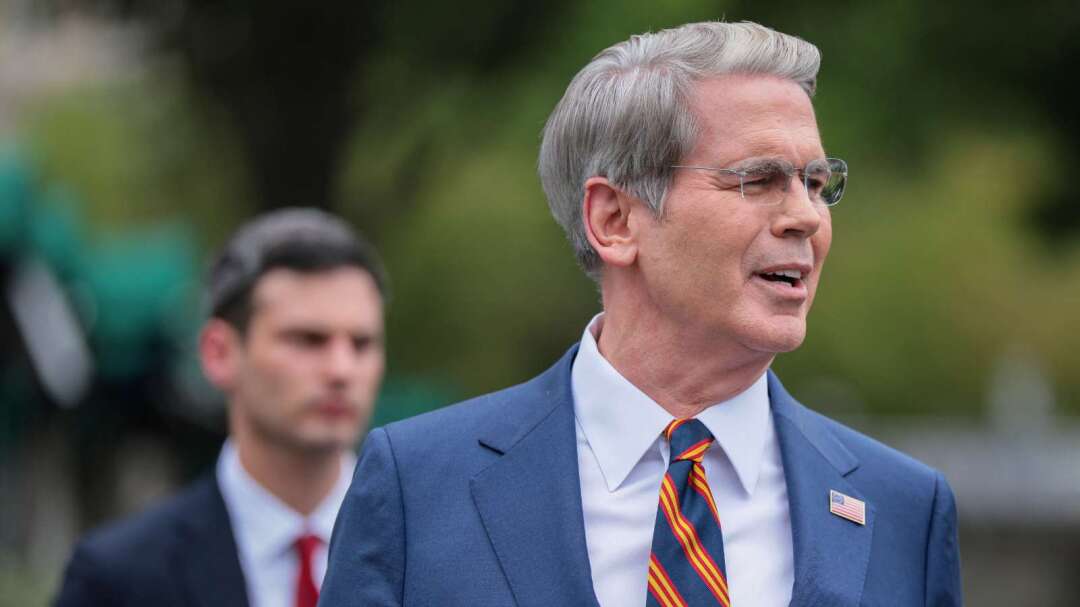
The most direct evidence came from a handwritten note by US Treasury Secretary Scott Bessent, captured by media cameras. On Friday, local time, President Trump hosted a cabinet meeting at Camp David in Maryland, broadcasting it live. Bessent sat directly across from Trump as usual.
Unabashed under the watchful lenses, Bessent wrote on his notepad: "To-do: Buy yen, $5 billion to $10 billion." The note was quickly photographed and rapidly circulated worldwide.
Looking back over the past thirty years, there have been only two previous instances of joint US-Japan currency market interventions:
One occurred during the 1998 Asian financial crisis, when both sides coordinated to buy yen;
The other took place after the 2011 Great East Japan Earthquake, when the yen unexpectedly surged, prompting the US and other G7 nations to join Japan in a coordinated intervention.
Interestingly, Bessent himself was once a veteran of the foreign exchange market, having led Soros Fund Management’s short-selling of the yen in 2012, earning over $1 billion in just three months.
Now, he is personally stepping in to "rescue" the yen. Observers interpret this move as driven by deeper concerns: preventing a collapse in Japan’s financial situation that could spill over into the US Treasury market.
After all, amid rising US-Iran military tensions and a credibility crisis surrounding new Federal Reserve Chair Kevin Warsh, long-term US Treasury yields had just hit their highest levels since the subprime mortgage crisis last week.
In fact, in January this year, Japanese Prime Minister Sanae Takagi’s fiscal policy briefly triggered a "Japanese bond storm," prompting Citigroup to warn that the turmoil could trigger a $130 billion sell-off in US Treasuries.
It is said that US officials have privately expressed concerns to their Japanese counterparts, fearing that Takagi’s aggressive fiscal path might repeat the market collapse caused by former UK Prime Minister Liz Truss.
Despite recent large-scale use of foreign exchange reserves by Japanese authorities to defend the market, the results have been limited.
Market estimates suggest that on last Thursday alone, Japan’s intervention reached between ¥6 trillion and ¥7 trillion. Combined with the ¥11.7 trillion (approximately $74.3 billion) deployed from late April to the end of May, the cumulative intervention amount has climbed to ¥18 trillion (about $114.3 billion), surpassing the previous record of ¥15.3 trillion set in 2024.
Earlier data from the US Treasury’s International Capital Flow Report also showed that Japan indeed sold $66.75 billion in US Treasury bonds in May, an amount roughly matching the scale of its foreign exchange intervention.
However, the effect of that intervention lasted only about a month, with the yen depreciating back to pre-intervention lows by early June.
In the early hours of Saturday, Japan’s Ministry of Finance posted on social media, stating it would not rule out using the Federal Reserve’s "Standing Repo Facility for Foreign and International Monetary Authorities" (FIMA Repo Facility) under appropriate circumstances, allowing temporary dollar liquidity support by pledging US Treasury bonds as collateral.
Observers interpret that Bessent seems aware that simply spending money in the forex market cannot fundamentally solve the yen’s depreciation. On Friday, he specifically posted on social media expressing his anticipation to "meet again" with Bank of Japan Governor Kazuo Ueda during the G20 meeting at the end of August.
Coincidentally, on the same Friday, after announcing the decision to keep interest rates unchanged, Governor Ueda unusually opened up during his press conference, hinting that the central bank might "accelerate the pace of rate hikes" in the future.
FACT BOX
- Source: PR Times
- Category: News
- Organizations: FRB