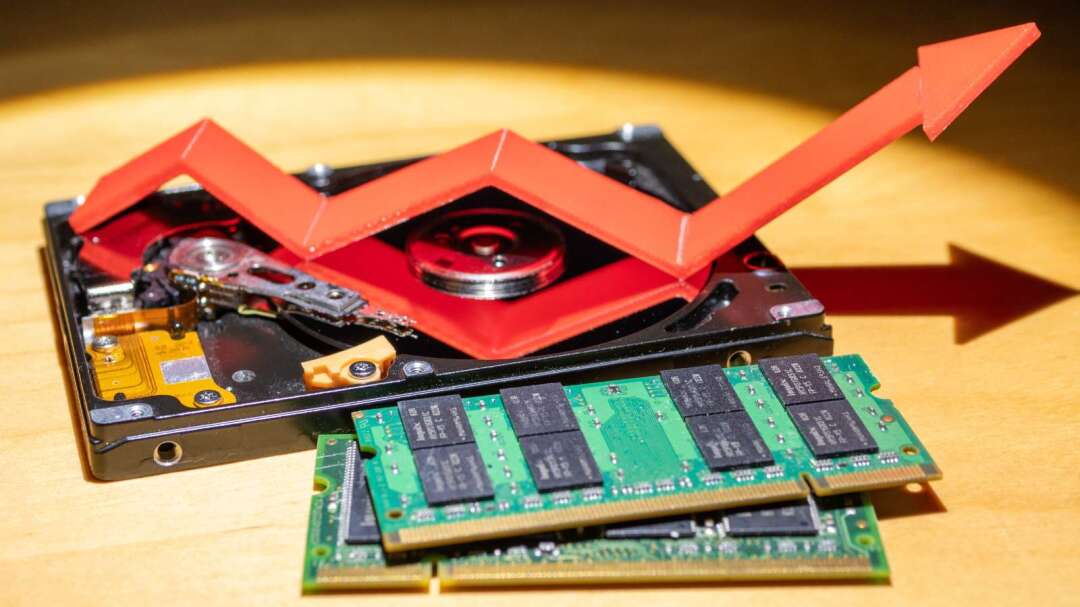
A memory price surge described by Apple CEO Tim Cook as a 'once-in-a-century flood' is striking the global consumer electronics supply chain with unprecedented force.
Apple CEO Tim Cook, during the company's earnings call last Thursday (July 30), unusually detailed how rising memory costs are eroding Apple's profits—his final earnings call before stepping down.
He clearly stated that memory costs for the quarter ending in September will exceed those of the June quarter, and the upward pricing trend will continue to expand thereafter.
The source of this 'flood' lies in structural supply-demand imbalances triggered by AI infrastructure development. While upstream memory manufacturers reap massive profits and see their stock prices hit new highs, downstream smartphone makers are forced to absorb soaring costs, even reshaping market competition.
As the leader in mobile SoCs, Qualcomm was the first to sound the alarm. CEO Cristiano Amon announced a comprehensive price hike on chips starting in September, bluntly stating, 'Costs have gone up, and prices will keep going up.' He also noted that overall costs across the entire semiconductor supply chain—from wafer fabrication and advanced packaging to memory—are rising.
This is directly changing consumer purchasing behavior. Amon observed that due to soaring memory prices, high-end smartphone users are increasingly opting for lower-priced flagship models or previous-generation devices. This shift in demand, combined with pricing pressures on mid-to-low-end smartphones, is making the competitive landscape more complex.
Data from Counterpoint Research reveals a harsh reality. In the first half of this year, global smartphone SoC shipments declined 15% year-on-year, with MediaTek and Qualcomm both seeing shipment drops exceeding 25%. Qualcomm's challenges stem from Samsung's Galaxy S26 series resuming use of its in-house Exynos chips, taking away orders, compounded by weak sales of the Xiaomi 17 series. MediaTek suffered due to low-end 5G chipsets being hit hard by the memory crisis, despite solid performance from its高端 9500 series.
In contrast, Apple gained 4% market share thanks to strong performance from the iPhone 17 series, while Unisoc achieved steady growth by benefiting from entry-level devices shifting back to 4G platforms to cut costs. This confirms a trend: under cost pressure, market share is shifting from pure performance competition to competition based on cost control capabilities.
In stark contrast to downstream anxiety, memory giants holding supply power are entering a period of explosive earnings growth.
SK Hynix's latest financial report shows a 257% year-on-year revenue increase for the quarter ending in June, with operating profit surging 557%. Its cumulative revenue for the first half of the year has historically surpassed 100 trillion Korean won.
eToro analyst Josh Gilbert pointed out that SK Hynix's gross margin of up to 83% demonstrates strong pricing power: 'This only happens when customers are fighting for supply.'
Samsung's numbers are equally astonishing. In Q2, its operating profit reached 89.49 trillion won, a 19-fold year-on-year increase, with net profit soaring nearly 13 times. AI-driven HBM demand is the core engine. Samsung not only expanded HBM4 sales but also delivered the industry's first HBM4E samples to major clients, targeting NVIDIA's next-generation Rubin platform.
Japan's Kioxia saw even more dramatic growth, with net profit increasing 46 times year-on-year in the April–June quarter and average selling prices rising 70% quarter-on-quarter. Its data center-focused sales in just three months nearly matched the total of the previous full year. The company optimistically predicts that 'real growth has yet to come.'
However, capital markets reacted dramatically. Despite explosive results, SK Hynix and Samsung shares initially plunged on earnings announcement day, then rebounded to record single-day gains of nearly 30% and 27%, respectively.
Kioxia's stock fell over 60% from its June peak, while SanDisk saw a decline of over 56% in the same period, reflecting investors' tension between 'epic earnings' and 'deep fear of cyclical reversal.'
Historically, the memory industry is known for severe cyclical volatility. But this time, growing evidence suggests 'this time is different.' First, the price surge has lasted over four years with no sign of demand peaking. Second, AI infrastructure investments continue hitting new highs, and customized products like HBM are replacing generic DRAM as the new growth driver.
Nomura Securities has completely reshaped market perception in its latest research report. The firm predicts DRAM revenue will explode from around $80 billion in 2022 to over $2.06 trillion by 2030. This forecast is supported by a permanent shift in supply-demand dynamics. Nomura expects DRAM prices to rebound strongly from 2023 lows, reaching a peak of nearly $18.6 per GB in 2027 and remaining high long-term, with capacity utilization consistently exceeding 100% and inventory turning negative.
This implies that if AI spending continues to grow rapidly, the DRAM market could be 5 to 7 times larger than mainstream forecasts. Memory chips may no longer be low-margin cyclical commodities but could become the semiconductor industry's largest profit pool.
For downstream players like Apple and Qualcomm, building defenses against this prolonged 'century flood' will be a far greater challenge than short-term financial performance.
FACT BOX
- Source: PR Times
- Category: Survey
- Organizations: Apple / Qualcomm / SK Hynix
- Products / services: DRAM / HBM