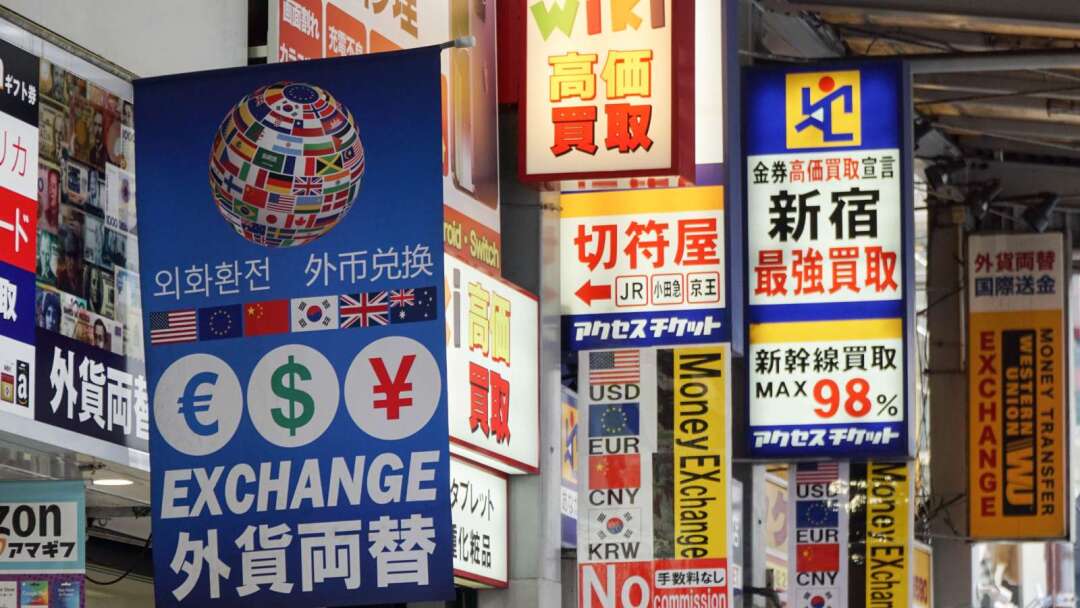
Last week, the United States, Japan, and South Korea launched a rare coordinated foreign exchange intervention—the largest in nearly 30 years—not only to curb the depreciation of the yen and won but also to signal a joint 'market rescue' aimed at stabilizing allied financial markets and preventing Asian asset volatility from spilling back into Wall Street.
On Thursday, July 30, Japanese authorities deployed approximately ¥8.45 trillion (about $528 billion) in a single day, selling dollars and buying yen—an intervention of historic scale. On the same day, South Korea’s foreign exchange authorities also entered the market unusually, selling dollars, causing the won to appreciate 2% to a nine-month high.
The next day, the U.S. Treasury, through the New York Federal Reserve Bank, instructed Goldman Sachs and Morgan Stanley to 'sell euros, buy yen'—marking the first direct U.S. intervention in the yen since 1998. Following the joint action, the dollar-yen pair fell from above 162 to the 157–159 range, pulling the yen away from its 40-year lows.
The U.S. approach was highly technical. Prior to actual trading, the New York Fed conducted two consecutive days of 'exchange rate checks'—inquiring prices without executing trades. On Thursday, it checked the dollar-yen rate; on Friday, the euro-yen rate—sending a clear signal to markets.
Alex Cohen, FX strategist at Bank of America, noted that 'exchange rate checks' sit between verbal intervention and actual market action, calling it a new pressure tool adopted by the U.S. Treasury this year. By choosing the euro channel instead of the dollar channel, the U.S. aimed to support the yen without increasing dollar supply, thus protecting the dollar index.
South Korea’s Deputy Finance Minister Moon Ji-sung confirmed close coordination with the U.S. and Japan. Japan’s Vice Minister of Finance, Atsushi Mimura, stated that U.S. support had 'gone far beyond mere moral encouragement.' The backdrop is simultaneous pressure on Japanese and South Korean markets: the KOSDAQ index fell to its lowest since October 2022, tech stocks are still unwinding leverage, and further weakening of the yen and won could trigger a chain reaction of asset repricing across Asia.
Wall Street is particularly focused on 'why now.' BofA strategist Hartnett labeled this action a 'Price Keeping Operation' (PKO) for the AI era, as both Japan and South Korea are central to the U.S. semiconductor and AI supply chains. Companies like Samsung, SK Hynix, and Tokyo Electron drive global compute expansion. If their currencies collapse, pushing up Japanese bond yields and forcing unwinding of carry trades, the fire could spread to U.S. Treasuries and equities.
Thus, the U.S. aims to mitigate three key risks: prevent a sharp yen decline from exploding Japanese bond yields, stop financial stress from spreading across Asia, and shield U.S. Treasuries from disorderly capital flows. Since the beginning of the year, semiconductor ETFs have attracted around $53 billion in inflows. While the PHLX Semiconductor Index has pulled back short-term, the fundamental logic of AI capital spending remains intact. Washington does not want allied assets to be short-squeezed at the tail end of a leverage unwind.
However, intervention ≠ trend reversal. Exchange rate checks can deter speculators, but if the U.S.-Japan interest rate differential remains wide and Korean stocks haven’t fully deleveraged, the yen and won could be tested again.
Market consensus holds that this coordinated move temporarily halted 'disorderly depreciation,' buying time for South Korea’s August regulatory measures and the Bank of Japan’s upcoming rate review. True price discovery will ultimately depend on semiconductor earnings, corporate buybacks, and global AI spending.
The U.S. direct involvement—unseen for nearly 30 years—carries more signal value than monetary size. Washington has formally elevated the stability of Japan and South Korea’s exchange rates and assets to a core component of its domestic financial defense.
FACT BOX
- Source: PR Times
- Category: News