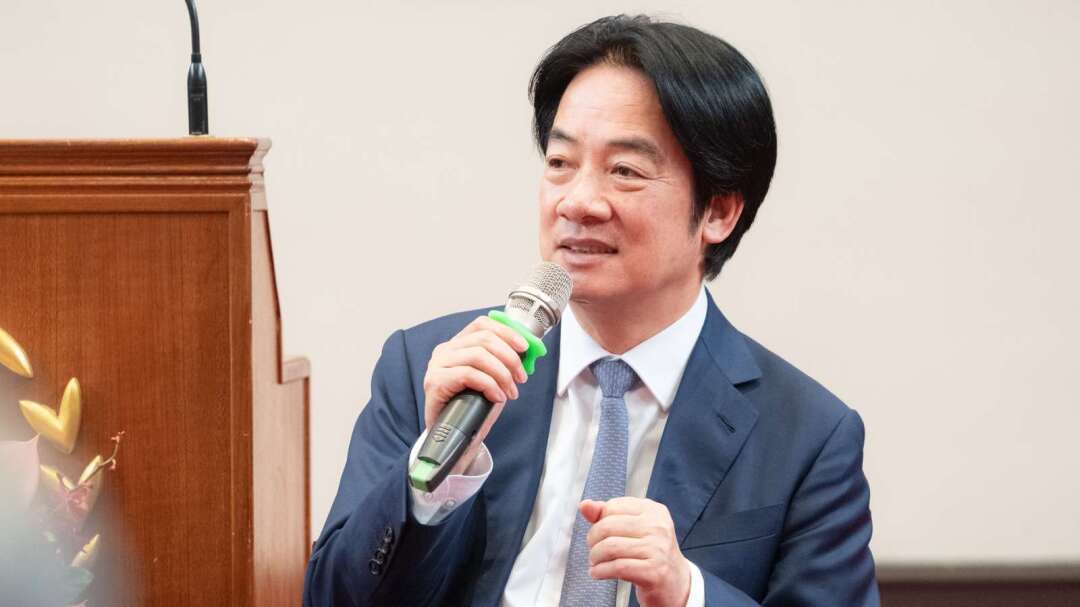
President Lai Ching-te met on March 3 with winners and nominees of the inaugural 'Golden Tang Award,' commending all awardees and nominees for breaking social stereotypes and striving toward their aspirations, while expressing gratitude to foundations and families for their long-term support.
President Lai announced that the government will implement a five-year plan starting in 2024, investing over NT$48 billion by 2028 to expand care services for people with physical and mental disabilities. The 'Long-Term Care 3.0' initiative, launching in 2026, will include individuals with disabilities who require care as eligible service recipients.
'Long-Term Care 3.0' is Taiwan's upgraded long-term care policy in response to its super-aged society, with core goals including expanding service eligibility, relaxing restrictions on foreign caregivers in households, and integrating smart technologies and assistive devices.
In his speech, President Lai expressed longstanding concern for the care and development of individuals with Down syndrome, praising the Down Syndrome Foundation and all partner foundations, enterprises, and loving families supporting 'Tang babies.' He noted that the establishment of the 'Golden Tang Award' honors individuals with Down syndrome, eliminates social stereotypes, and promotes equal appreciation of everyone's abilities, efforts, and achievements.
President Lai outlined three future directions to strengthen government support. First is 'rights'—the government will continue implementing the Convention on the Rights of Persons with Disabilities (CRPD), shifting policies from 'deciding for you' to 'supporting your choices.' Second is 'care'—the five-year plan launched in 2024 will reduce caregiver burdens and expand community and institutional services. Third is 'health'—the 'Healthy Taiwan' initiative will ensure lifelong care, healthcare equity, and the health rights of people with disabilities.
President Lai also mentioned that the Executive Yuan recently approved comprehensive increases to elderly farmers' allowances, National Pension, and six major social welfare subsidies, including living assistance for low-income households, educational subsidies for students from low-income families, child living allowances for low-income families, living allowances for middle- and low-income seniors, living subsidies for people with disabilities, and support for vulnerable children and youth. The government will continue to monitor and support the well-being of vulnerable families.
FACT BOX
- Source: PR Times
- Category: News