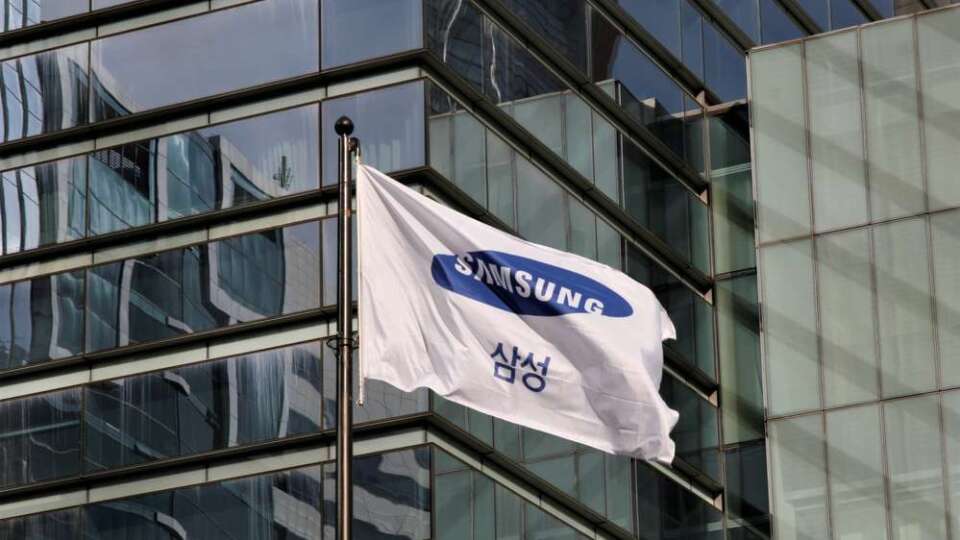
Fueled by robust demand for artificial intelligence (AI) and high-bandwidth memory (HBM), Samsung Electronics (005930KS) expects its foundry division’s capacity utilization to surge to 100% in the second half of the year—signaling a historic turning point that may finally end more than a year of persistent losses.
According to South Korea’s Chosun Ilbo, Samsung’s current foundry capacity utilization stands between 70% and 80%. Given existing order backlogs and ongoing contract progress, full-capacity operation by year-end appears almost certain.
During its Q2 earnings call, Samsung noted significant year-over-year improvements in utilization across all process nodes, with advanced nodes below 8nm reaching their highest levels. The company anticipates that orders for its 2nm projects this year will double compared to last year.
While Samsung remains cautious about pinpointing the exact timing of profitability, it has publicly stated that this goal is achievable in the near future.
Market analysts are broadly optimistic, expecting the foundry and system LSI businesses—non-memory segments—to turn profitable as early as Q3 and no later than Q4. With capacity utilization returning to normal levels and wafer price increases providing additional tailwinds, the pace of profit recovery could exceed initial market expectations.
Two primary drivers underlie this rebound in capacity utilization. First, the sixth-generation high-bandwidth memory (HBM4) adopts a 4nm process, effectively transmitting the memory market’s cyclical upswing into Samsung’s foundry operations.
Second, demand for the 2nm process from cloud service providers (CSPs), AI firms, and high-performance computing (HPC) clients continues to rise. Negotiations with global flagship customers such as Broadcom (AVGO-US) are actively progressing.
As a capital-intensive industry with high fixed costs, the semiconductor foundry sector suffered severe losses over the past year due to prolonged capacity utilization below 50%. Now, as utilization returns to healthy levels, incremental revenue will directly translate into profit gains.
On the customer front, Samsung Foundry is actively diversifying beyond its historical reliance on a single major client. Tech giants including Qualcomm (QCOM-US), AMD (AMD-US), and Google (GOOGL-US) have entered partnership talks, while Tesla (TSLA-US) is reportedly planning to manufacture its next-generation chips using Samsung’s 2nm process. The medium- to long-term order pipeline has significantly thickened.
However, industry experts emphasize that securing large-scale volume orders from titans like Qualcomm hinges on surpassing the 70% yield “make-or-break” threshold for the 2nm process. Current yields are estimated at around 60%, leaving room for further improvement.
Overall, Samsung Foundry is undergoing a deep structural transformation. Advanced processes are projected to account for over 50% of revenue this year, while AI and HPC-related businesses are expected to jump to over 30% of total revenue.
With preparations underway for the launch of Fab 1 in Taylor, Texas, and plans for a second facility already in motion, Samsung is simultaneously expanding its production capacity.
Analysts believe that 100% capacity utilization is the starting signal for ending losses. However, only a stable breakthrough in 2nm yield will truly cement Samsung’s competitive standing in advanced process technologies—and enable flagship product outsourcing from major clients to become the solid foundation for business revitalization.
FACT BOX
- Source: PR Times
- Category: News
- Organizations: AMD