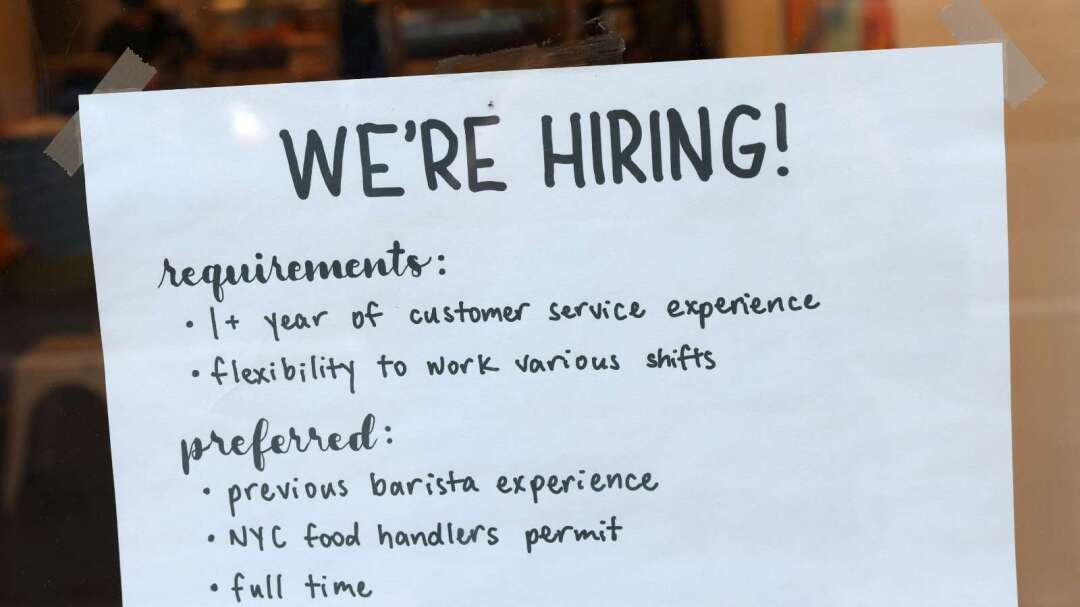
U.S. job openings declined in June, but corporate hiring saw a slight rebound, and layoff numbers remained low, suggesting the labor market continues in a 'slow hiring, slow layoffs' state, with overall supply and demand broadly balanced.
The U.S. Bureau of Labor Statistics (BLS) released its Job Openings and Labor Turnover Survey (JOLTS) on Tuesday (4th), showing that job openings at the end of June decreased by 178,000 from May to 7.359 million—below the 7.4 million expected by economists surveyed by Reuters. The job opening rate also dropped from 4.5% in May to 4.4%.
The decline in job openings was primarily driven by the healthcare and social assistance sector, which saw a monthly drop of 147,000 positions. Job vacancies also fell in leisure and hospitality, wholesale trade, and professional and business services, while transportation and warehousing saw increases. Federal government job openings rose to their highest level since the end of 2024.
Corporate hires in June increased by 96,000 to 5.348 million, raising the hiring rate from 3.3% to 3.4%, mainly driven by healthcare and construction. However, hiring in leisure and hospitality declined for the third consecutive month, falling to its lowest level since early 2025, indicating that anticipated labor demand boosts from the World Cup have yet to materialize.
Layoffs and discharges remained nearly flat at 1.766 million, with the layoff rate holding steady at 1.1%, suggesting that despite recent announcements of layoffs by companies like Visa and Uber, widespread workforce reductions have not occurred. Layoffs increased in professional and business services and entertainment and leisure sectors.
The quit rate, which measures workers’ willingness to voluntarily leave jobs, remained unchanged at 2%, reflecting no significant improvement in employees’ confidence about switching jobs. Currently, there is approximately one job opening per unemployed person, far below the 2-to-1 ratio seen at the 2022 peak, consistent with a balanced labor market.
Some economists caution that JOLTS survey response rates have noticeably declined, so data should be interpreted cautiously. Nevertheless, the labor market’s sustained low-hiring, low-layoff pattern may allow the Fed to keep its policy focus on inflation. The Fed held interest rates steady at 3.5% to 3.75% last week, though three policymakers advocated for a 25-basis-point rate hike.
Markets now await Friday’s (7th) release of the July nonfarm payrolls report. Economists project 80,000 new jobs, up from 57,000 in June, with the unemployment rate likely holding at 4.2%. However, the share of U.S. consumers who believe jobs are plentiful has fallen to its lowest since February 2021, leaving a small upside risk to the unemployment rate.
FACT BOX
- Source: PR Times
- Category: Survey
- Organizations: Visa / Uber