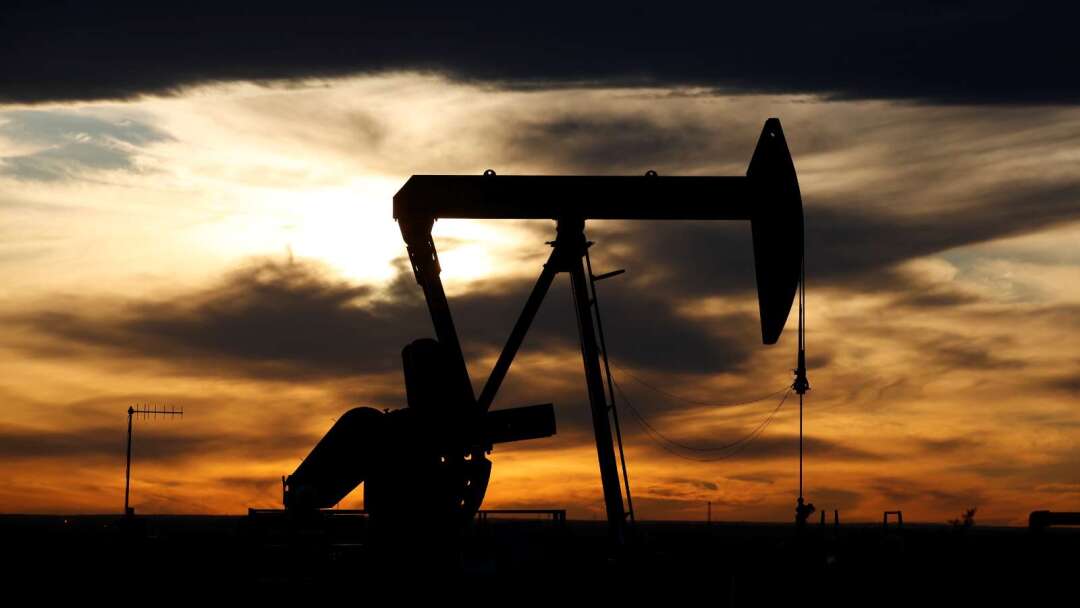
International oil prices plunged for the second consecutive trading day on Tuesday (4th), as market sentiment shifted following reports of progress in negotiations between the United States, Iran, and Oman, along with ongoing Qatari mediation efforts in the Middle East conflict. Expectations that crude oil shipments through the Strait of Hormuz could gradually resume led to a rapid decline in geopolitical risk premiums, pushing both Brent and West Texas Intermediate (WTI) crude oil futures to three-week lows.
Brent crude futures dropped $4.41, or 5.3%, closing at $79.36 per barrel—the lowest settlement since July 13. U.S. West Texas Intermediate (WTI) crude futures fell $4.57, or 5.7%, to settle at $75.77 per barrel, also marking a near three-week low.
U.S. Secretary of State Marco Rubio stated on Tuesday that discussions among the U.S., Iran, and Oman regarding increased vessel traffic through the Strait of Hormuz have made progress, though a final agreement has not yet been reached.
Earlier, U.S. Treasury Secretary Scott Bessent indicated that the U.S. and Iran could potentially reach a deal to reopen the Strait of Hormuz as early as Tuesday or Wednesday.
Qatar’s Foreign Ministry spokesperson, Majed al-Ansari, confirmed that diplomatic efforts to resolve the Middle East conflict are ongoing. The Qatari royal office reported that the country’s leadership and U.S. President Trump have discussed ways to de-escalate regional tensions and narrow the gap between U.S. and Iranian positions.
Meanwhile, a U.S. State Department spokesperson announced that a new round of U.S.-facilitated talks between Israel and Lebanon began on Tuesday and will continue through Thursday.
Simon-Peter Massabni, Head of Business Development at XS.com, noted that since the U.S. resumed airstrikes on Iran last month, oil prices have incorporated a significant geopolitical risk premium. He added that market expectations of a diplomatic resolution are now gradually erasing this premium.
He stated that if U.S.-Iran talks achieve tangible progress, the market will further reduce expectations of supply disruptions, leaving room for additional declines in the geopolitical risk premium embedded in oil prices.
Despite the sharp closing losses, markets briefly narrowed declines during the session. This came after a senior Iranian source told media that Tehran seeks operational control over vessels entering the Strait of Hormuz and the ability to monitor departing ships, reserving the right to intervene when necessary, as part of negotiations with Oman.
Market analysts emphasized that the Strait of Hormuz remains the most critical strategic waterway for global energy supply. Prior to the outbreak of conflict with Iran, approximately one-fifth of the world’s crude oil and natural gas supply passed through the strait, meaning any policy shift could significantly impact global energy markets.
Maritime conditions in the Middle East have not yet improved significantly. Analysts at ANZ Bank noted that Persian Gulf crude exports remain under pressure. While vessel traffic through the Strait of Hormuz has slightly increased from previously extremely low levels, the improvement remains limited, with Iran’s continued attacks on commercial ships constraining energy exports.
Shipping data also showed that vessel traffic through the Strait of Hormuz and the Bab el-Mandeb Strait saw almost no change compared to the previous week at the start of this week.
Due to shipping disruptions, several Middle Eastern countries have significantly cut crude oil production. Saudi Aramco, Saudi Arabia’s national oil company, stated that over 2.6 billion barrels of crude oil supply have been cumulatively lost from global markets since the outbreak of the Iran conflict in February.
Markets continue to closely monitor diplomatic developments. Goldman Sachs (GS-US) forecasts that Brent crude prices will remain range-bound between $80 and $90 per barrel until clarity emerges on whether a new U.S.-Iran agreement is reached or if Middle East military tensions escalate further.
Analysts believe that while markets are beginning to price in potential supply improvements from diplomatic talks, international oil prices will remain highly sensitive to political and military developments in the short term, as shipping through the Strait of Hormuz has not fully resumed and regional uncertainty remains high.
FACT BOX
- Source: PR Times
- Category: News
- Organizations: Saudi Aramco / Goldman Sachs / ANZ Bank