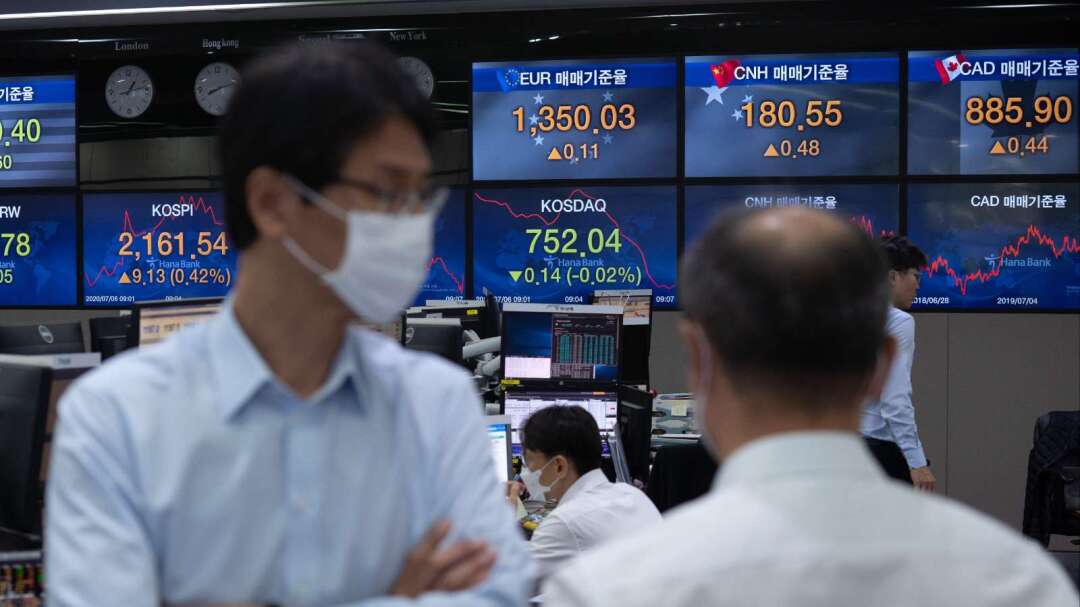
South Korea's retail investors, once known for their risk-taking appetite, have seen their confidence shattered by the historic July plunge in the KOSPI index. Anger and regret are spreading from the streets of Seoul to social media, with some investors vowing never to touch Korean stocks again—a crash that is profoundly reshaping retail investor psychology in South Korea.
The KOSPI index fell 22% in July alone, recording its largest monthly decline since the global financial crisis. The market triggered its circuit breaker four times in July, setting a new historical record.
Despite an 18% strong rebound at month-end, retail investors set a record for net selling of KOSPI stocks on the very day of the rebound, indicating that confidence recovery is far from complete.
According to a Bloomberg report on the 2nd (Sunday), Seoul resident Kim Han-kyung said she has engraved two principles in her mind: "First: Do not invest in the South Korean stock market; Second: Follow the first rule."
The crash was partly triggered by government-backed single-stock leveraged ETFs. Retail investors bought approximately 78 trillion Korean won (about $54.2 billion) worth of KOSPI stocks between May and June, only to suffer heavy losses during the violent market swings in July.
Market analysts warn that the deleveraging process will not end quickly, and the extreme volatility in tech and semiconductor stocks could persist for months.
Since May, optimism had swept through South Korea's stock market. President Lee Jae-myung pushed for market reforms, and the launch of single-stock leveraged ETFs at the end of May gave retail investors a tool to amplify returns, fueling widespread FOMO (fear of missing out).
Amid this backdrop, a flood of retail investors poured into the market, heavily betting on AI-related leaders such as Samsung Electronics and SK Hynix. These two global top-tier memory chip manufacturers collectively account for over 50% of the KOSPI index's weight and are central beneficiaries of the global AI boom.
However, the sharp reversal in July caught these new entrants off guard. Kim Han-kyung, who bought Korean stocks for the first time in early May, recalled: "It was the era of KOSPI mania. I was completely swept up in the frenzy. Now, I'm truly afraid."
Forty-year-old Lee Jung-min borrowed 50 million won by mortgaging his apartment to enter the market and is now deeply in losses. "The government poured oil on the fire with those leveraged ETFs," he said. "They turned the stock market into a casino. I think that's wrong."
Market data underscores the severity of the downturn.
Samsung Electronics plunged 21% in July alone, while SK Hynix fell even more sharply by 35%.
Despite these losses, Samsung's stock price has still risen over fourfold since the beginning of 2025, and SK Hynix's gains are close to tenfold. Even after this correction, the KOSPI index remains among the top performers in global major markets year-to-date.
FACT BOX
- Source: PR Times
- Category: News