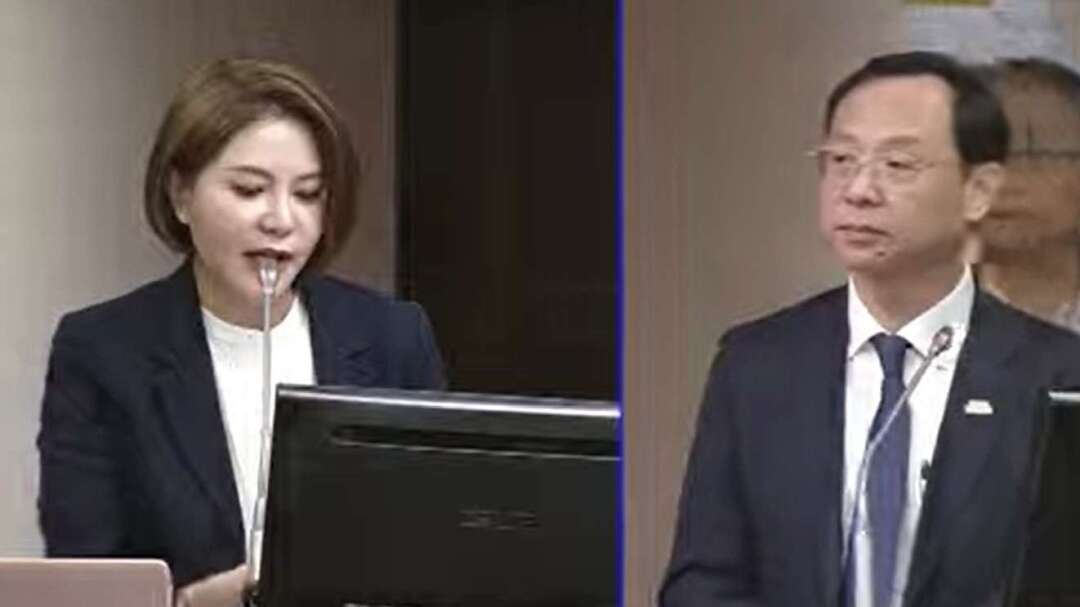
Health Minister Shih Chong-liang was invited today (5th) to the Legislative Yuan to deliver a special report and respond to inquiries regarding the Chung Lian oil food safety incident. In response to external criticism questioning whether the Executive Yuan bypassed the Ministry of Health and Welfare (MOHW) by issuing a '20% recall threshold' directive, and whether Taisugar's procurement of crude oil without reporting constitutes a 'cover-up,' Shih emphasized that all decisions were made based on expert meeting consensus. He reiterated that 'degummed crude oil' is legally defined as a semi-finished product and indeed does not require reporting.
The Chung Lian edible oil carcinogen scandal continues to escalate, with Health Minister Shih Chong-liang attending the Legislative Yuan's Social Welfare and Health Environment Committee today. In response to media reports stating that Xu Fu, Director of the Executive Yuan's Food Safety Office, attended the expert meeting on July 4, while the Health Minister was absent—raising suspicions that the so-called '20% contamination threshold requiring product withdrawal' was directed by the Executive Yuan—
Shih clarified that this figure emerged from expert discussions during the meeting, referencing international principles, and that 'administrative agencies highly respect expert conclusions,' rather than being unilaterally decided by the Executive Yuan.
Regarding allegations of internal communication failure, Shih further explained that past food safety advisory meetings were routinely convened by the Food and Drug Administration (FDA), not at the ministry level, and that meeting procedures followed standard protocols. Internal communications remained synchronized, and there was no instance of 'bypassing the MOHW.'
On the issue of Taisugar discovering in May that Chung Lian's crude oil failed to meet acceptance standards but failing to report it, Shih provided a detailed legal clarification in his report. He pointed out that under Article 7, Paragraph 5 of the Food Safety Act, businesses must report products posing health risks. However, administrative actions must 'follow the law.' Legally, the 'degummed crude oil' procured by Taisugar is an 'intermediate product' in the soybean salad oil production process and is not yet classified as a legally defined 'product.'
Shih emphasized that the current Food Safety Act Article 17 targets 'edible oils,' with no specific standards set for 'degummed crude oil.' He explained that degummed crude oil can be used not only for food after refining but also for soap or industrial oil, making it fundamentally different from cases like chili powder adulterated with the banned substance 'Sudan Red.' Since Sudan Red is absolutely prohibited and must not be detected in any raw material or finished product, whereas crude oil remains in a legal gray area regarding standard application.
In practical terms, Shih reported that after receiving notification on June 30, immediate action was taken to require Chung Lian Company to halt production and shipment. Expanded testing was conducted on oil products manufactured between April and June, completing 224 upstream and downstream inspections. Ultimately, seven batches were confirmed as non-compliant, while the remaining 19 batches and tested compliant products were approved for relisting on July 21 following confirmation by the advisory committee.
Finally, regarding compensation for affected consumers, Shih announced that the Executive Yuan's Consumer Protection Office has coordinated with groups such as the Consumer Foundation to facilitate damage compensation claims. Going forward, the 'Food Safety Fund' will fully support litigation. The MOHW pledged to conduct a complete investigation report on this incident and ensure the safety of military group meals and student nutrition lunches in the future.
FACT BOX
- Source: PR Times
- Category: News