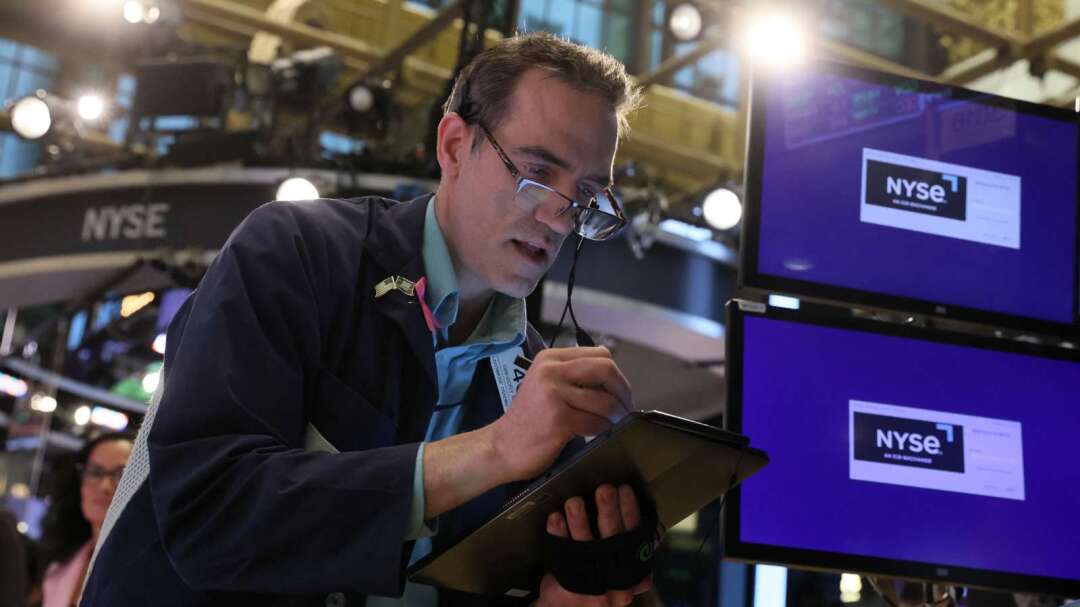
U.S. major stock indices opened higher on Wednesday (5th), with the S&P 500 briefly hitting a new all-time high, extending its fifth consecutive day of gains.
The latest batch of corporate earnings reaffirmed the resilience of the U.S. economic fundamentals, while demand for artificial intelligence (AI) infrastructure remains strong. Investor risk appetite was further boosted by expectations of a diplomatic breakthrough between the U.S. and Iran, raising hopes that the Strait of Hormuz could reopen soon. Although SpaceX and AMD failed to meet elevated investor expectations—leading to sharp pre-market declines—their weakness did not derail the broader market rally.
As of press time, the Dow Jones Industrial Average was up nearly 500 points, or 0.9%; the Nasdaq Composite rose 120 points, or 0.4%; and the S&P 500 gained 0.6%. The Philadelphia Semiconductor Index dipped 0.3%, while TSMC ADR climbed 0.8%.
Pre-market momentum continued Wednesday, supported by earnings reports indicating solid U.S. economic underpinnings and sustained demand for AI infrastructure. With the S&P 500 futures up 0.5% and Nasdaq 100 futures slightly higher, investor sentiment remained positive.
NVIDIA shares rose in pre-market trading, buoyed by strong monthly revenue growth from its key partners, signaling continued global demand for AI infrastructure deployment.
Arista Networks (ANET-US), a cloud networking equipment provider, surged 14% pre-market after forecasting third-quarter revenue above Wall Street expectations. This reinforced confidence in the durability of big tech companies’ AI spending.
However, pre-market individual stock performance was mixed. SpaceX (SPCX-US) plunged over 11% after releasing its first quarterly report since its June IPO, announcing that AI-related capital expenditures would exceed market expectations. AMD fell about 9% pre-market due to its third-quarter revenue guidance falling short of high investor expectations, despite slightly beating estimates in the prior quarter.
Although some tech earnings disappointed, recent corrections have brought valuations back to more reasonable levels, helping restore investor confidence. Last month’s market volatility caused losses for some hedge funds, and the MSCI World Semiconductor Index dropped over 20% from its June peak, pressured by concerns over the sustainability of AI spending and advances in China’s advanced chip manufacturing.
However, the index has since rebounded 15% from its lows, indicating renewed capital inflows into semiconductor stocks. Stephan Kemper, Chief Investment Officer at BNP Paribas Wealth Management Germany, stated that while individual company results may disappoint, overall data confirms that the long-term trend of computing infrastructure investment remains intact. Thus, even if some stocks face pressure, the tech sector as a whole is likely to benefit.
As of Wednesday (5th) around 9:00 PM Taipei time:
- Dow Jones Industrial Average: Up 398.04 points (0.74%), at 54,483.92 - Nasdaq Composite: Up 112.81 points (0.42%), at 26,697.81 - S&P 500: Up 46.13 points (0.60%), at 7,782.65 - Philadelphia Semiconductor Index: Down 4.20 points (0.03%), at 12,175.07 - TSMC ADR: Up 0.96% to $421.09 per share - 10-year U.S. Treasury yield: Up to 4.62% - NY Light Crude: Down 0.08% to $75.71 per barrel - Brent Crude: Up 0.87% to $80.05 per barrel - Gold: Up 2.44% to $4,253.80 per ounce - U.S. Dollar Index: Down to 99.72
Key Stocks:
SpaceX (SPCX-US): Down 11.67% early, to $110.79 per share. Pre-market down 11%. The Elon Musk-led space company reported its first quarterly results since its June listing. Q2 revenue was $7.81 billion, beating LSEG’s forecast of $6.93 billion. EPS loss was $0.09, though comparability with the expected $0.26 loss is unclear. Capital expenditures surged 550% year-on-year to $18.37 billion due to AI investments, raising market concerns. SpaceX began trading under the ticker SPCX in June 2024.
AMD (AMD-US): Down 6.88% early, to $482.89. Pre-market down 8.5%. Q2 adjusted EPS was $1.66 and revenue $11.54 billion, slightly above LSEG consensus, but failed to meet elevated investor expectations. Q3 revenue guidance of ~$13 billion met expectations but lacked upside surprise, dragging shares lower.
Circle (CRCL-US): Down 6.03% early, to $59.44. However, Circle Internet Group rose over 5% pre-market after announcing the first partners for its financial services blockchain Arc and significantly raising its full-year other income forecast—from a midpoint of $160 million to $320 million—driving investor optimism. Circle trades on the NYSE under the ticker CRCL.
Key Economic Data Today:
- U.S. July ADP Employment Change: +44K (expected +68K, prior +95K) - U.S. July ISM Non-Manufacturing Index: Expected 54.5, prior 54.0 - U.S. July Services PMI Final: Expected 53.6, prior 51.2 - U.S. July Composite PMI Final: Expected 53.6, prior 51.9
Wall Street Analysis:
JPMorgan noted that the backlog of unfulfilled contracts at major cloud providers has grown over 150% year-on-year, totaling approximately $1.7 trillion—significantly outpacing the ~80% increase in capital expenditures during the same period. Both backlog and new annual recurring revenue (ARR) are growing faster than capex, suggesting future revenues could justify the current multi-hundred-billion-dollar AI investments.
JPMorgan believes that if market focus shifts from “Are AI spending levels too high?” to “Are AI investments starting to yield returns?”, the next leg of tech stock gains could be led by large tech platforms, not just AI chipmakers. The Roundhill Magnificent Seven ETF, tracking the U.S. tech giants, has rebounded nearly 10% from recent lows, reclaiming its 200-day moving average and approaching the long-term uptrend line extending from April 2023.
FACT BOX
- Source: PR Times
- Category: News
- Organizations: SpaceX / AMD / Arista Networks