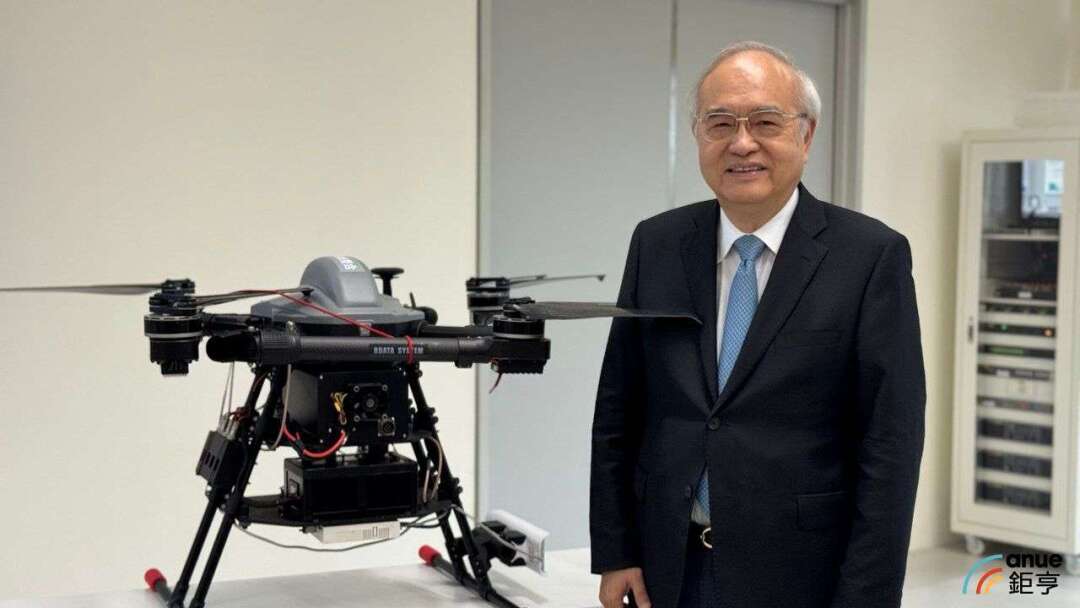
Elan (2458-TW) held its earnings call today (5th), stating that due to rising prices of CPUs, DRAM, passive components, and wafer foundry services, the overall operating environment in the second half will be tougher than in the first half. However, drone AI Box shipments have started in July, with further integration into obstacle avoidance systems expected by year-end. In silicon photonics, the 1.6T photonic integrated circuit (PIC) developed by PETA, a company in which Elan has invested, is scheduled for mass production in the first half of next year, while the 3.2T product is expected to enter sampling later this year.
According to Elan, supply chain conditions indicate weaker demand in the second half compared to the first half, primarily due to more severe-than-expected shortages of CPUs and DRAM, along with continuously rising material costs. CPU suppliers are inherently limited in number, and recently have shifted more capacity and resources toward AI servers, tightening supply even further for the general PC market.
Some customers' previously prepared component inventories are gradually being depleted, making second-half shipments more vulnerable to component shortages. The company will continue to respond to short-turn and urgent customer orders, mitigating supply disruption risks through early ordering and increased inventory levels.
In terms of product mix, Elan estimates that touch-related products will account for roughly the same revenue share in Q3 as in Q2, while AI product share may slightly increase. Non-touch products could decline by 1 to 2 percentage points compared to Q2.
Regarding gross margin, Elan expects Q3 margins to face greater pressure than Q2 due to ongoing price hikes from foundries, as well as rising costs of DRAM, passive components, and other materials.
To reflect higher costs, Elan implemented price increases effective July 1 across all product lines, with increases ranging from 5% to over 10%, depending on the product and customer. Customers generally understand the reasons for the price hikes, though actual increases and implementation timelines vary.
In drones, Elan supplied image signal processors (ISPs) and camera modules in the first half, with ISP unit prices around USD 5–6 and camera modules around USD 40–50. Since July, the company has begun shipping drone AI Boxes, currently priced at approximately USD 300 and USD 500—significantly higher than previous standalone ISP or camera module offerings.
Elan emphasized that its competitive advantage in the drone market lies not just in selling camera modules, but in integrating them with AI Boxes to provide more comprehensive vision processing solutions.
The AI Box primarily handles front-end optical and image processing, with obstacle avoidance functionality expected to be introduced by year-end. A forward- and downward-facing architecture similar to France’s Parrot, equipped with about four cameras, would result in a system price of around USD 500. A full-directional obstacle avoidance setup like DJI’s, with about 12 cameras covering front, back, left, right, top, and bottom, could exceed USD 1,000 per unit.
Shipments of drone products to Thunder Tiger have also commenced. Elan noted that Thunder Tiger has stringent specifications and verification requirements; after multiple calibration trips to Chiayi, the products have officially passed validation and entered mass shipment.
All drone-related products are currently classified under AI business, with first-half revenue contribution still in the low single digits. With orders increasing since June, the annual revenue share is expected to rise, though it will remain in the single-digit range.
Looking ahead to next year, Elan anticipates that growth in obstacle avoidance, AI vision, and overseas customer orders will boost both average selling prices and revenue share for drone products, leading to more significant progress in this segment.
In silicon photonics, Elan's investment in PETA marks its formal entry into the high-speed optical communications market. PETA focuses on photonic integrated circuits, with the 1.6T PIC already in sampling and scheduled for volume production in the first half of next year. The 3.2T PIC is expected to sample later this year. The electronic integrated circuit (EIC) is co-designed, developed, and manufactured by Elan and PETA, with sampling expected in the second half of next year and mass production likely in the first half of the following year.
Beyond new ventures, Elan sees AI PCs driving upgrades in human-machine interface specifications. The company estimates AI PC penetration at around 50% this year, potentially rising to 60% next year. As agent-type AI evolves, demand for haptic touchpads, fingerprint recognition, touchscreens, and active pens is expected to grow further.
FACT BOX
- Source: PR Times
- Category: New Product
- Organizations: PETA / Thunder Tiger / Parrot
- Products / services: AI Box