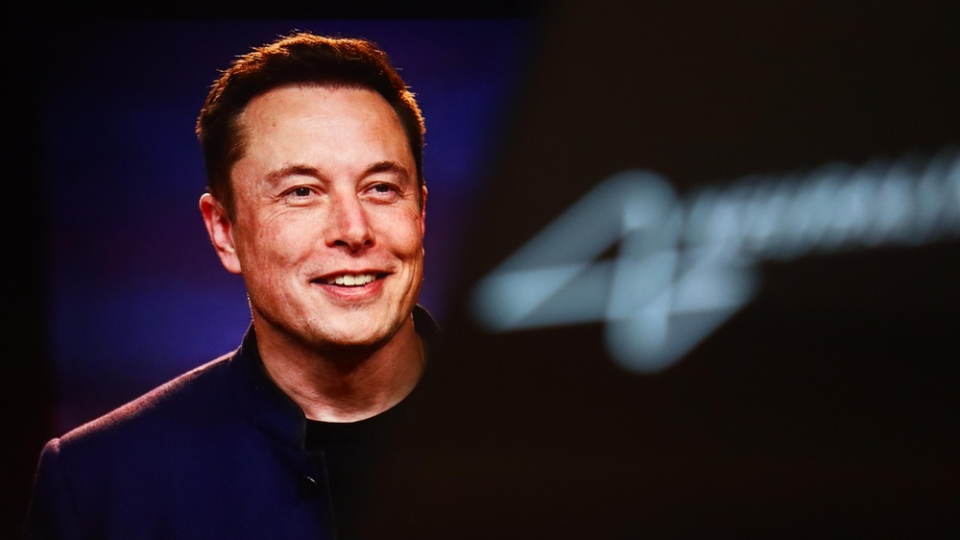
A recent interview clip featuring NVIDIA (NVDA-US) CEO Jensen Huang has sparked widespread discussion on social media. In discussing the future of AI competition, Huang specifically named Tesla (TSLA-US) and SpaceX (SPCX-US) CEO Elon Musk, stating that Musk holds a 'phenomenal position' in the AI race. According to Huang, Musk’s advantage does not stem from personal charisma, but from robust foundations in computing infrastructure, real-world data, and multiple AI application domains.
Huang emphasized that Musk’s greatest strength lies in infrastructure and data resources that are difficult for competitors to replicate in the short term. Tesla continuously accumulates vast amounts of driving data from its global fleet, while deploying extensive NVIDIA hardware to support AI computation. Combined with the parallel advancement of three major AI initiatives—xAI, Tesla Autopilot, and the Optimus humanoid robot—Musk occupies a strategically critical position in the AI era.
### Real-World Data as the Key to AI Competition
In the circulated video, Huang highlighted that collecting real-world data is extremely costly, giving Musk a significant edge. This advantage stems from two main areas: AI computing infrastructure and access to real-world data.
First, in terms of computing power, Tesla’s AI factory for autonomous driving training utilizes a large number of NVIDIA GPUs, making it one of the world’s most powerful AI training platforms. This infrastructure enables continuous iteration of the Full Self-Driving (FSD) model.
Second, in data collection, Tesla operates one of the largest connected vehicle fleets globally, continuously gathering data on driving environments, road conditions, and vehicle operations. Unlike AI companies relying on public datasets, Tesla gains ongoing access to high-cost, real-world data—an essential foundation for the evolution of autonomous driving models.
Huang believes Musk’s advantage in the AI era is a result of long-term accumulation and cannot be easily replicated in a short timeframe.
### Three AI Battlegrounds: xAI, Autonomous Driving, and Humanoid Robots
Beyond infrastructure and data, Huang also stressed that Musk is strategically positioned in the three most critical directions of AI: foundational models, autonomous driving, and humanoid robotics.
Specifically, xAI focuses on cognitive intelligence and foundational AI models; Tesla concentrates on autonomous driving; and Optimus targets the development of humanoid robots. Huang identified these three areas as the most important battlegrounds for the future of AI.
This suggests that AI competition will extend beyond chatbots and large language models into robotics and physical-world applications. If foundational models represent 'thinking,' autonomous driving represents 'understanding the real world,' and humanoid robots represent 'entering and acting in the real world,' together they form a crucial closed-loop system for the next phase of AI development.
### AI Competition Shifts from Models to Infrastructure
In recent years, the focus of AI competition has shifted from model parameter scale to harder-to-replicate infrastructure capabilities. On one hand, large models are driving rapid investment in GPUs and data centers; on the other, tech companies are recognizing high-quality real-world data as a new scarce resource.
In this context, autonomous driving has become a vital data source for the AI industry. Tesla’s millions of connected vehicles generate massive driving data daily, used not only for FSD training but also to build a data moat that other AI companies struggle to replicate.
Meanwhile, Musk continues expanding his AI footprint: xAI trains next-generation foundational models, Tesla advances FSD and Robotaxi, and Optimus is positioned as a scalable humanoid robot platform for the future.
By highlighting these three initiatives, Huang underscores that AI competition will increasingly revolve around computing power, data, and robotic applications—not merely who possesses the most powerful large model.
### Huang Reinforces NVIDIA’s Central Role in AI
Notably, while analyzing Musk’s advantages, Huang also reiterated the importance of AI infrastructure. Whether training foundational models or advancing autonomous and robotic systems, sustained investment in large-scale GPU clusters and data centers is essential—and NVIDIA GPUs remain a core component of today’s AI training and inference infrastructure.
Huang has previously stated that every major company will eventually build its own 'AI factory.' In the AI era, core competitiveness lies not just in algorithms, but in the ability to continuously transform data into intelligence through computing infrastructure.
Using Tesla as an example, Huang reaffirmed that what is truly difficult to replicate is not a single model, but the flywheel effect created by the long-term integration of computing power, real-world data, and application scenarios.
FACT BOX
- Source: PR Times
- Category: News
- Organizations: NVIDIA / Tesla / SpaceX
- Products / services: NVIDIA GPU / Tesla FSD