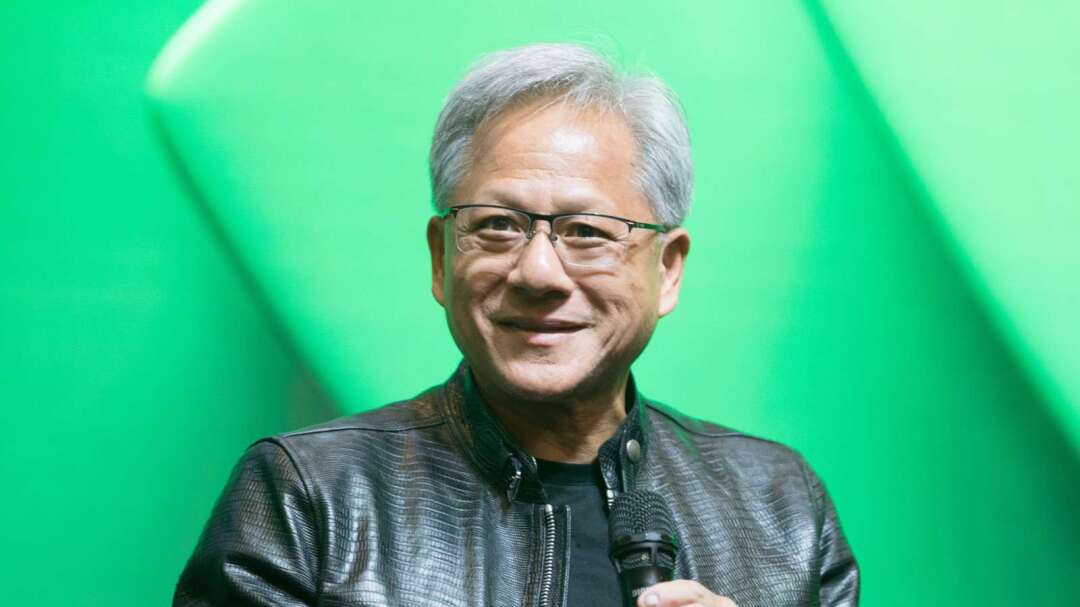
NVIDIA (NVDA-US) CEO Jensen Huang announced on April 4 via the social platform X the official launch of Alpamayo 2 Super, its latest open-source autonomous driving inference model. He stated, "The next wave of AI is robotics, and it will begin with autonomous vehicles," emphasizing that the new model is open-sourced under the OpenMDW-1.1 license for commercial use, aiming to advance the development of autonomous driving and robotics ecosystems.
Huang explained that Alpamayo 2 Super is NVIDIA's most advanced autonomous driving inference model to date, capable not only of visual recognition but also of understanding complex environments and performing reasoning before taking action. It is expected to be applied in robotaxis, logistics trucks, buses, agricultural machinery, and various mobile robots, potentially supporting billions of autonomous machines in the future.
Alpamayo 2 Super is released under the OpenMDW-1.1 license, allowing enterprises to inspect the model, fine-tune it, and deploy it commercially. This license, developed by the Linux Foundation for open-source AI models, covers model fine-tuning, derivative models, and commercial redistribution. Automakers, autonomous driving system developers, and suppliers can customize the model according to their specific needs.
According to NVIDIA's published data, Alpamayo 2 Super features 320 billion parameters—triple the size of the 100 billion-parameter Alpamayo 1 and Alpamayo 1.5 models—significantly enhancing the model’s generalization and reasoning capabilities for sparse samples and long-tail scenarios, particularly excelling in complex road situations involving multi-vehicle interactions.
The new model simultaneously outputs five results: vehicle trajectory planning, decision-making causal chain (Chain of Causality, CoC), meta-actions describing the model’s intent (e.g., yielding, lane changing, stopping), automatically inferred annotation data, and visual question answering (VQA) results combined with 2D images, helping developers understand the model’s decision-making rationale.
Additionally, Alpamayo 2 Super functions as an automatic annotation tool, converting raw driving footage into high-quality training data and generating CoC annotations. This reduces the data annotation process, which previously took months, to just days, while supporting multiple functions such as scene understanding, model evaluation, and knowledge distillation—all within a single foundational model.
NVIDIA stated that Alpamayo 2 Super is specifically designed for real-world road environments, featuring new capabilities including 360-degree environmental perception, advanced driving decision-making, and automatic reasoning-based annotation. It is already commercially applicable to robotaxis and autonomous driving systems.
In terms of performance, test results published by NVIDIA show that Alpamayo 2 Super ranked first among nearly 40 evaluated models on the LingoQA autonomous driving reasoning benchmark. According to the Lingo-Judge scoring, it scored 17 points higher than Qwen2.5-VL 72B, 15.1 points above Gemini 2.5 Pro, and 23.2 points above GPT-4o, ranking first across all autonomous driving benchmark tests conducted by NVIDIA, demonstrating its superior reasoning capabilities in intelligent driving scenarios.
Alpamayo 2 Super is now officially available on the Hugging Face platform and has become a key component of NVIDIA’s open autonomous driving AI ecosystem. Related tools include the AlpaSim closed-loop simulation platform, the AlpaGym high-throughput reinforcement learning framework, the Physical AI Open Datasets, and a complete open training pipeline with an automated annotation toolchain.
NVIDIA officially entered the autonomous driving field in 2015, launching the DRIVE PX platform at CES that year and entering the automotive AI computing market. It subsequently released platforms such as DRIVE PX 2, DRIVE Xavier, and DRIVE Orin, gradually establishing its automotive AI chip portfolio.
In 2021, NVIDIA announced the DRIVE Atlan and DRIVE Hyperion 8 platforms; in 2022, it introduced DRIVE Thor as its next-generation flagship automotive chip, claiming peak computing performance of 2,000 TOPS, and launched the Hyperion 9 platform, attracting adoption from automakers like BYD.
In 2024, NVIDIA announced that DRIVE Thor would adopt the Blackwell architecture, adjusting its INT8 computing power to 1,000 TOPS, with mass production delayed to 2026.
During the 2026 CES, NVIDIA officially launched the Alpamayo series models. Alpamayo 1 adopted a 100-billion-parameter VLA (Visual-Language-Action) architecture and simultaneously open-sourced the AlpaSim simulation platform and a 1,700-hour Physical AI real-world driving dataset. Initial partners included Jaguar Land Rover, Lucid (LCID-US), Uber Technologies (UBER-US), and Mercedes-Benz, with the Mercedes-Benz CLA being the first to integrate it for real-world testing.
In March of the same year, NVIDIA released Alpamayo 1.5, enhancing reasoning capabilities for urban roads and extreme weather conditions, and introduced the Halos in-vehicle safety operating system, providing automotive-grade safety protection. Automakers such as BYD, Geely, Nissan, and Isuzu joined the Hyperion and Alpamayo co-development alliance.
In June 2026, Alpamayo 2 Super was upgraded to 320 billion parameters, primarily targeting Level 4 robotaxi applications, with significantly enhanced full-domain planning capabilities. Officially, the Alpamayo series surpassed 400,000 cumulative downloads within six months of launch and ranked among the most popular robotics models on Hugging Face.
Jensen Huang officially joined the X platform just 10 days ago and has since posted three times. The first two focused on open-source AI model collaboration and the Open Safe AI Alliance, while the third centered on autonomous driving and robotics. To date, his account has gained approximately 989,000 followers, and the three posts have collectively surpassed 70 million views.
Huang believes that robotics will be the next major growth driver for the AI industry, and autonomous driving is a crucial starting point for Physical AI. With simultaneous advancements in open-source models, in-vehicle AI platforms, and AI infrastructure, NVIDIA continues to expand its strategic footprint from intelligent driving and robotics to the future Physical AI ecosystem.
FACT BOX
- Source: PR Times
- Category: New Product
- Organizations: Uber Technologies / Mercedes-Benz / Lucid
- Products / services: Alpamayo 2 Super / AlpaSim