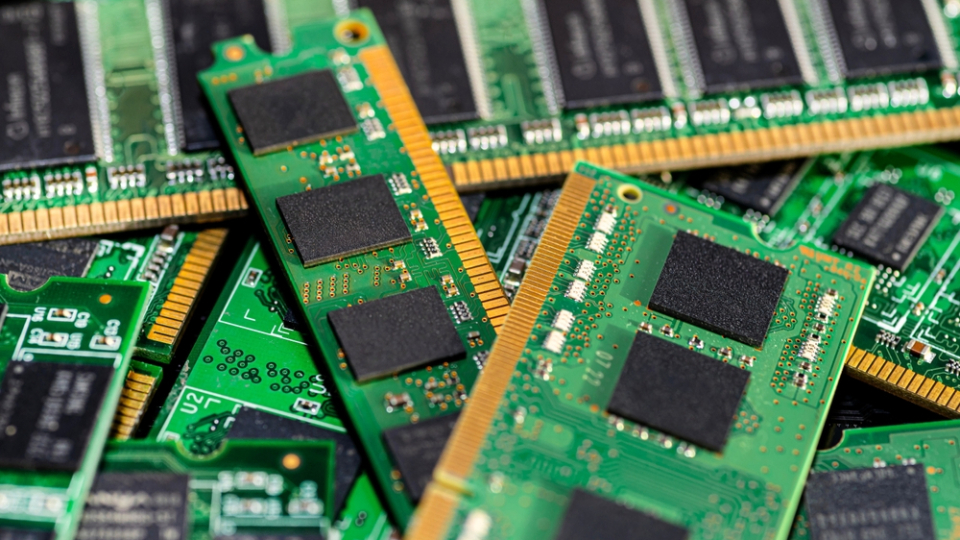
The artificial intelligence (AI) wave continues to elevate the semiconductor industry's value chain, giving rise to an emerging investment segment not previously classified in official market categories. Investors have coined it 'Memi.' Though it lacks a dedicated stock ticker, it is absorbing massive capital amid a $700 billion AI infrastructure boom, becoming the nerve center of global capital markets.
For cloud service giants like Amazon (AMZN-US), Google (GOOGL-US), Meta (META-US), and Microsoft (MSFT-US), securing sufficient storage chips has become a critical bottleneck in their race to build massive data centers.
Globally, the supply of high-end memory chips is almost entirely controlled by three leading manufacturers: Micron Technology of the U.S., SK Hynix of South Korea, and Samsung Electronics of South Korea.
Benefiting from unprecedented AI-driven demand, all three companies now have market capitalizations at or exceeding $1 trillion, with their stock prices continuing to rise strongly.
However, investors must remain vigilant: the influence of the 'Memi' segment has already spilled over into U.S. small-cap funds, international equity funds, and emerging market funds.
This means that even a seemingly diversified and risk-controlled portfolio may have far greater actual exposure to the Memi sector than investors anticipate.
Despite the surge in related stocks, if tech giants reduce capital expenditures in the coming quarters, the sector could face a sharp correction. Given recent volatility in tech stocks, this pullback pressure may already be underway.
Looking at performance this year, Micron's stock has surged 240%, reaching a market cap of $1.1 trillion. SK Hynix officially listed on Nasdaq this month, raising $26.5 billion—the largest fundraising ever for a foreign company listing in the U.S. Samsung's shares on the Korea Exchange have risen 116% year-to-date, demonstrating explosive momentum.
Memory and Semiconductors: The New Barometer of the AI Wave
The term 'Memi' originated from Harbor Capital's mid-year investor outlook conference. Spencer Lerner, Head of Multi-Asset Solutions at Harbor Capital, confirmed that combining 'Memory' and 'Semiconductor' into 'Memi' was intentional, as storage chips have now become the core barometer of the entire semiconductor sector.
Lerner noted that among AI-beneficiary sectors, semiconductor stocks have soared this year. Whether memory chips, power chips, analog chips, or computing chips, all have performed exceptionally well, outpacing even the so-called 'Magnificent Seven' U.S. tech giants.
In past AI booms, market attention focused largely on NVIDIA's graphics chips. Now, memory chips are increasingly becoming the new spotlight.
Supply-Demand Imbalance Keeps Prices Firm, Pricing Power to Last at Least Two Years
It is well known that NVIDIA's high-performance chips require DRAM—the primary memory chip—to handle the massive data throughput needed for training large AI models.
Harbor Capital's report indicates that DRAM prices remain highly resilient, and meaningful supply increases in memory chips are unlikely before 2028.
This implies that Micron Technology (MU-US), SK Hynix (000660KS), and Samsung (5007-TW)—the three leaders of the Memi sector—will maintain strong pricing power for at least two more years.
Micron CEO Sanjay Mehrotra stated in the Q3 earnings call that demand for AI storage bandwidth is 'endless.'
Micron has reaped enormous profits thanks to its extremely scarce product pricing power. Quarterly revenue surged to $41.5 billion, up 74% quarter-on-quarter and 346% year-on-year. DRAM business revenue alone hit a record $31.3 billion, up 343% year-on-year, accounting for 76% of total quarterly revenue.
Additionally, Longhill Investments launched the world's first ETF dedicated to the memory chip sector, 'DRAM,' in April this year. Its top three holdings are Micron, SK Hynix, and Samsung.
The ETF, listed less than a year ago, has already achieved a cumulative return of 162%, peaking at 180% in June—demonstrating the market's intense enthusiasm.
A Domino Effect: Quietly Binding Global Multi-Asset Markets
'Memi' may sound like a playful informal label, but these memory chip companies are creating real domino effects in public equity markets, tightly interweaving market segments that once seemed unrelated.
Lerner analyzed that this year, U.S. small-cap stocks, emerging market equities, and developed market equities outside the U.S. have all outperformed U.S. large-cap stocks. The upward momentum in these three segments can ultimately be traced back to the same group of memory chip companies.
In emerging markets, the relevant index returned 43.51% over the past year, with most of the gains coming from South Korea's Samsung and SK Hynix, and Taiwan's TSMC (2330-TW).
Lerner emphasized that this rally stems from genuine corporate earnings growth, not merely investors paying higher price-to-earnings ratios. Korean and Taiwanese stocks now account for 51% of the index.
This phenomenon is mirrored in other overseas markets. In developed markets outside the U.S.—covering Europe, Australia, and the Far East—the MSCI index rose 20.8% over the past year, with Japan contributing most of the gains.
Over the same period, the MSCI Japan Index surged 29.5%, primarily driven by domestic semiconductor equipment makers and memory chip firms, including Tokyo Electron and Kioxia, which spun off from Toshiba's storage business in 2017.
Even in the historically lackluster small-cap space, AI themes have strongly boosted stock prices. The MSCI Small Cap Index rose 30.2% over the past year, with its largest holding being SanDisk, which produces high-performance flash memory-based memory cards.
Lerner concluded that most of this year's stock market logic can be distilled into three core questions: Where are the bottlenecks? Where are the funds from hyperscale and emerging cloud providers flowing? And who are the ultimate beneficiaries of this funding chain? Understanding this logic makes it easy to interpret most stock performances this year.
Breaking Free from Traditional Cycles—or Doomed to Repeat History?
Of course, the memory chip market has long been known for its intense cyclical nature, having weathered multiple booms and busts.
When manufacturers continuously expand capacity to meet massive demand, oversupply often leads to a collapse in chip prices.
However, supported by the unprecedented scale of AI infrastructure investment and the market's belief that more powerful AI models will fundamentally rewrite business rules, many bulls are optimistic that the memory chip market may finally break free from its historical cycles.
If this thesis holds, the 'Memi' sector may not be a fleeting market fad. But if history repeats itself, this demand-fueled 'Memi' segment could ultimately become just a 'memory' in capital markets.
FACT BOX
- Source: PR Times
- Category: News
- Organizations: Amazon / Google / Meta
- Products / services: DRAM