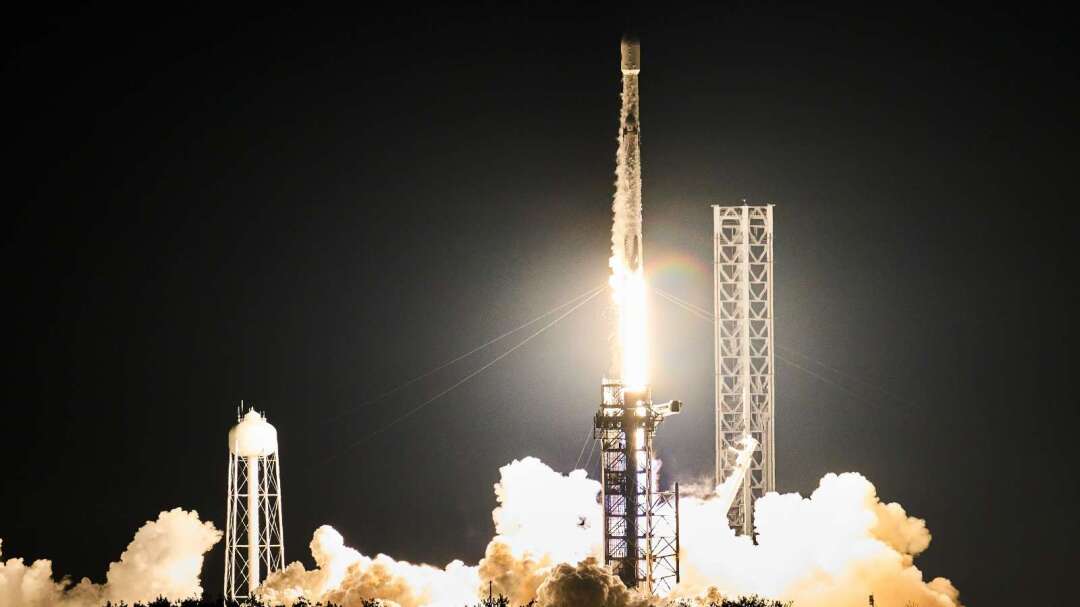
SpaceX (SPCX-US) saw its stock plummet over 13% to $108.27 per share on Wednesday (5th), erasing $225 billion in market value overnight. The sell-off was triggered by market concerns over the company's massive capital expenditures on artificial intelligence (AI) infrastructure, despite second-quarter revenue exceeding expectations and losses continuing to narrow. The significant cash burn has become a focal point for investors.
This marks SpaceX's first financial report since its historic IPO in June. CEO Elon Musk outlined the company's future vision during the earnings call, raising its 2030 revenue target to $1 trillion—bringing forward the original timeline by one year—and announcing plans to begin deploying space-based data centers as early as next year to further strengthen its AI infrastructure.
However, market attention has shifted more toward cash flow performance than operational growth. SpaceX reported substantial free cash outflows in both the first and second quarters of this year, with Q2 capital expenditures reaching $18.36 billion—approximately $2.8 billion higher than the same period last year.
The company revealed that about $15.8 billion of Q2's capital spending was allocated to AI operations, underscoring AI as its top investment priority. Prior to its IPO, SpaceX positioned itself as a technology company integrating space, satellite communications, and AI infrastructure, aiming to attract a broader investor base.
Operationally, the AI segment remains the fastest-growing division. Q2 revenue surged 247% year-on-year to $2.6 billion, driven by new cloud service contracts that generated approximately $1.6 billion in AI infrastructure revenue. Overall computing capacity also expanded to 1.4GW.
Nevertheless, satellite communications, centered on Starlink, remains the primary profit driver. Benefiting from a doubling of Starlink users compared to the previous year, the segment's revenue rose 66% year-on-year to $4.3 billion, maintaining its position as the company's largest revenue source. Customers span consumers, enterprises, governments, and commercial markets such as aviation and cruise lines.
The financial report showed SpaceX's Q2 revenue reached $7.81 billion, surpassing the market estimate of $6.81 billion. Adjusted loss per share was $0.09, a significant improvement from the $0.34 loss per share in the same period last year.
However, research firm Vital Knowledge noted that while revenue and EBITDA performance were strong, the deterioration in free cash flow reflects an unprecedented pace of investment in AI infrastructure, which will continue to pressure finances in the short term—this is the primary reason for the market's cautious reaction to the earnings report.
Founded by Elon Musk in 2002, SpaceX currently operates across three core areas: space launch (Space), satellite communications (Connectivity), and artificial intelligence (AI). Starlink remains the company's largest business segment, while post-IPO efforts are focused on expanding AI infrastructure to create a new growth engine.
SpaceX's IPO was priced at $135 per share, and the stock briefly surged above $200 after listing. However, it has since declined sharply, losing over $1 trillion in market value from its peak—indicating that while long-term growth prospects remain appealing, investors are wary of the short-term financial strain caused by massive AI investments and cash flow pressures.
FACT BOX
- Source: PR Times
- Category: News
- Organizations: Vital Knowledge
- Products / services: Starlink