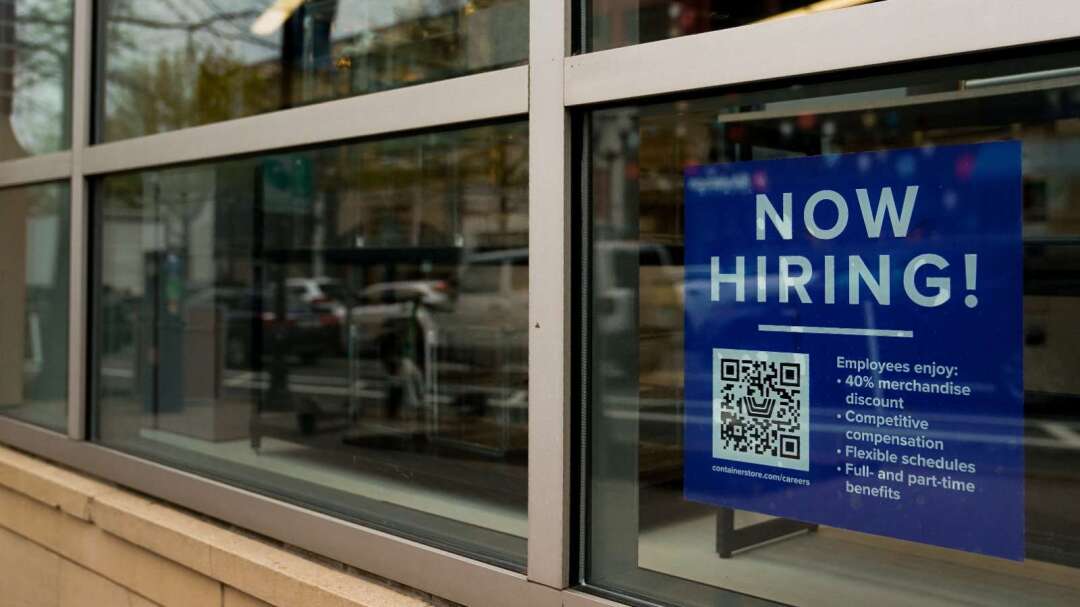
Initial jobless claims in the United States increased only slightly last week, staying below 200,000 for the third consecutive week, signaling that the labor market remains stable even as recent employment growth has slowed and companies have not engaged in large-scale layoffs.
The U.S. Department of Labor reported on Thursday (August 6) that seasonally adjusted initial jobless claims for the week ending August 1 rose by 1,000 to 199,000, below the 202,000 expected by economists surveyed by Reuters. This marks the third consecutive week that initial claims have stayed below 200,000, setting the longest such streak since 1969—when the U.S. labor force was only about half its current size.
The four-week moving average of initial jobless claims, which smooths out weekly fluctuations, fell to its lowest level since September 2022, further indicating that layoffs remain under control. Initial claims had spiked sharply in early June but have since declined noticeably; while some of the decline may reflect difficulties in seasonal adjustment during summer months, the overall data does not suggest significant stress in the labor market.
Separately, global employment services firm Challenger, Gray & Christmas reported that U.S. companies announced 33,429 job cuts in July, a 27% decrease from June and the lowest since July 2024. This represents a 46% drop compared to the same month last year. Year-to-date job cut announcements are also down 41% compared to the same period in 2025.
Despite rapid expansion in AI investment, a broad wave of job losses has not yet materialized. Layoffs related to AI remain concentrated in the technology sector. While some companies have indicated slight workforce reductions following AI adoption, this trend has not yet spread across the broader economy.
Meanwhile, continuing claims—the number of people collecting unemployment benefits for more than one week—rose by 24,000 to 1.801 million for the week ending July 25, in line with market expectations and still significantly below year-ago levels. This metric is often seen as an indicator of how difficult it is for unemployed individuals to find new jobs. The slight increase suggests that while companies are not rushing to lay off workers, hiring appetite may remain relatively cautious.
The current U.S. labor market shows a clear "low-hiring, low-layoff" pattern: companies are reducing new hires but tend to retain existing employees. Market attention now turns to Friday’s release of the July nonfarm payrolls report, where economists expect 80,000 jobs added—up from 57,000 in June—with the unemployment rate likely holding steady at 4.2%.
FACT BOX
- Source: PR Times
- Category: News
- Organizations: Challenger, Gray & Christmas